Did PM Modi Honor Tamil Poet-Philosopher Thiruvalluvar and Encourage Reading Tirukkural?

Synopsis
On Thiruvalluvar Day, PM Modi paid tribute to the iconic Tamil poet-philosopher, Thiruvalluvar, whose teachings resonate through time. He urged the public to explore the Tirukkural, a testament to Thiruvalluvar's remarkable intellect and ideals of compassion and harmony.
Key Takeaways
Thiruvalluvar is a celebrated Tamil poet-philosopher.
The Tirukkural is a seminal text on ethics and morality.
PM Modi emphasizes the relevance of Thiruvalluvar 's teachings today.
Thiruvalluvar Day promotes the exploration of Tamil culture.
His life's work continues to inspire generations.
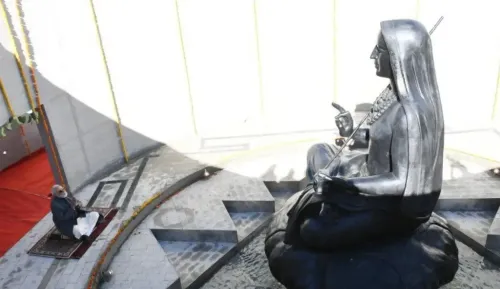
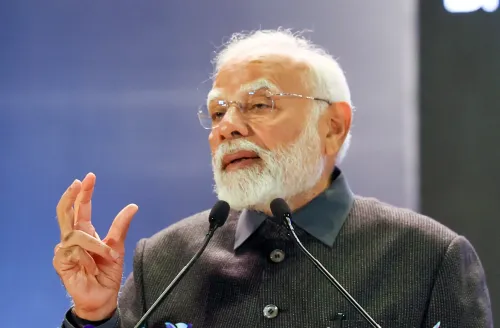
New Delhi, Jan 16 (NationPress) On this special day commemorating Thiruvalluvar, Prime Minister Narendra Modi paid tribute to the esteemed Tamil poet-philosopher Thiruvalluvar, emphasizing how his profound teachings and values continue to motivate countless individuals through the ages.
The Prime Minister shared his thoughts on the social media platform X, stating, "On this Thiruvalluvar Day, I honor the multifaceted Thiruvalluvar, whose works and principles inspire many. He envisioned a society marked by harmony and compassion. He exemplifies the best of Tamil culture. I encourage everyone to delve into the Tirukkural, which showcases the remarkable intellect of the great Thiruvalluvar."
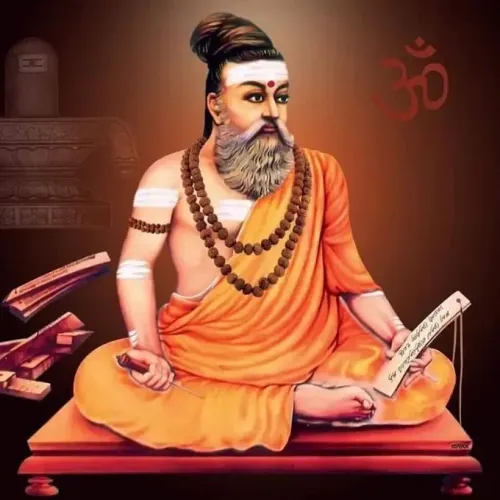
Thiruvalluvar lived approximately two millennia ago in Mylapore, now part of Chennai. He was a born Siddha and poet, often referred to simply as Valluvar, or more commonly as Thiruvalluvar, which translates to ‘the devotee of the Valluva caste’. Traditionally, the Valluvas were part of the Pariah community, now known as Harijans, and their role involved announcing royal decrees through drumbeats. Legends suggest that Thiruvalluvar was born to Bhagavan, a Brahmin, and Adi, a Pariah woman whom he wed.
Various accounts exist regarding Thiruvalluvar’s birthplace and era. While some traditions assert he originated in Madurai, the Pandyas' capital, his existence is believed to span from the 4th century BCE to the early 6th century CE. Scholar Maraimalai Adigal proposed a birth date of 31 BCE, whereas Tamil scholar Kamil Zvelebil indicated that Thiruvalluvar and the Tirukkural likely belong to the timeframe of 500 to 600 CE.
Many regard Thiruvalluvar as an incarnation of Brahma. His wife, Vasuki, is celebrated as a devoted and virtuous woman, embodying the ideals of an ideal wife who faithfully fulfilled her husband's wishes. Through his life and teachings, Thiruvalluvar illustrated that one can pursue a divine life of purity and sanctity while being a family person. He proved that renouncing family life is not a prerequisite for achieving spiritual excellence.
Also referred to simply as Valluvar, he remains one of the most prominent Tamil philosopher-poets. His ultimate work, the Tirukkural, comprises 1,330 couplets addressing morality, governance, economics, and love. This text is hailed as one of the finest pieces of Tamil literature, renowned for its universal principles and ethical clarity.
In January 1935, the government of Tamil Nadu officially recognized 31 BCE as Thiruvalluvar’s birth year. Scholars generally agree that Valluvar may have had connections to either Jainism or Hinduism during a time when these religions, along with Buddhism, thrived across the Indian subcontinent.
Thiruvalluvar is celebrated as one of the greatest poet-philosophers of the Sangam period. His work is revered to such an extent that it is referred to by multiple names, including Tirukkural, Uttaravedam, Tamil Veda, Teyvanul (the divine book), and Potumarai (the common Veda).
Throughout southern India, Thiruvalluvar is venerated as a saint and, in certain traditions, as a deity. Many Shaivite communities identify him as the 64th Nayanmar, particularly in areas like Mylapore and Tiruchuli. Numerous temples dedicated solely to Thiruvalluvar can be found in South India, with the most renowned being in Chennai’s Mylapore, constructed in the early 16th century within the Ekambareeswara-Kamakshi temple complex.
Point of View
It's essential to highlight the significance of Thiruvalluvar's teachings in today's society. PM Modi's homage serves as a reminder of the cultural heritage that shapes our collective identity. Engaging with Thiruvalluvar's works can foster a deeper understanding of compassion and ethical living, principles that remain relevant in our modern discourse.
NationPress
27 Sept 2026
Frequently Asked Questions
Who was Thiruvalluvar?
Thiruvalluvar was a revered Tamil poet-philosopher known for his work, the Tirukkural, which addresses various aspects of life including morality, governance, and love.
What is the significance of Thiruvalluvar Day?
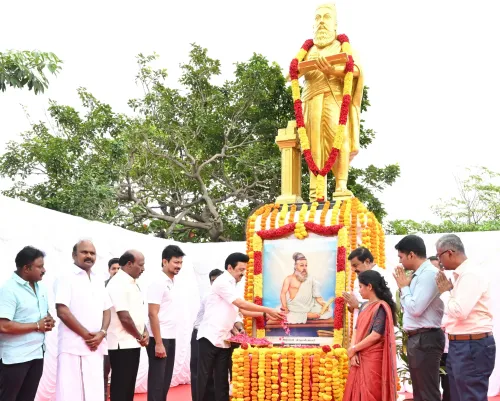
Thiruvalluvar Day commemorates the life and teachings of Thiruvalluvar, promoting the exploration of his ideals and the Tirukkural.
What is the Tirukkural?
The Tirukkural is a classic Tamil text consisting of 1,330 couplets that provide insights into ethics, governance, and love.
When was Thiruvalluvar born?
Though there are differing accounts, Thiruvalluvar's birth is often recognized around 31 BCE.
Why is Thiruvalluvar considered a great philosopher?
Thiruvalluvar is celebrated for his profound insights into human behavior and ethics, making him a timeless figure in Tamil literature and philosophy.