PM Modi meets Akie Abe, unveils memorial corridor in Varanasi
Synopsis
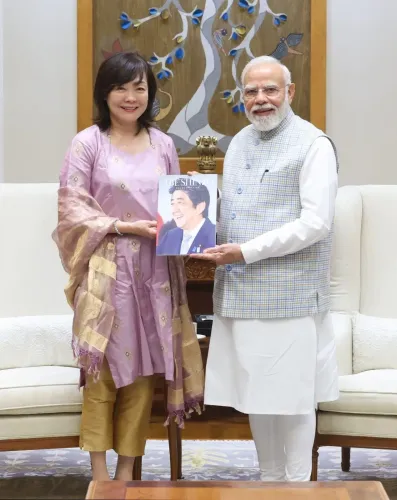
Prime Minister Narendra Modi met Mrs. Akie Abe and hailed the inauguration of the Abe Memorial Corridor at Varanasi's Rudraksh Convention Centre — a permanent tribute to Shinzo Abe's foundational role in elevating India-Japan ties to a Special Strategic and Global Partnership.
Key Takeaways
Akie Abe , widow of former Japanese PM Shinzo Abe , and posted a bilingual English-Japanese tribute on October 8, 2026 .
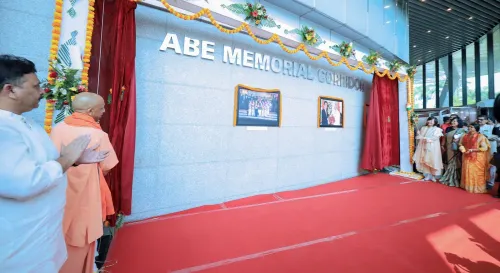
The Abe Memorial Corridor was inaugurated at the Rudraksh Convention Centre in Varanasi on October 7, 2026 .
The Rudraksh Convention Centre was itself built with Japanese assistance and jointly inaugurated by Modi and Abe in 2021 .
Abe elevated India-Japan ties to a 'Special Strategic and Global Partnership' and co-architected the Quad security dialogue.
India declared a national day of mourning following Abe's assassination on July 8, 2022 — a rare honour for a foreign leader.
Abe visited Varanasi in December 2015 , with the riverside Ganga Aarti visit becoming an iconic image of the bilateral relationship.
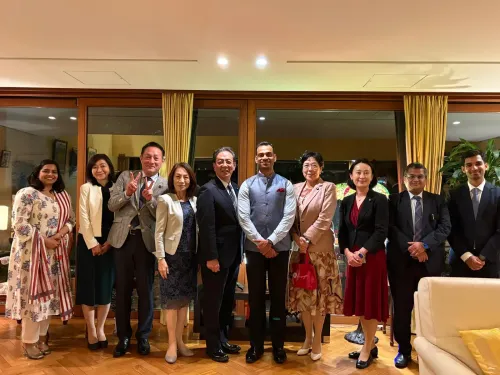
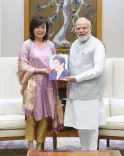
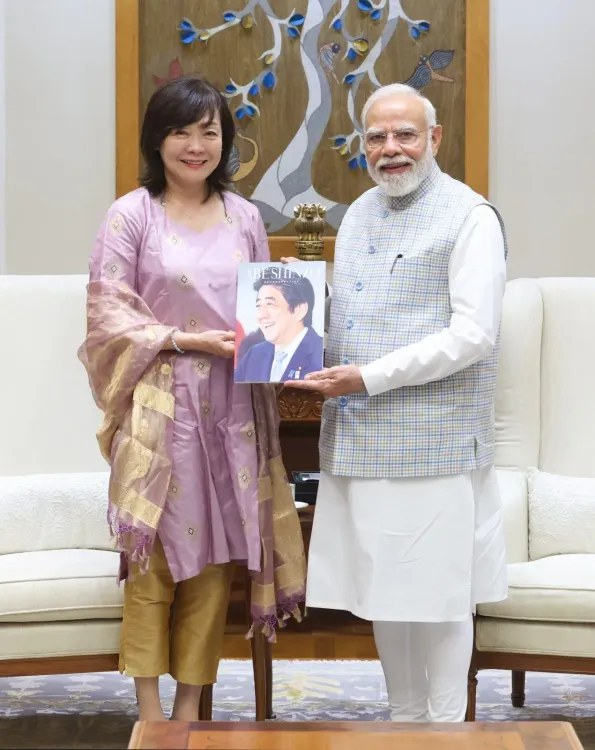
A friendship forged across continents and sustained beyond death received its most tangible tribute yet — Prime Minister Narendra Modi met Mrs. Akie Abe, widow of assassinated former Japanese Prime Minister Shinzo Abe, and announced the inauguration of the Abe Memorial Corridor at the Rudraksh Convention Centre in Varanasi on Wednesday, October 7, 2026.
Modi, posting on X in both English and Japanese — a rare bilingual gesture underscoring the personal depth of the bond — described Abe as 'a dear friend and a visionary leader who played a defining role in elevating India-Japan relations to new heights.' He expressed how deeply he values Mrs. Akie Abe's 'enduring association with India,' tagging her official account @akie_official directly.
A corridor named for a statesman — what the Rudraksh tribute means
The Rudraksh Convention Centre in Varanasi is itself a symbol of the India-Japan partnership: the convention centre was built with Japanese assistance and inaugurated by Modi and Abe together in 2021, during one of Abe's visits to Modi's parliamentary constituency. Naming a memorial corridor within it after Abe is a pointed choice — the physical space already carries the fingerprints of their collaboration, and the tribute now makes that legacy permanent in stone.
Shinzo Abe was assassinated on July 8, 2022, in Nara, Japan, while delivering a campaign speech — a loss that sent shockwaves through global diplomatic circles. Modi had declared a national day of mourning in India, a mark of state grief rarely extended for a foreign leader, reflecting just how central Abe had become to India's foreign-policy architecture.
Abe's defining role in the India-Japan strategic pivot
Under Abe's leadership, Japan elevated its relationship with India to a 'Special Strategic and Global Partnership' — the highest tier in Japan's diplomatic hierarchy. Abe was instrumental in committing Japanese investment and technology to India's infrastructure ambitions, most visibly through the Mumbai-Ahmedabad High Speed Rail project, popularly called the bullet train corridor, financed substantially by Japan's JICA at concessional rates. He was also a co-architect of the Quad — the security dialogue among India, Japan, Australia, and the United States — a framework that has grown only more consequential in the years since his death.
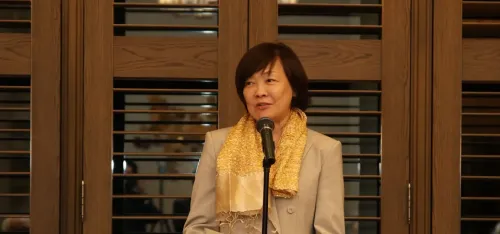
Mrs. Akie Abe's continued engagement with India — visiting the country and maintaining ties with Indian leadership — signals that the personal and institutional bonds Abe cultivated remain alive. Her presence at the Varanasi tribute is as much a diplomatic statement as a personal one.
Varanasi as a stage for India-Japan symbolism
Modi's choice of Varanasi — his own constituency, and a city of deep civilisational resonance — as the site for this memorial is deliberate. Abe visited Varanasi in December 2015, attending the evening Ganga Aarti (the riverside lamp ceremony) alongside Modi, in images that became emblematic of an India-Japan relationship that was as much cultural as strategic. Anchoring Abe's memorial there ensures it lives not just in official records but in the living fabric of the city.
The bilateral relationship Abe helped shape now faces its next chapter: defence co-production agreements, semiconductor supply-chain collaboration, and sustained Quad coordination are all on the table. The corridor in Varanasi stands as a reminder of who laid the groundwork — and a quiet prompt for those who follow to keep building.
Point of View
Deepening a people-to-people dimension that outlasts any single government. Modi's decision to post in both English and Japanese, and to tag Mrs. Akie Abe directly, signals that New Delhi is investing in the continuity of the Abe legacy as a live diplomatic asset, not just a historical footnote. With the Quad's institutional future and Japan's expanded defence co-production interest in India both in active play, keeping the Abe connection warm serves clear strategic logic. The tribute also reinforces Modi's well-documented practice of using Varanasi — his constituency and a city of civilisational weight — as a stage for India's soft-power diplomacy with its closest partners.
NationPress
8 Oct 2026
Frequently Asked Questions
What is the Abe Memorial Corridor in Varanasi?
The Abe Memorial Corridor is a dedicated memorial space inaugurated on October 7, 2026 , inside the Rudraksh Convention Centre in Varanasi , honouring former Japanese Prime Minister Shinzo Abe 's contribution to India-Japan friendship. The convention centre itself was built with Japanese assistance.
Why did PM Modi meet Akie Abe?
PM Modi met Mrs. Akie Abe , wife of the late Shinzo Abe , on the occasion of her visit to India, coinciding with the inauguration of the Abe Memorial Corridor in Varanasi. Modi described her as someone whose 'enduring association with India' he deeply values.
What was Shinzo Abe's role in India-Japan relations?
Shinzo Abe elevated India-Japan ties to a 'Special Strategic and Global Partnership' — Tokyo's highest diplomatic tier. He championed Japanese investment in Indian infrastructure, co-architected the Quad , and visited India multiple times including a landmark trip to Varanasi in December 2015 .
When was Shinzo Abe assassinated?
Shinzo Abe was assassinated on July 8, 2022 , in Nara, Japan , while delivering a campaign speech. India declared a national day of mourning — an exceptional honour extended to a foreign leader.
What is the Rudraksh Convention Centre in Varanasi?
The Rudraksh Convention Centre in Varanasi was built with Japanese assistance and jointly inaugurated by PM Narendra Modi and then-PM Shinzo Abe in 2021 . It is now home to the Abe Memorial Corridor , making it a living monument to the India-Japan bilateral partnership.