Should PM Modi's Call to End Macaulay's Legacy of Mental Slavery Inspire Change?
Synopsis
On Veer Bal Diwas, PM Modi's address resonates deeply as he challenges the nation to break free from the enduring impacts of colonialism. His emphasis on cultural pride and linguistic diversity inspires a movement towards self-reliance and national unity.
Key Takeaways
The importance of breaking free from colonial legacies.
Emphasis on cultural and linguistic diversity.
The role of Veer Bal Diwas in promoting national pride.
The commitment to self-reliance and the Swadeshi movement.
Recognition of young achievers as a source of inspiration.
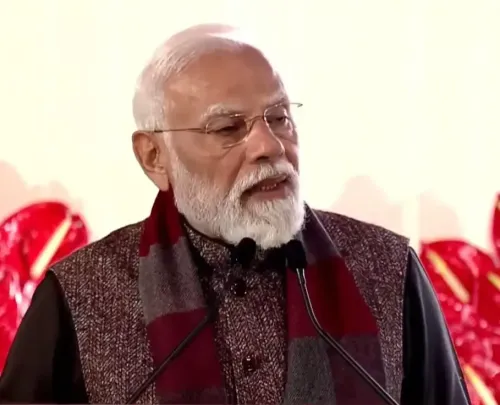
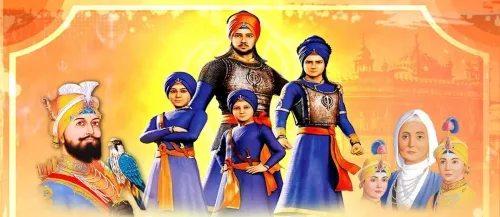
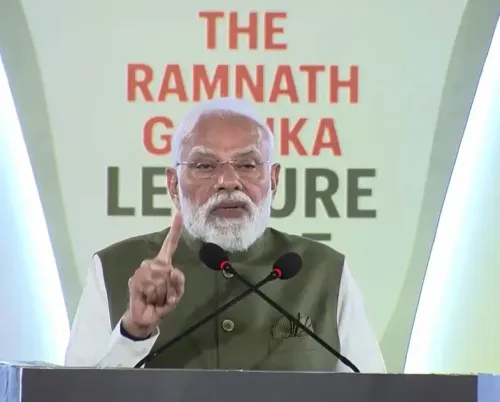
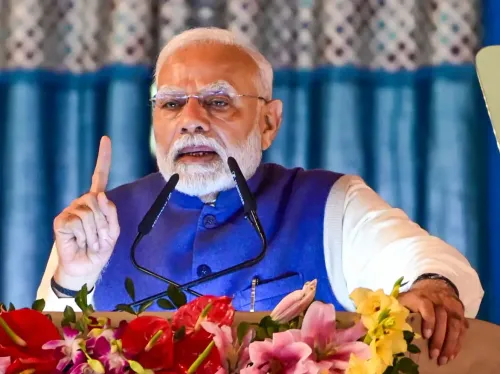
New Delhi, Dec 26 (NationPress) Prime Minister Narendra Modi delivered a powerful message to the nation's 1.4 billion citizens, urging them to liberate themselves from the "mental slavery" imposed by British colonialist Lord Thomas Babington Macaulay, while honoring the martyrdom of Guru Gobind Singh's young sons, the Sahibzadas.
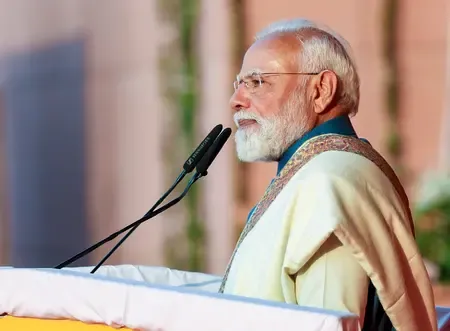
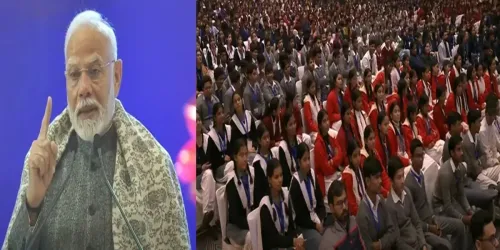
Speaking at Bharat Mandapam during Veer Bal Diwas in the capital, PM Modi connected the historic sacrifice to India's ongoing struggle against colonial legacies that have suppressed truth and diversity even after independence.
In a subtle critique of the former Congress government, PM Modi stated, "Even after freedom, attempts were made to suppress such truth. Now, India has decided to emerge from the mentality of slavery."
He emphasized Macaulay's scheme to undermine India's cultural and linguistic wealth, declaring, "The conspiracy designed by Macaulay is one we must break free from. This should be the pledge of 1.4 billion citizens."
PM Modi highlighted recent advancements in Parliament, where over 160 speeches were made in various Indian languages, including 50 in Tamil, 40 in Marathi, and 25 in Bengali.
"Macaulay attempted to suppress our linguistic diversity, but our cultural richness has become our strength," he continued, stressing pride in India's multilingual heritage as a unique global asset.
Reflecting on the 350th martyrdom anniversary of Shri Guru Tegh Bahadur Ji and the valor of the four Sahibzadas, the Prime Minister asserted that Veer Bal Diwas symbolizes the commitment to uphold Indianness.
He noted, "The mentality of slavery has lingered since the 18th century. Even post-Independence, efforts were made to hide the truth," adding that celebrating this day with dedication will boost the Swadeshi movement and self-reliance.
As India approaches 2035, marking 200 years since Macaulay's education policy, PM Modi called for total liberation from subservient thought. "The more we free ourselves from this mentality, the more robust our diversity becomes," he affirmed.
The occasion also recognized young achievers with the 'Pradhan Mantri Rashtriya Bal Puraskar', aligning with the day's theme of fostering courage and righteousness.
PM Modi paid homage to Mata Gujri Ji and Guru Gobind Singh Ji, whose teachings continue to inspire generations. His address reinforces the government's commitment to cultural revival, promoting indigenous languages and countering historical narratives that fostered feelings of inferiority. With Veer Bal Diwas gaining international recognition, it serves as a symbol of national pride and unity.
Point of View
Delivered on a significant day, reflects a broader movement towards self-identity and empowerment in a rapidly changing world.
NationPress
3 Oct 2026
Frequently Asked Questions
What is Veer Bal Diwas?
Veer Bal Diwas commemorates the martyrdom of Guru Gobind Singh's young sons, the Sahibzadas, highlighting their bravery and sacrifice.
Why did PM Modi mention Macaulay?
PM Modi referred to Macaulay to emphasize the colonial legacy that has influenced Indian education and culture, calling for a break from this mental slavery.
What is the significance of PM Modi's speech?
PM Modi's speech aims to inspire citizens to reclaim their cultural identity and promote linguistic diversity as a strength of India.