Dharmendra Pradhan Extends Ratha Jatra 2026 Greetings
Synopsis
Union Education Minister Dharmendra Pradhan greeted the nation on Ratha Jatra 2026, calling the chariot festival a symbol of Sanatan faith, cultural heritage, and public welfare, and praying for the well-being of all citizens.
Key Takeaways
Dharmendra Pradhan , Union Education Minister and senior BJP leader from Odisha , posted Ratha Jatra 2026 greetings on 16 July 2026 .
He described the festival as a symbol of Sanatan faith , rich cultural heritage , and the spirit of public welfare .
The minister invoked the blessings of Lord Jagannath , Lord Balabhadra , and Devi Subhadra for the happiness, prosperity, good health, and well-being of all Indians.
Ratha Jatra is centred on the Jagannath Temple in Puri, Odisha , one of Hinduism's four sacred dhams .
The greetings align with the National Education Policy 2020 's emphasis on integrating Indian cultural heritage into the education system.
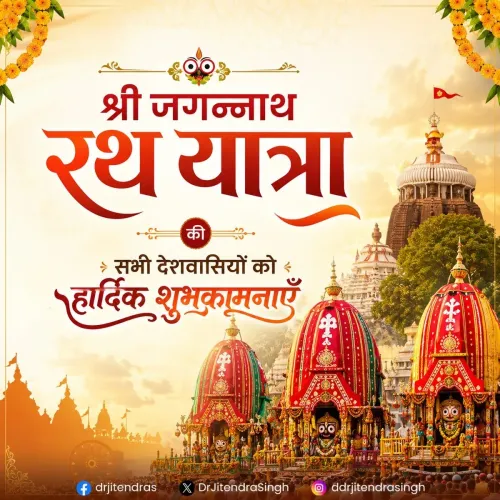
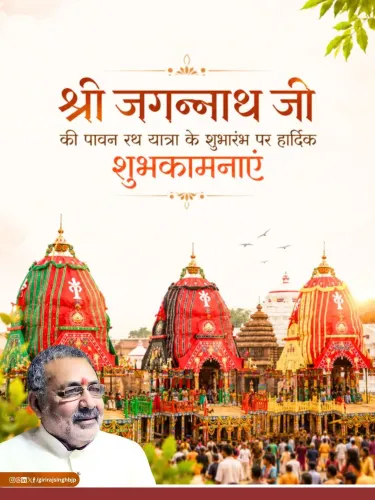
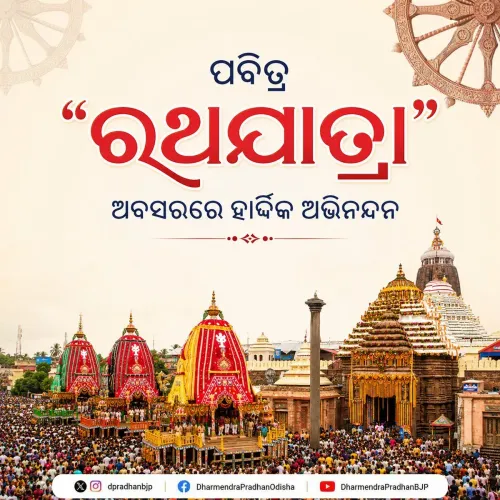
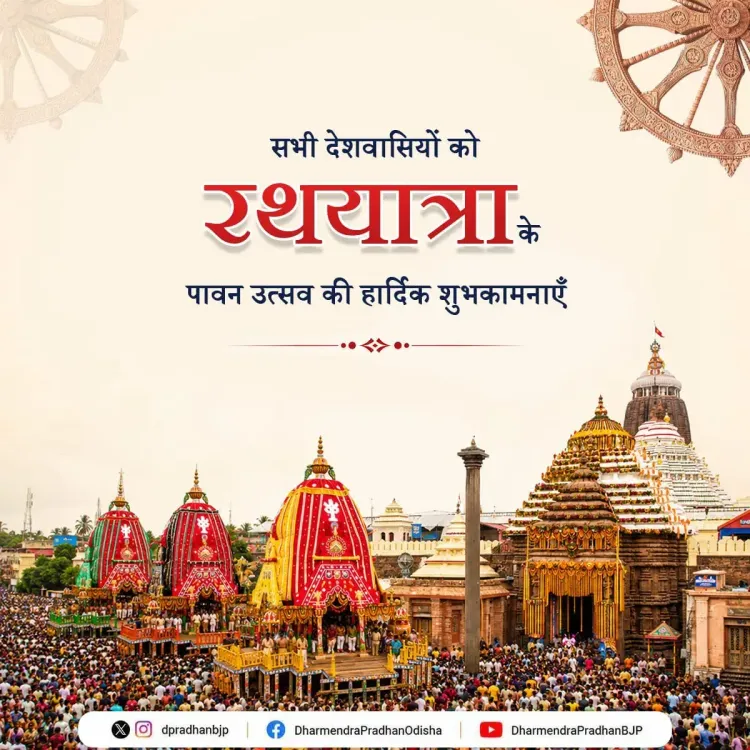
Union Education Minister Dharmendra Pradhan extended warm greetings to the nation on the occasion of Ratha Jatra 2026 on Thursday, 16 July 2026, invoking the blessings of Lord Jagannath, Lord Balabhadra, and Devi Subhadra for the happiness, prosperity, good health, and well-being of all citizens.
In his post on X, the Minister wrote: 'जय जगन्नाथ!' ('Jai Jagannath!') and described the festival as a symbol of 'सनातन आस्था, समृद्ध सांस्कृतिक विरासत और लोककल्याण की भावना' — 'Sanatan faith, rich cultural heritage, and the spirit of public welfare.' He offered prayers to Mahaprabhu Shri Jagannath for the well-being of all Indians.
Context
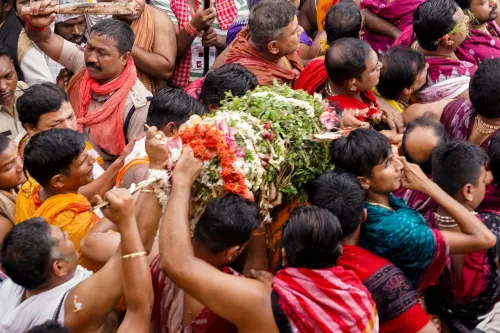
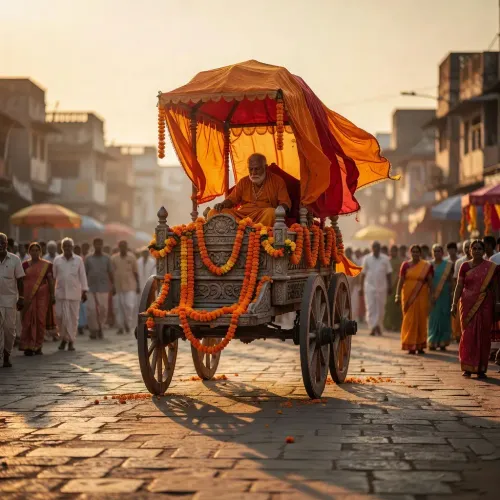
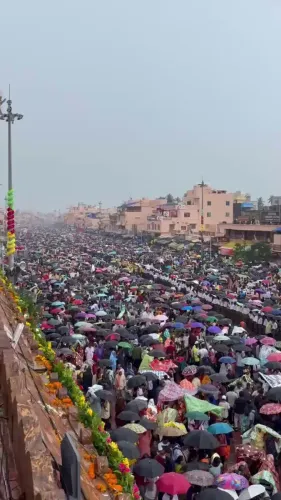
Ratha Jatra, or the Chariot Festival, is one of India's oldest and most celebrated Hindu festivals, centred on the Jagannath Temple in Puri, Odisha. The festival involves the ceremonial procession of the deities — Lord Jagannath, Lord Balabhadra, and Devi Subhadra — on elaborately decorated chariots through the streets of Puri, drawing millions of devotees from across India and the world. Puri is one of the four sacred dhams in Hindu tradition and holds particular cultural significance for the Odia community.
Pradhan, himself from Odisha, has consistently highlighted the spiritual and cultural importance of the Jagannath tradition in his public communications. His greetings reflect both a personal connection to the festival and his role as a senior national leader.
Policy Backdrop
The invocation of India's civilizational heritage by a Union Minister is consistent with the broader thrust of the National Education Policy (NEP) 2020, which explicitly emphasises the integration of Indian cultural traditions, values, and heritage into the education system at all levels. As the minister overseeing its implementation, Pradhan has regularly linked India's classical knowledge systems and cultural identity to the goals of educational reform.
Ruling party ministers routinely use major Hindu festivals as occasions for public outreach on social media, reinforcing a pattern of highlighting India's civilizational symbols in official communication. Such messaging has become a consistent feature of the current government's public engagement strategy.
Stakeholders and Impact
The greetings are addressed to all deshvasiyon — 'fellow citizens' — though they hold special resonance for the Hindu devotee community and the Odia diaspora spread across India and abroad. The Ratha Jatra in Puri is also a major driver of cultural tourism in Odisha, attracting lakhs of pilgrims and tourists each year, with significant economic impact on the region.
The festival's message of lokakalyan — public welfare — cuts across sectarian lines, and Lord Jagannath's tradition is historically noted for its inclusive character, with the deity regarded as a symbol of unity across caste and community.
What's Next
The annual Ratha Jatra arrangements in Puri will remain in focus in the coming days, including any updates on the Puri Heritage Corridor project and related cultural tourism initiatives in Odisha. The festival season also typically sees central and state government announcements on infrastructure and pilgrimage facilitation in the temple town. As India's cultural calendar continues to intersect with policy priorities under NEP 2020, the Education Ministry's engagement with heritage themes is likely to remain prominent throughout the year.
Point of View
But it carries added weight coming from a minister with deep Odia roots who is also the face of India's most ambitious education reform in decades. The consistent invocation of civilizational and Sanatan themes by BJP ministers on such occasions reflects a deliberate communication strategy that ties cultural identity to governance. For Pradhan specifically, the Jagannath tradition is both a personal touchstone and a political asset in Odisha, a state where the BJP has invested heavily. Watching whether such cultural messaging translates into concrete policy announcements — on the Puri Heritage Corridor, for instance — will be the real test of its policy significance.
NationPress
15 Oct 2026
Frequently Asked Questions
What did Dharmendra Pradhan say about Ratha Jatra 2026?
Dharmendra Pradhan extended greetings to all Indians on Ratha Jatra 2026, describing the festival as a symbol of Sanatan faith, rich cultural heritage, and public welfare, and prayed to Lord Jagannath, Lord Balabhadra, and Devi Subhadra for the happiness, prosperity, good health, and well-being of all citizens.
When is Ratha Jatra 2026?
Dharmendra Pradhan's greetings were posted on 16 July 2026, indicating that Ratha Jatra 2026 falls on or around that date. The festival's exact date varies each year based on the Hindu lunar calendar.
What is Ratha Jatra and where is it celebrated?
Ratha Jatra, or the Chariot Festival, is a major Hindu festival celebrated primarily at the Jagannath Temple in Puri, Odisha. It involves a grand procession of Lord Jagannath, Lord Balabhadra, and Devi Subhadra on decorated chariots and draws millions of devotees annually.
Why does Dharmendra Pradhan celebrate Ratha Jatra?
Pradhan is a senior BJP leader from Odisha, the state where the Jagannath tradition originates, giving him a strong personal and cultural connection to the festival. He regularly marks the occasion with public greetings.
How is Ratha Jatra connected to India's education policy?
The National Education Policy 2020, overseen by Education Minister Dharmendra Pradhan, explicitly promotes the integration of Indian cultural heritage and traditions into the education system, making the celebration of festivals like Ratha Jatra consistent with the ministry's broader cultural emphasis.