Pradhan joins Chhath Usha Arghya at Sambalpur's Marwaripada
Synopsis
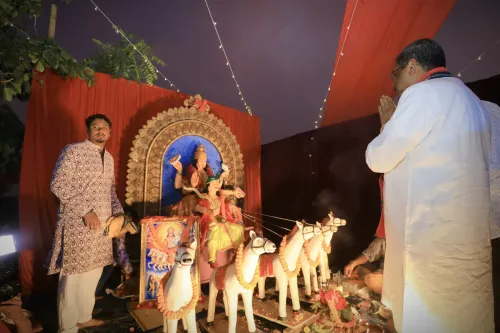
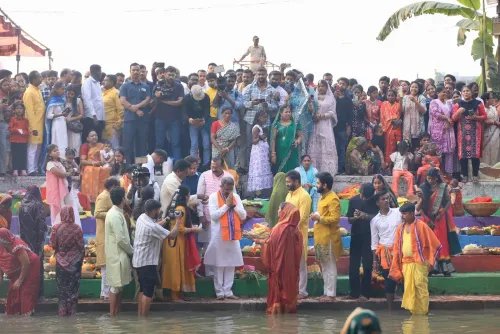
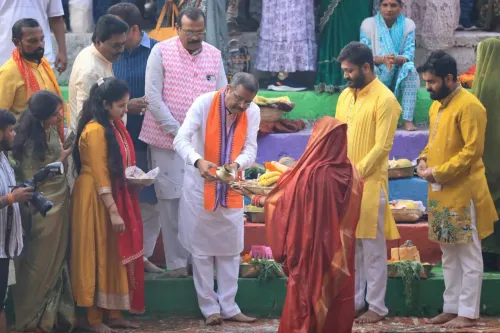
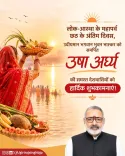
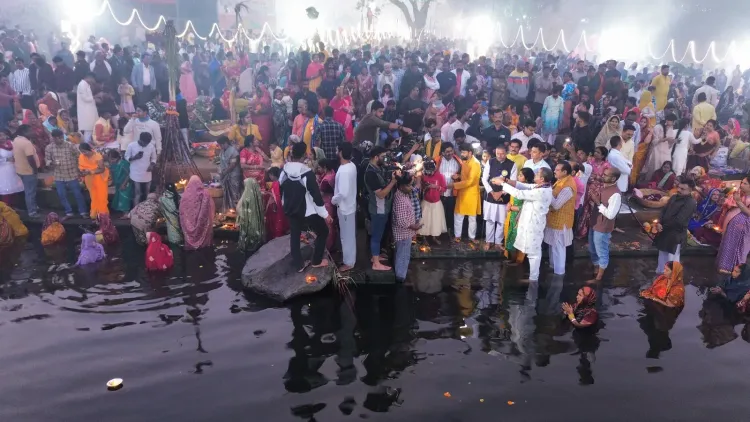
Union Education Minister Dharmendra Pradhan attended the final Usha Arghya ritual of Chhath Puja at Sambalpur's Marwaripada and Mandalia localities on 16 November 2026, praying alongside devotees and invoking the blessings of Chhathi Maiya and Surya Dev.
Key Takeaways
Dharmendra Pradhan participated in the Usha Arghya (dawn offering) ritual — the concluding ceremony of Chhath Puja — on 16 November 2026 .
The minister joined devotees at Marwaripada and Mandalia , two prominent Chhath Puja sites in Sambalpur , western Odisha.
Chhath Puja is a four-day festival dedicated to Surya Dev and Chhathi Maiya , culminating in a pre-dawn arghya offering after a 36-plus-hour fast.
Pradhan posted in Odia , describing the festival as a celebration of 'devotion, dedication, and collective brotherhood.' Sambalpur's Marwari community is a core constituency for Chhath observance in western Odisha, reflected in the locality name Marwaripada .
Senior BJP leaders from Odisha routinely attend such regional religious events as part of the party's cultural outreach in eastern India.
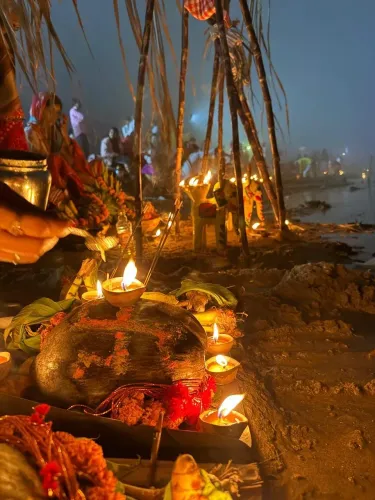
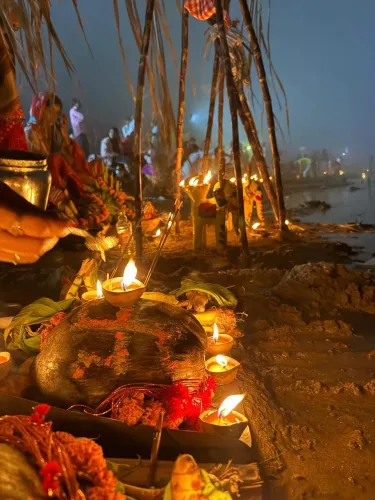
Before sunrise broke over Sambalpur, Union Education Minister Dharmendra Pradhan was already standing among the faithful — offering arghya to Surya Dev alongside devotees at Marwaripada and Mandalia, two prominent Chhath Puja ghats in the city, on Monday, 16 November 2026.
Posting in Odia after the ceremony, Pradhan described the moment with unmistakable warmth: 'Bhakti, nishtha ebam samukhika bhaicharara ei mahana utsava' — 'This great festival of devotion, dedication, and collective brotherhood has filled every heart with fresh enthusiasm and positive energy.' He concluded with a prayer that the blessings of Chhathi Maiya and Bhagwan Surya Dev remain with everyone.
What Usha Arghya means — and why it closes Chhath
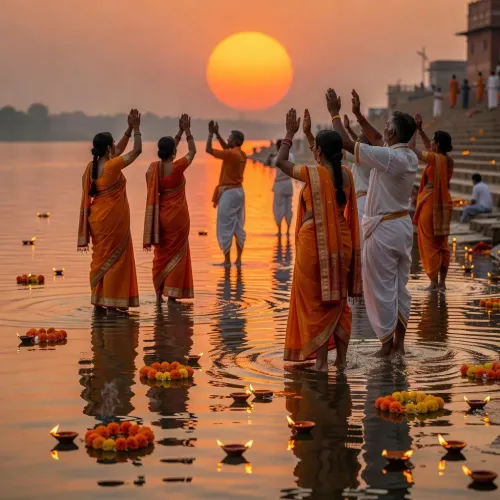
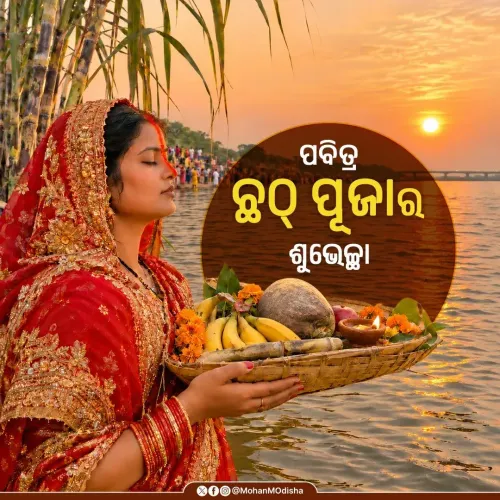
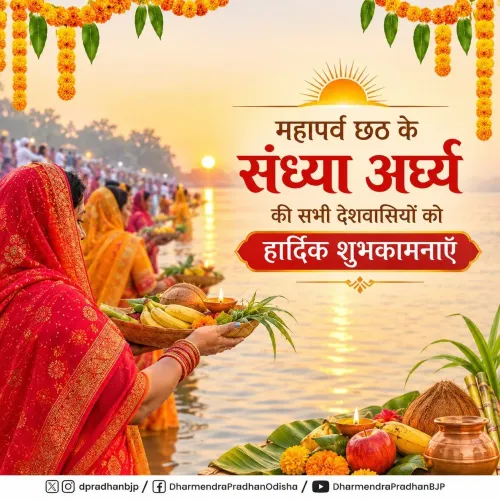
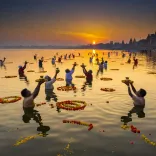
Chhath Puja is a four-day Hindu festival dedicated to Surya Dev and Chhathi Maiya, observed with ritual bathing, rigorous fasting, and offerings of arghya at both dusk and dawn. The final act — Usha Arghya, the dawn offering — is the emotional and spiritual crescendo of the entire observance. Devotees wade into rivers or stand at water bodies before daybreak, hands raised to greet the first light, completing a vow that for many has been held without water for over 36 hours.
Sambalpur, a major city in western Odisha, has a substantial community of Hindi-belt migrants — including Marwari and other north Indian families — for whom Chhath Puja is a defining cultural anchor far from their ancestral homes. The locality name Marwaripada itself signals that history.
Pradhan's Odia roots and the BJP's eastern India push
Pradhan, a senior BJP leader born in Odisha, has long positioned himself as a cultural bridge between the state and national politics. Union ministers from Odisha routinely participate in regional religious observances as a way of maintaining visible, ground-level ties with communities — and Pradhan's presence at a pre-dawn Chhath ghat is consistent with that practice.
The BJP has been systematically expanding its footprint in eastern India, and cultural participation at grassroots festivals is part of that organisational effort. A minister who is seen standing with devotees in the dark before the sun rises sends a message no rally can quite replicate.
As the country's education chief prepares to return to Delhi's policy corridors, the image he carries back — of marigolds, cold river water, and a city waking in unison — is one that connects every constituency at once.
Point of View
Visible ties to state communities at culturally charged moments. For a party that has made eastern India a long-term expansion priority, a minister wading through ritual alongside ordinary devotees carries more organisational weight than a press conference. The Odia-language post is equally pointed — it speaks directly to a home audience in its own tongue, reinforcing regional identity even from a national ministry. Watch whether such cultural participation is accompanied by any policy announcements around heritage, education, or infrastructure in Odisha in the coming weeks.
NationPress
16 Nov 2026
Frequently Asked Questions
What is Usha Arghya in Chhath Puja?
Usha Arghya is the final ritual of Chhath Puja, performed at dawn on the fourth day, in which devotees offer water and prasad to the rising sun after completing a lengthy fast. It marks the conclusion of the four-day festival dedicated to Surya Dev and Chhathi Maiya.
Where did Dharmendra Pradhan attend Chhath Puja in 2026?
Dharmendra Pradhan attended the Chhath Puja Usha Arghya ceremony at Marwaripada and Mandalia in Sambalpur, western Odisha, on 16 November 2026.
Why is Chhath Puja celebrated in Sambalpur?
Sambalpur has a significant community of Marwari and other north Indian migrants for whom Chhath Puja is a central cultural and religious observance. The locality Marwaripada in Sambalpur is historically associated with this migrant community.
What did Dharmendra Pradhan say about Chhath Puja?
Posting in Odia, Pradhan called Chhath Puja 'a great festival of devotion, dedication, and collective brotherhood' and prayed that the blessings of Chhathi Maiya and Surya Dev remain with all.
Is Dharmendra Pradhan from Odisha?
Yes, Dharmendra Pradhan is a senior BJP leader born in Odisha. He serves as Union Minister of Education and previously served as Union Petroleum Minister.