Punjab canal water for paddy: 21,000 cusecs from May 1, says CM Mann

Synopsis
Punjab is attempting a structural shift in how it waters its fields. Chief Minister Bhagwant Singh Mann's May 1 canal water release — backed by ₹6,700 crore in infrastructure and 7,000 new watercourses — is the state's most ambitious push yet to wean farmers off tubewells and reverse a groundwater crisis that threatens Punjab's agricultural future.
Key Takeaways
CM Bhagwant Singh Mann announced canal water release from May 1 with 21,000 cusecs to be distributed across Punjab .
The initiative is backed by a ₹6,700 crore investment in irrigation works completed by March 2025 .
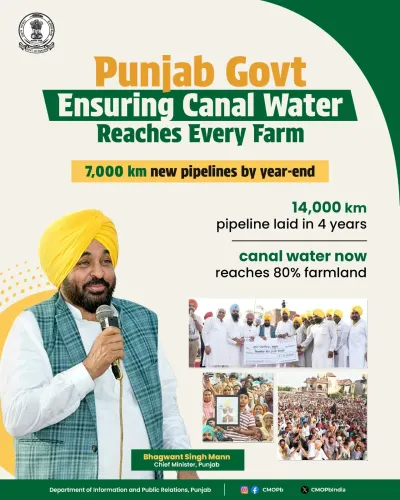
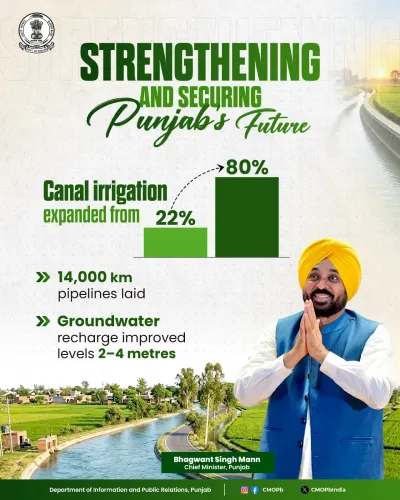
A 14,000-km pipeline network and 7,000 new watercourses have been activated to support the rollout.
Groundwater levels have reportedly risen by two to four metres due to recharge points created in canals and rivers.
21 lakh cubic metres of water have been recharged in the last one year, according to the government.
Paddy cultivation season has been advanced from June 1 to reduce moisture-related procurement complications in October.
Punjab Chief Minister Bhagwant Singh Mann on Wednesday, 29 April announced that canal water for paddy irrigation will be made available from May 1, with 21,000 cusecs of water to be released across the state. The announcement, made at a press conference in Chandigarh, is aimed at reducing groundwater depletion and ensuring assured irrigation ahead of the paddy sowing season.
Infrastructure Behind the Push
The initiative is backed by a ₹6,700 crore investment in irrigation infrastructure, including a 14,000-km pipeline network and the activation of 7,000 newly constructed watercourses and channels. The government has also paired the water release with an eight-hour power supply schedule across four zones to streamline sowing operations for farmers.
Taking to X, CM Mann said,
Point of View
With the state drawing far more from its aquifers than rainfall and rivers replenish. CM Mann's ₹6,700 crore irrigation push is the most concrete state-level response in years — but the real test is adoption. Farmers have long defaulted to tubewells for their reliability and flexibility; canal water, by contrast, depends on schedule adherence and functional infrastructure at the last mile. The claim of a two-to-four-metre groundwater rise is significant if independently verified, but the government has not cited a third-party assessment. Advancing the paddy season from June 1 is a sensible agronomic move, yet its success hinges on procurement agencies being equally prepared — a coordination challenge that has tripped up past reforms.
NationPress
19 Sept 2026
Frequently Asked Questions
When will canal water be released for paddy irrigation in Punjab?
Canal water will be made available from May 1, with 21,000 cusecs to be released across Punjab, as announced by Chief Minister Bhagwant Singh Mann on 29 April 2025.
How much has the Punjab government invested in irrigation infrastructure?
The Punjab government has invested ₹6,700 crore in irrigation works, including a 14,000-km pipeline network and the activation of 7,000 newly constructed watercourses and channels.
Why is Punjab advancing the paddy cultivation season?
The government has decided to advance the paddy cultivation season from June 1 to avoid complications for farmers during paddy procurement in October, when high moisture content in grain can lead to rejection or price penalties.
How has Punjab's groundwater level changed?
According to Chief Minister Mann, recharge points created in canals and rivers have resulted in groundwater levels rising by two to four metres. The government also claims 21 lakh cubic metres of water have been recharged in the last one year.
Which crops and regions benefit beyond paddy?
Besides paddy, the canal water availability is expected to secure irrigation for cotton, horticulture, maize, and fodder crops, particularly in the Malwa region of Punjab.