Murshidabad and Malda: Key Focus in Battle Against Radicalisation

Synopsis
The West Bengal Governor warns of the rising threats of radicalisation and militancy in border districts like Murshidabad and Malda. With illegal immigration and terrorist networks on the rise, the implications for national security are profound.
Key Takeaways
Radicalisation and militancy are rising in Murshidabad and Malda.
Illegal immigration is causing demographic shifts.
Financial resources linked to criminal activities are concerning.
There is a growing number of illegal madrasas .
Potential implications for Northeastern states are significant.
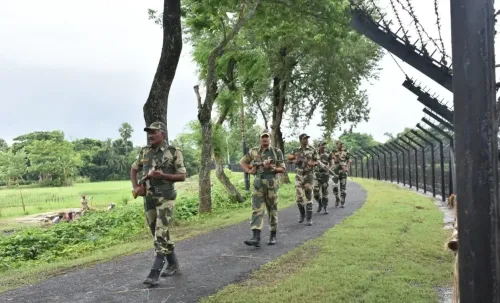
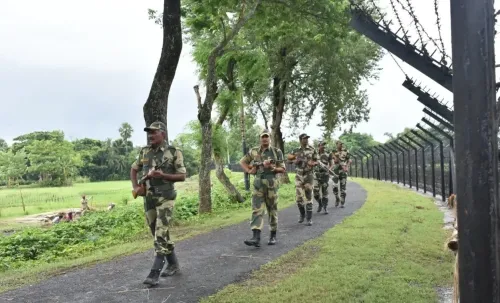
New Delhi, April 15 (NationPress) The Governor of West Bengal has recently stated that the dual threats of radicalisation and militancy present a significant challenge for the state, especially in border districts like Murshidabad and Malda, which share a border with Bangladesh.
These comments emerge amid ongoing initiatives reportedly aimed at promoting radicalisation, which could exacerbate communal strife and lead to terrorist activities.
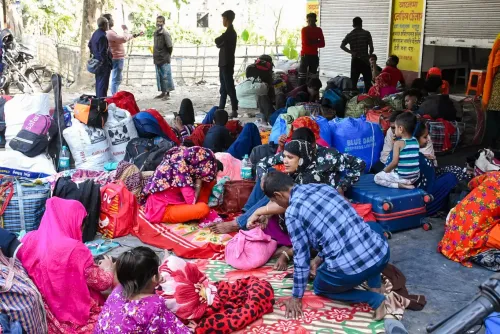
Over the years, intelligence agencies have repeatedly expressed concerns regarding these regions. Officials indicate that illegal immigration has surged in these areas, resulting in notable demographic shifts. There have even been claims of land encroachments in certain locales.
An official from the Intelligence Bureau noted that illegal immigrants not only possess a considerable numerical advantage but also have financial means, allegedly derived from activities such as cattle smuggling, narcotics trafficking, and counterfeit currency operations.
Moreover, a renewed effort is underway to strengthen criminal networks. In addition to demographic changes and rising communal tensions, there are mounting worries regarding the establishment and maintenance of terror cells.
Officials have also reported a rise in the number of illegal madrasas in the region, which are believed to be functioning as safe havens. In the lead-up to elections, elements allegedly linked to Pakistan’s ISI have made persistent attempts to increase illegal immigration, as per official reports.
It is suspected that the ISI has collaborated with groups like the Rohingya Solidarity Organisation (RSO) and the Arakan Rohingya Salvation Army (ARSA) to facilitate these operations. The Ansarullah Bangla Team (ABT) is also reportedly active in these areas, indicating a possible strategy to keep security forces engaged while planning for potential attacks.
The alleged operations in West Bengal are not merely limited to one activity but encompass a range of illicit activities, including smuggling, illegal immigration, counterfeiting, and the establishment of terror modules associated with ABT.
Concerns extend beyond West Bengal, as there are indications that similar elements may try to infiltrate Northeastern states like Assam to execute their plans. The intent appears to undermine internal security and stability, potentially straining India’s relations with Bangladesh.
Although relations had recently been tense, they seem to have stabilised after the recent elections in Bangladesh, which saw the Bangladesh Nationalist Party (BNP) return to power. Prime Minister Tarique Rahman has reiterated the importance of fostering positive relations with India.
According to officials, the ISI's objective is to destabilise this diplomatic relationship by leveraging networks in Murshidabad and Malda to incite turmoil within India. The agency is also believed to be attempting to activate terrorist networks in Jammu and Kashmir, supporting modules in Delhi and other urban centres, and assisting Khalistan-linked factions in Punjab.
Officials caution that similar strategies are being considered for West Bengal and the Northeastern states. They stress that the increased activity in Murshidabad and Malda should not simply be viewed in the context of West Bengal.
The overarching concern, they argue, lies in the potential use of these networks to conduct operations in the Northeast, aiming to disrupt peace in border states—a development that could have far-reaching implications for national security.
Point of View
It is imperative to recognize the serious implications of the increasing radicalisation and militancy in West Bengal's border districts. The challenges posed by illegal immigration and potential terrorist networks not only threaten local stability but also have broader national security ramifications. It is crucial for authorities to address these issues with urgency.
NationPress
19 Sept 2026
Frequently Asked Questions
What challenges are facing Murshidabad and Malda?
Murshidabad and Malda are facing significant challenges from radicalisation and militancy, exacerbated by illegal immigration and the rise of terrorist networks.
How is illegal immigration affecting these regions?
Illegal immigration has led to demographic changes and has been linked to criminal activities, including smuggling and financing terrorism.
What role does the ISI play in these developments?
The ISI is suspected of fostering unrest by supporting illegal immigration and activating terror networks in India.
Why are illegal madrasas a concern?
Illegal madrasas are believed to serve as safe houses for radical elements, raising alarms about their role in promoting radicalisation.
What are the broader implications of these issues?
The rise of radicalisation and militancy in border areas threatens not just local security but also has the potential to destabilise relations between India and Bangladesh and impact national security.