Rahul Gandhi Launches 'Satyagraha' Map to Unite Rights Fighters
Synopsis
Rahul Gandhi has launched 'Satyagraha', a digital initiative that maps citizens' stories of injustice across India, inviting Gen Z, farmers, Adivasis, Dalits and women to share their experiences in two minutes, with Gandhi pledging to act on them in Parliament and on the streets.
Key Takeaways
Congress leader Rahul Gandhi announced the 'Satyagraha' initiative on October 3, 2026 , via social media.
The platform at rahulgandhi.in/satyagraha lets citizens submit their injustice stories in approximately two minutes , which are then plotted on a shared national map.
Target communities named include Gen Z, students, farmers, Adivasis, Dalits, and women .
Gandhi explicitly tied submissions to his role as Leader of the Opposition , pledging to act through Parliament, street protests, and written interventions.
The initiative invokes Mahatma Gandhi's concept of Satyagraha — truth-force — as its ideological anchor.
The map's stated goal is to make dispersed, individual grievances collectively visible and politically actionable.
A lone voice is easier to silence — and Congress leader Rahul Gandhi is betting that a map can change that. On Saturday, October 3, 2026, the Leader of the Opposition in Lok Sabha unveiled 'Satyagraha', a digital initiative that invites citizens across India to submit their stories of injustice and see them plotted on a shared, public map — turning isolated grievances into a visible, collective force.
What the Satyagraha Map Actually Is
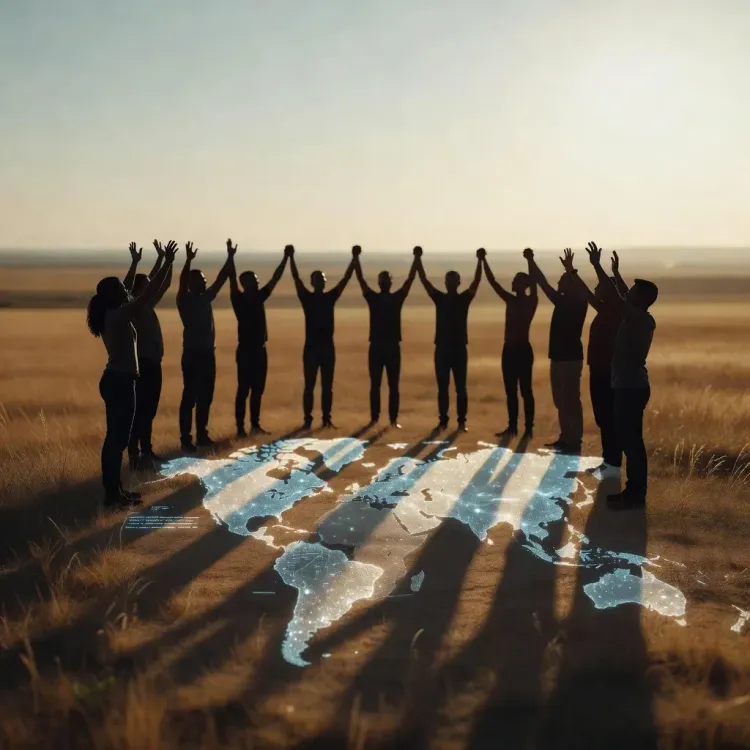
The initiative, hosted at rahulgandhi.in/satyagraha, asks anyone fighting what they consider an injustice — whether a student, farmer, Adivasi, Dalit, or woman — to share their story in roughly two minutes. That account then gets a pin on the Satyagraha map, so every contributor can see who else, across the country, is waging a similar battle. The framing is explicitly Gandhian: Gandhi borrowed the word 'Satyagraha' (literally, 'truth-force') to describe nonviolent resistance, and the initiative leans on that lineage to give individual complaints a moral and historical weight they would not carry alone.
Gandhi's Own Pledge — Parliament, Streets, Letters
What makes the announcement more than a petition drive is Gandhi's personal commitment attached to it. 'I will do whatever I can — in Parliament, on the streets, through letters, wherever I am needed — to stand with you,' he wrote. 'As the Leader of the Opposition, that is my responsibility.' That framing ties the platform directly to his constitutional role: the Leader of the Opposition is formally the principal check on the ruling government, and Gandhi is casting the Satyagraha map as the evidence base he will carry into that fight. Each pinned story, in this framing, becomes potential ammunition for a parliamentary question, a public protest, or a written intervention.
The Groups the Platform Is Explicitly Reaching For
Gandhi named Gen Z, students, farmers, Adivasis, Dalits, and women as the communities the initiative is designed to reach — a list that maps closely onto constituencies where Congress has been working to rebuild ground-level presence. The platform's two-minute submission format is designed to lower the barrier to entry for people who may not have access to legal aid, media attention, or political networks. By aggregating their stories geographically, the map is intended to make the scale of dispersed grievances visible in a way that individual social media posts or local protests cannot.
Opposition Politics in the Age of Citizen Data
Crowdsourced grievance platforms are not new in Indian politics, but anchoring one to the Leader of the Opposition's office — and explicitly tying submissions to parliamentary action — is a structural step beyond a typical feedback form. If the platform gains traction, it could give Congress a real-time, citizen-sourced picture of ground conditions to contest government narratives in the legislature. The risk, of course, is the gap between promise and follow-through: the credibility of the Satyagraha map will ultimately be measured by what actually happens after a story lands on it.
Truth as a weapon is a tested idea. Whether a map can sharpen it is the question Gandhi has now put before the public.
Point of View
Data-driven operation — one that could give Congress a crowd-sourced evidence base to challenge the ruling government's claims in Parliament. By naming specific communities (Dalits, Adivasis, farmers, Gen Z), Gandhi is also signalling the demographic fault lines Congress wants to contest ahead of state and national electoral cycles. The Gandhian branding is deliberately resonant, but the initiative's long-term value depends entirely on whether submitted stories demonstrably reach the floor of the House or the street — or quietly accumulate in a database. Crowdsourced opposition tools have historically struggled with the follow-through gap; how Gandhi closes it will define whether 'Satyagraha' becomes a genuine accountability mechanism or a high-concept petition drive.
NationPress
3 Oct 2026
Frequently Asked Questions
What is Rahul Gandhi's Satyagraha initiative?
'Satyagraha' is a digital platform launched by Congress leader Rahul Gandhi on October 3, 2026, where citizens can submit short accounts of injustice they are facing. The stories are then plotted on a public national map so that contributors can see others fighting similar battles, and Gandhi has pledged to take them up in Parliament and through other means.
How do I submit my story to the Satyagraha map?
You can submit your story at rahulgandhi.in/satyagraha . According to Gandhi, the submission process takes approximately two minutes.
Who is the Satyagraha platform aimed at?
Gandhi specifically named Gen Z, students, farmers, Adivasis, Dalits, and women as the communities the platform is designed to reach — groups he says are often fighting injustice alone without political support.
What does 'Satyagraha' mean and why did Rahul Gandhi use the term?
'Satyagraha' — meaning 'truth-force' — was the term Mahatma Gandhi coined for nonviolent resistance. Rahul Gandhi invoked Bapu's legacy to frame the initiative, saying truth is a weapon but collective solidarity is an even greater one.
What action will Rahul Gandhi take on stories submitted to the map?
Gandhi pledged to act on the stories 'in Parliament, on the streets, through letters, wherever I am needed,' framing it as part of his responsibility as Leader of the Opposition in the Lok Sabha.