Rahul Gandhi Recalls Dadi's Gift of a Sacred Shloka
Synopsis
Congress leader Rahul Gandhi posted a tender tribute recalling how his grandmother Indira Gandhi taught him the Sanskrit peace prayer 'asato mā sadgamaya' as a child — a rare, unguarded window into the private spiritual inheritance behind a public life.
Key Takeaways
Rahul Gandhi shared a personal post on 31 October 2026 recalling his grandmother teaching him a sacred Sanskrit shloka.
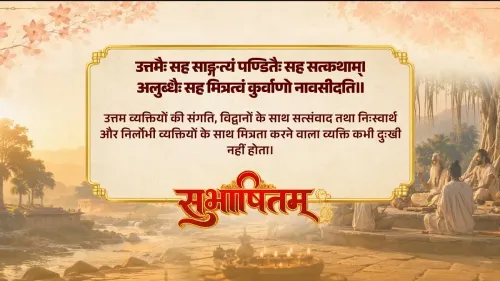
The verse quoted — asato mā sadgamaya, tamaso mā jyotirgamaya, mṛtyormā amṛtaṃ gamaya — is from the Brihadaranyaka Upanishad and translates as 'Lead me from untruth to truth, from darkness to light, from death to immortality.' Gandhi addressed the post to 'Dadi', understood to refer to former Prime Minister Indira Gandhi , his paternal grandmother.
Indira Gandhi was assassinated in 1984 when Rahul Gandhi was approximately fourteen years old.
The post carries no political messaging — it is an intimate personal reflection on a childhood spiritual memory.
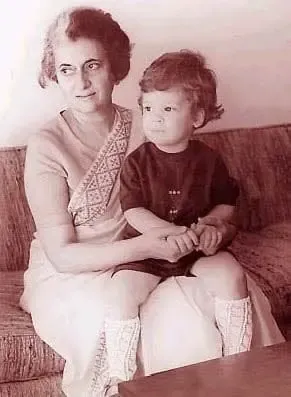
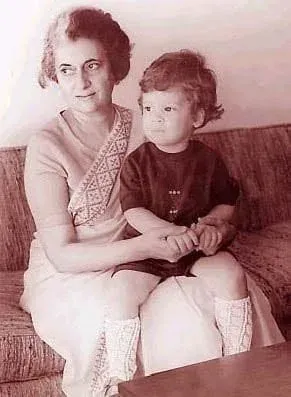
A childhood memory, a grandmother's lap, and three lines from the Brihadaranyaka Upanishad — Congress leader Rahul Gandhi shared a rare, deeply personal moment on Saturday, 31 October 2026, recounting how his grandmother first taught him one of Hinduism's most revered prayers.
In his post, Gandhi describes the scene with striking intimacy: 'Sitting on your lap. Holding both your hands. Listening to your voice say these words.' The prayer he quotes — asato mā sadgamaya, tamaso mā jyotirgamaya, mṛtyormā amṛtaṃ gamaya — translates from Sanskrit as 'Lead me from untruth to truth, from darkness to light, from death to immortality.' He closes with 'OM Shanti, shanti, Shanti' and addresses the memory directly: 'What a beautiful gift you gave me Dadi. What a gift. I never imagined.'
The Shloka and Its Weight
The verse Gandhi quotes belongs to the Brihadaranyaka Upanishad, one of the oldest Upanishads in the Hindu scriptural tradition, and is among the most widely recited Sanskrit shlokas across India. Chanted at school assemblies, religious ceremonies, and moments of quiet prayer alike, it carries a universality that cuts across region and caste. That Gandhi connects it not to a temple or a teacher but to a grandmother's lap gives it a different kind of gravity — personal, not performative.
Indira Gandhi's Quiet Inheritance
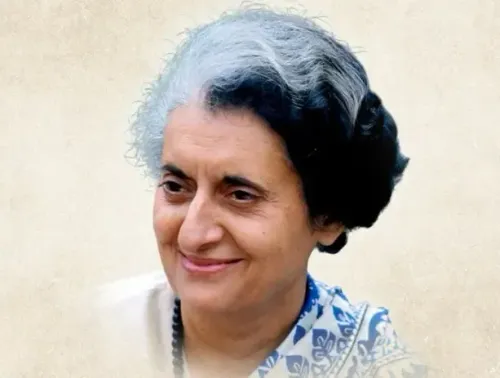
The 'Dadi' in the post is understood to refer to Indira Gandhi, former Prime Minister of India and Rahul Gandhi's paternal grandmother. Assassinated in 1984 when Rahul was just fourteen, Indira Gandhi has remained a towering presence in the family's public identity — and, it now emerges, a formative one in his private spiritual life. The image of a future Leader of the Opposition receiving his first lesson in Sanskrit prayer on his grandmother's lap carries the kind of quiet biographical detail that rarely surfaces in political life.
Indian political figures periodically share personal reflections on social media, but posts of this texture — unhurried, unguarded, reaching for something genuinely felt — are uncommon. There is no policy ask here, no adversarial edge. Just a man in his mid-fifties, marking what appears to be a day of remembrance, letting a childhood scene speak for itself.
A grandmother passed on three lines of Sanskrit. Decades later, they still echo.
Point of View
Who has spent years navigating questions about his Hindu identity and spiritual authenticity, a memory this specific — a grandmother, a lap, a Sanskrit verse — is its own kind of statement, one no press conference could manufacture. It also lands on 31 October, the death anniversary of Indira Gandhi, lending the tribute an obvious but unspoken occasion. The broader pattern is worth noting: Indian political heirs carry their family histories as both inheritance and burden, and the occasional glimpse of the private person behind the public position tends to land differently than any policy announcement.
NationPress
31 Oct 2026
Frequently Asked Questions
What shloka did Rahul Gandhi quote in his post?
He quoted the Shanti Mantra from the Brihadaranyaka Upanishad: 'asato mā sadgamaya, tamaso mā jyotirgamaya, mṛtyormā amṛtaṃ gamaya', meaning 'Lead me from untruth to truth, from darkness to light, from death to immortality.'
Who is 'Dadi' in Rahul Gandhi's post?
'Dadi' refers to Rahul Gandhi's paternal grandmother, former Prime Minister of India Indira Gandhi, who was assassinated on 31 October 1984.
Why did Rahul Gandhi post this on 31 October?
31 October is the death anniversary of Indira Gandhi, making it a significant day of remembrance for the Gandhi family, though Gandhi's post does not state the occasion explicitly.
What does 'asato mā sadgamaya' mean in English?
The phrase is Sanskrit for 'Lead me from untruth to truth.' It is the opening line of a three-part Shanti Mantra from the Brihadaranyaka Upanishad, one of Hinduism's oldest sacred texts.
What is Rahul Gandhi's current political position?
Rahul Gandhi is the Leader of the Opposition in the Lok Sabha and an Indian National Congress Member of Parliament from the Rae Bareli constituency.