Rahul Gandhi thanks Aaditya Thackeray, invokes Idea of India
Synopsis
Congress leader Rahul Gandhi publicly thanked Shiv Sena (UBT) leader Aaditya Thackeray for his wishes on June 19, 2026, invoking the 'Idea of India' and Maharashtra's progressive spirit as the values uniting their opposition partnership.
Key Takeaways
Rahul Gandhi responded to warm wishes from Aaditya Thackeray in a post on X on June 19, 2026 .
Gandhi invoked the 'Idea of India' and the 'progressive, inclusive spirit of Maharashtra ' as shared values.
The exchange reflects the continuing alignment between Congress and Shiv Sena (UBT) since the 2022 Shiv Sena split.
Both parties are part of the Maha Vikas Aghadi coalition and the national INDIA opposition platform formed in 2023 .
Political observers will watch for formal alliance or seat-sharing moves ahead of the next Maharashtra assembly cycle.
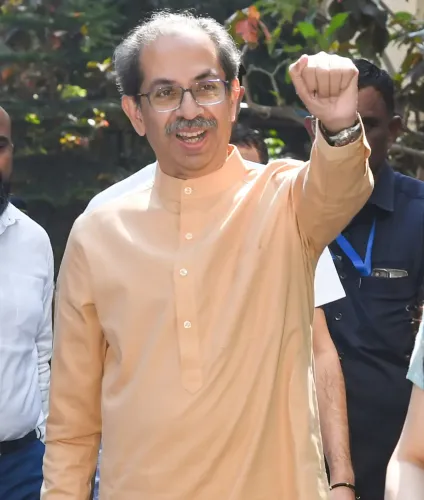
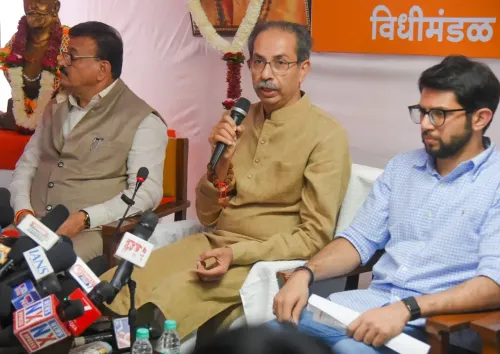
Congress leader Rahul Gandhi, Leader of the Opposition in the Lok Sabha, responded on Friday, June 19, 2026, to warm wishes extended by Shiv Sena (UBT) leader Aaditya Thackeray, invoking the 'Idea of India' and the progressive spirit of Maharashtra as shared values binding their political partnership.
Context
In his post on X, Gandhi wrote: 'Thank you, Aaditya ji, for your warm wishes. The Idea of India and the progressive, inclusive spirit of Maharashtra will continue to unite our path.' The exchange is a public affirmation of the continuing alignment between the Indian National Congress and the Shiv Sena (UBT) faction led by Uddhav Thackeray, of which Aaditya Thackeray is a prominent face.
The phrase 'Idea of India' is a recurring touchstone in Gandhi's political vocabulary, used to articulate a vision of secular, pluralist and constitutionally grounded governance. Pairing it with Maharashtra's identity signals that the Congress leader views the state as a natural home for that outlook.
Policy Backdrop
The Congress-Shiv Sena (UBT) relationship has its roots in the Maha Vikas Aghadi (MVA) coalition formed in 2019, when Congress, Shiv Sena and the Nationalist Congress Party joined hands to form the Maharashtra government. That arrangement collapsed in 2022 when a faction of the original Shiv Sena broke away, triggering the fall of the Uddhav Thackeray-led government.
After the split, the Uddhav faction distanced itself from the BJP and renewed coordination with Congress. This realignment was institutionalised at the national level when opposition parties, including Congress and Shiv Sena (UBT), came together under the INDIA platform in 2023 to jointly contest the BJP-led NDA. Public exchanges between leaders of the two parties have since become a regular feature of opposition signalling in western India.
Stakeholders and Impact
Aaditya Thackeray, a former Maharashtra cabinet minister and the public face of the younger Thackeray generation, has cultivated a reputation for urban and environmental advocacy. His outreach to Gandhi — and Gandhi's visible, warm response — reinforces the personal dimension of the Congress-Shiv Sena (UBT) alliance, which analysts note goes beyond transactional seat-sharing.
For Maharashtra voters, particularly in urban constituencies such as Mumbai, these exchanges carry symbolic weight: they signal that the two parties intend to present a united front. Opposition parties in the state have positioned the MVA framework as a counterweight to the ruling alliance, and high-profile social-media interactions between leaders help sustain that narrative between formal electoral cycles.
What's Next
Political observers will watch for any formal joint statements or seat-sharing discussions between Congress and Shiv Sena (UBT) as the next Maharashtra assembly cycle draws closer. The pattern of public affirmations — combining personal courtesy with references to shared secular values — has historically preceded more concrete organisational coordination between the two parties.
Whether this exchange marks the beginning of a fresh round of alliance talks, or remains a courteous gesture within an already established framework, will become clearer in the weeks ahead as political activity in Maharashtra picks up.
Point of View
' Gandhi frames the alliance not as opportunistic but as ideologically grounded, a framing both parties have cultivated since the 2022 split. The exchange fits a broader pattern in which senior leaders use social media to sustain alliance optics between formal organisational meetings. For Aaditya Thackeray, a public acknowledgement from the Leader of the Opposition carries its own signal value within the competitive landscape of Maharashtra's opposition space.
NationPress
19 Sept 2026
Frequently Asked Questions
Why did Rahul Gandhi thank Aaditya Thackeray?
Rahul Gandhi thanked Aaditya Thackeray for extending warm wishes to him, responding publicly on X on June 19, 2026, and using the occasion to reaffirm their shared political values.
What is the 'Idea of India' that Rahul Gandhi often mentions?
The 'Idea of India' is a phrase Gandhi uses to describe a vision of secular, pluralist and constitutionally grounded governance, drawing on the founding principles of the Indian republic.
What is the Congress and Shiv Sena (UBT) alliance?
Congress and Shiv Sena (UBT) are partners in the Maha Vikas Aghadi coalition in Maharashtra, an arrangement that took shape in 2019 and was reinforced after the Shiv Sena split in 2022 when the Uddhav Thackeray faction broke from the BJP.
Who is Aaditya Thackeray?
Aaditya Thackeray is a leader of the Shiv Sena (UBT) faction and son of former Maharashtra Chief Minister Uddhav Thackeray; he served as a cabinet minister during the MVA government and is a prominent voice in Maharashtra opposition politics.
What is the Maha Vikas Aghadi?
The Maha Vikas Aghadi is a coalition of Congress, Shiv Sena (UBT) and the Nationalist Congress Party (UBT faction) that governed Maharashtra from 2019 to 2022 and continues to function as the principal opposition alliance in the state.