Rahul, Priyanka Gandhi released after detention at Delhi Opposition protest
Synopsis
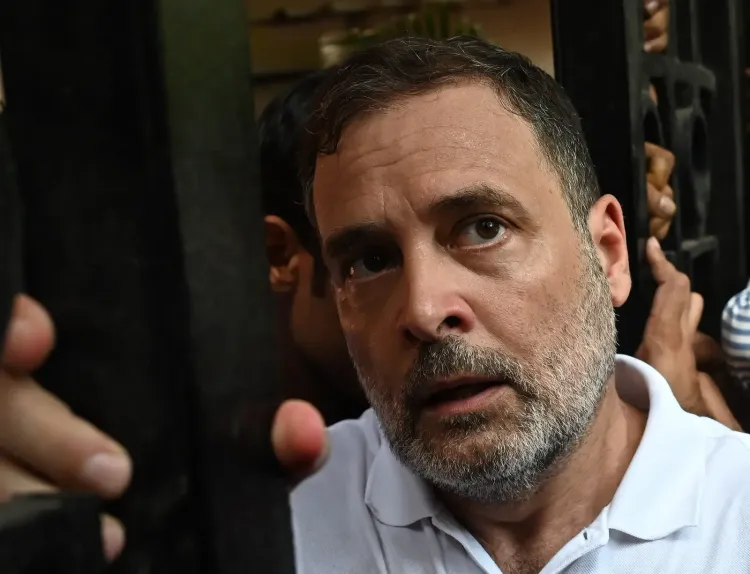
Rahul Gandhi and Priyanka Gandhi Vadra were detained — then released hours later — after leading INDIA bloc MPs in an audacious sit-in outside Akashvani Bhawan, scaling police barricades and entering the premises despite orders to disperse. At the heart of the standoff: Opposition demands for CEC Gyanesh Kumar's resignation and a halt to the contested Special Intensive Revision of electoral rolls.
Key Takeaways
Rahul Gandhi , Priyanka Gandhi Vadra and other INDIA bloc leaders were released by Delhi Police on Tuesday evening, 6 October , hours after detention.
The protest was held near Akashvani Bhawan on Parliament Street after police blocked a march to the Election Commission of India office.
Opposition parties are demanding the resignation of Chief Election Commissioner Gyanesh Kumar and action over the Special Intensive Revision (SIR) of electoral rolls.
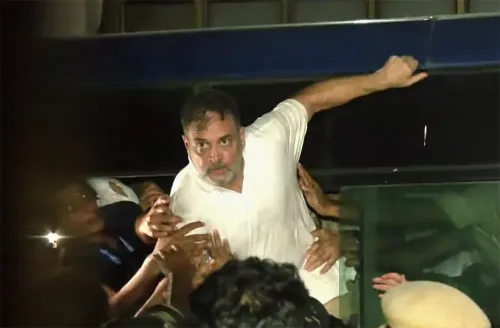
Rahul Gandhi and TMC MP Abhishek Banerjee were seen climbing over police barricades during the demonstration.
Priyanka Gandhi Vadra was briefly escorted to a detention bus but stepped out and rejoined the protest.
A formal meeting with the Election Commission , as demanded by the Opposition, remains unconfirmed.
Congress leaders Rahul Gandhi, Priyanka Gandhi Vadra, and other INDIA bloc leaders were released by Delhi Police on Tuesday evening, 6 October, hours after being detained during a large Opposition demonstration in New Delhi. The protest centred on demands for action against Chief Election Commissioner (CEC) Gyanesh Kumar and for a rollback of the ongoing Special Intensive Revision (SIR) of electoral rolls, according to sources.
How the Protest Unfolded
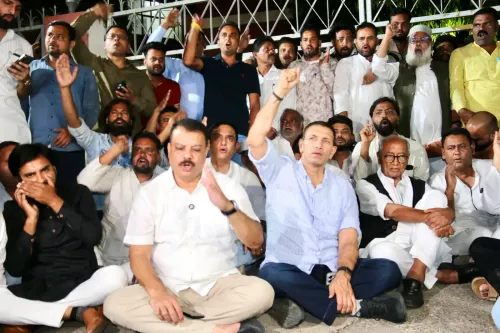
Opposition MPs, including Rahul Gandhi and Priyanka Gandhi Vadra, gathered near Akashvani Bhawan on Parliament Street after police stopped them from marching towards the Election Commission of India office. Amarinder Singh Raja Warring, the outgoing chief of the Punjab Pradesh Congress Committee (PPCC), was also present alongside the Gandhi siblings as officers urged the crowd to disperse.
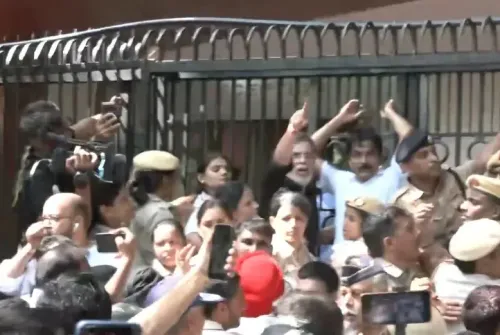
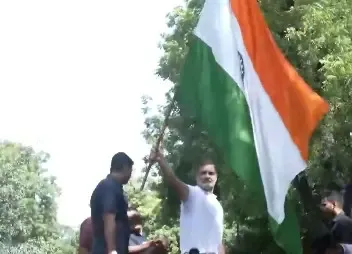
After being blocked from proceeding, the leaders staged a sit-in on the road. Rahul Gandhi and Trinamool Congress (TMC) MP Abhishek Banerjee were subsequently seen scaling a police barricade. Priyanka Gandhi Vadra was led to a waiting bus for detention but stepped out shortly after and rejoined the protest near the Akashvani gate.
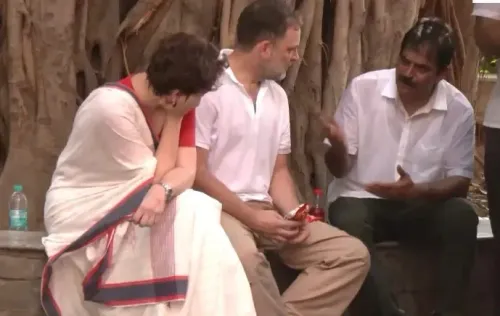
The protest leadership then entered the Akashvani Bhawan premises through the reception gate despite police resistance. Rahul Gandhi, Priyanka Gandhi Vadra, and Congress MP Deepender Hooda were later seen seated under a tree inside the compound.
Police Position and Warnings
Delhi Police had earlier warned that the demonstration at Akashvani Bhawan would not be permitted to continue through the night. Protesters were told to vacate the premises, with authorities stating that those who refused to leave would face detention. Congress had alleged that the police were specifically attempting to detain Rahul Gandhi and other Opposition MPs from the protest site.
The Core Demand: CEC Resignation and Electoral Roll Revision
The Opposition's central grievances are the Special Intensive Revision (SIR) of electoral rolls — which several parties have described as opaque and procedurally flawed — and the conduct of CEC Gyanesh Kumar. Opposition parties have demanded his resignation and sought a formal meeting with the Election Commission of India to raise their concerns over the revision exercise.
This is among the most dramatic instances of parliamentary Opposition leaders being detained in the capital in recent memory, and it marks an escalation in tensions between the INDIA bloc and the Election Commission ahead of a politically sensitive period.
What Happens Next
With the leaders released as of Tuesday evening, the Opposition is expected to deliberate on its next course of action, including whether to escalate its campaign over the electoral roll revision. The Election Commission of India has not issued a public statement in response to the protest demands, and a formal meeting — as demanded by the Opposition — remains pending.
Point of View
Regardless of the legal basis for it. The Opposition's specific target, the Special Intensive Revision of electoral rolls, is a substantive governance question that deserves scrutiny on its merits, yet the spectacle of barricade-climbing and overnight sit-in threats risks reducing a procedural accountability demand to a photogenic confrontation. The Election Commission has so far remained publicly silent — a posture that neither defuses the political pressure nor addresses the underlying concerns. How both sides manage the next 48 hours will signal whether this is a coordinated campaign or a one-day flash point.
NationPress
7 Oct 2026
Frequently Asked Questions
Why were Rahul Gandhi and Priyanka Gandhi Vadra detained by Delhi Police?
They were detained on 6 October during an Opposition protest near Akashvani Bhawan in New Delhi, where they were demonstrating against Chief Election Commissioner Gyanesh Kumar and the Special Intensive Revision of electoral rolls. Police had blocked the march and warned that protesters who refused to leave would be detained.
What is the Special Intensive Revision (SIR) of electoral rolls that the Opposition objects to?
The Special Intensive Revision is a process by which the Election Commission of India updates and revises voter rolls. Opposition parties have raised concerns about its methodology and transparency, alleging it could affect voter eligibility, and have demanded that the process be reconsidered.
Why is the Opposition demanding CEC Gyanesh Kumar's resignation?
Opposition parties allege that Chief Election Commissioner Gyanesh Kumar has not handled the electoral roll revision exercise fairly or transparently. They have linked the SIR process to broader concerns about electoral integrity and called for his resignation as part of their protest demands.
Were any other leaders involved in the protest apart from the Gandhi siblings?
Yes, the protest saw participation from Amarinder Singh Raja Warring of the Punjab Pradesh Congress Committee (PPCC), Trinamool Congress MP Abhishek Banerjee, and Congress MP Deepender Hooda, among other INDIA bloc members.
What happens next after the leaders were released?
As of Tuesday evening, the released leaders are expected to decide their next steps, including whether to escalate the campaign over the electoral roll revision. A formal meeting with the Election Commission, which the Opposition has demanded, has not yet been confirmed.