Rajasthan CM Bhajanlal: Over 1.78 Lakh Govt Jobs Filled
Synopsis
The Chief Minister's Office of Rajasthan announced on 3 August 2026 that the Bhajanlal Sharma government has made over 1,78,000 government appointments, positioning the figure as a direct fulfilment of the BJP's promise to clear recruitment backlogs and address youth unemployment in the state.
Key Takeaways
The Rajasthan CMO announced over 1,78,000 government appointments under the Bhajanlal Sharma administration.
The announcement was tagged to Chief Minister Bhajanlal Sharma and framed as fulfilling youth employment promises.
Bhajanlal Sharma took office in December 2023 after the BJP won the Rajasthan assembly elections.
Recruitment in Rajasthan is primarily conducted through the RPSC and RSSB , covering teachers, constables, and clerical posts.
The announcement does not specify a departmental breakdown or the share of vacancies still pending.
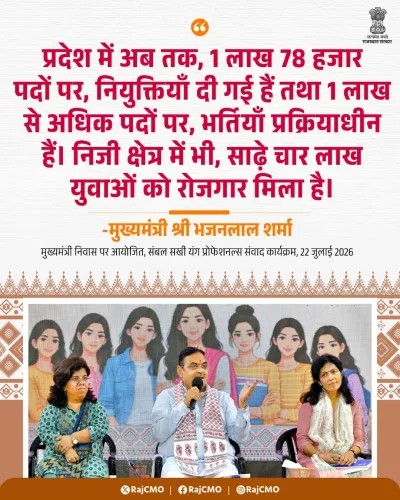
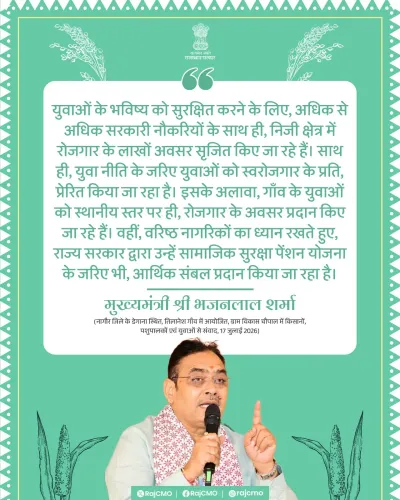
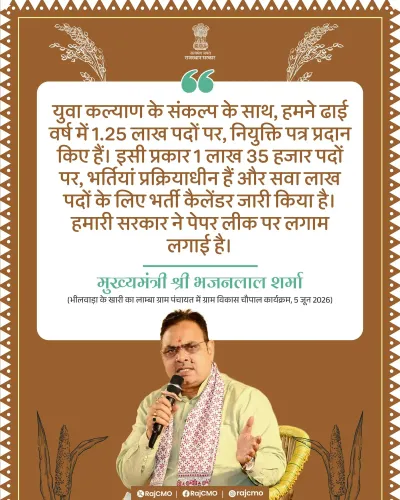
More than 1,78,000 government appointments delivered — that is the headline number the Chief Minister's Office of Rajasthan put on record on Monday, 3 August 2026, framing it as the Bhajanlal Sharma-led government turning the dream of sarkari naukri into reality for the state's youth.
The post, tagged to Chief Minister Bhajanlal Sharma and carrying the hashtag #आपणो_अग्रणी_राजस्थान ('Our Leading Rajasthan'), declared: 'Fulfilling the dreams of youth for government jobs, more than 1 lakh 78 thousand appointments have been given.' The number is the sharpest single metric the administration has put forward to demonstrate delivery on employment promises.
A BJP promise, now a headline figure
Bhajanlal Sharma was sworn in as Chief Minister of Rajasthan in December 2023 after the Bharatiya Janata Party won the state assembly elections. One of the incoming government's early commitments was to clear a backlog of pending recruitments across departments — vacancies that had accumulated over years across teaching, police, and clerical cadres.
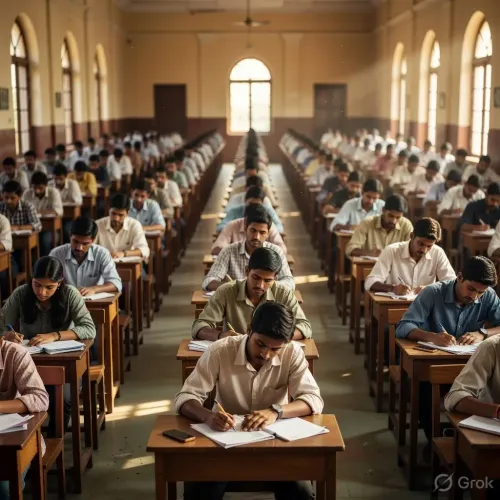
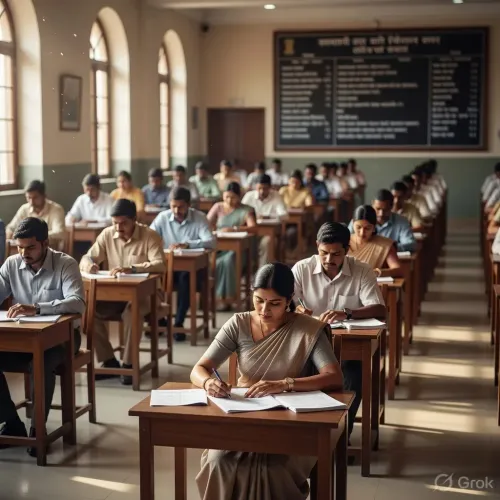
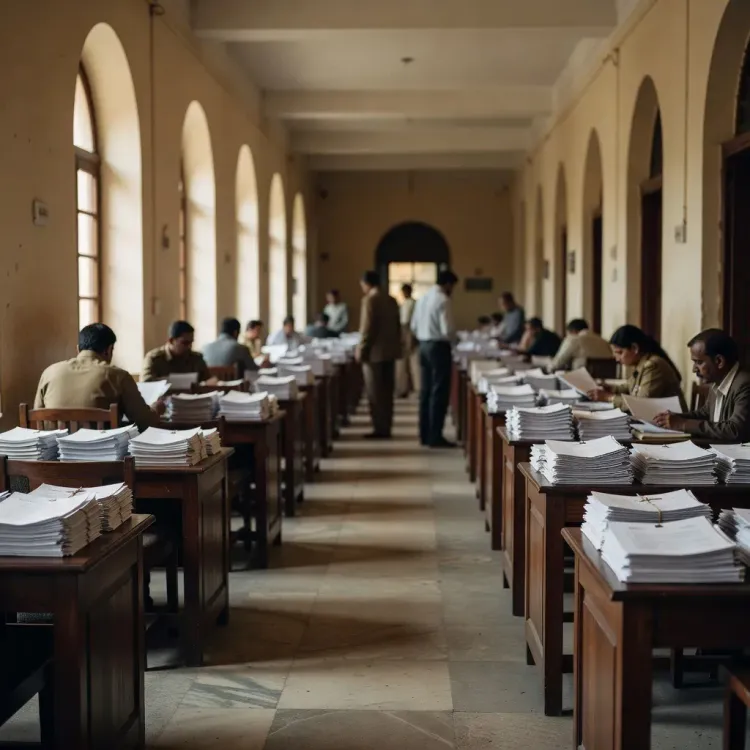
Rajasthan's two primary hiring bodies — the Rajasthan Public Service Commission (RPSC) and the Rajasthan Subordinate and Ministerial Services Selection Board (RSSB) — have historically driven large-scale hiring cycles for posts ranging from constables to schoolteachers. Youth unemployment in the state has been a persistent political pressure point, making aggregate appointment numbers a potent signal to voters.
Why governments count — and announce — every hire
Across Indian states, publicising cumulative recruitment tallies has become a standard tool of governance communication. The logic is straightforward: a concrete number cuts through policy noise, speaks directly to job-seeking families, and anchors a government's delivery narrative ahead of the next electoral cycle. A figure above 1.78 lakh is significant in scale — it represents careers, household incomes, and, in Rajasthan's social fabric, the prestige that a government post still commands.
What the announcement does not detail — departmental breakdown, the timeline over which these appointments were made, or the share of vacancies still pending — will likely be the next set of questions aspirants and opposition voices press for.
Point of View
78,000 figure is the Bhajanlal Sharma government's most concrete employment metric to date, and its timing — mid-term — suggests the BJP is building a delivery narrative well ahead of the next Rajasthan election cycle. Recruitment numbers have long been a decisive political currency in the state, where sarkari jobs carry outsized social weight. The announcement, however, invites scrutiny: without a departmental breakdown or a baseline of total vacancies, the figure is a headline, not yet a full accountability report. Whether the RPSC and RSSB pipelines can sustain this pace — and how many posts remain unfilled — will determine if the number holds its political weight.
NationPress
17 Sept 2026
Frequently Asked Questions
How many government jobs has the Rajasthan government given under Bhajanlal Sharma?
The Rajasthan Chief Minister's Office announced that over 1,78,000 government appointments have been made under the Bhajanlal Sharma administration as of August 2026.
Which body conducts government recruitment in Rajasthan?
Government recruitment in Rajasthan is primarily conducted by the Rajasthan Public Service Commission (RPSC) and the Rajasthan Subordinate and Ministerial Services Selection Board (RSSB) , covering a wide range of posts including teachers, constables, and clerical staff.
When did Bhajanlal Sharma become Chief Minister of Rajasthan?
Bhajanlal Sharma was sworn in as Chief Minister of Rajasthan in December 2023 after the Bharatiya Janata Party won the state assembly elections.
What is #AapnoAgraniRajasthan?
#आपणो_अग्रणी_राजस्थान translates to 'Our Leading Rajasthan' and is a campaign hashtag used by the Rajasthan government to promote its development and governance initiatives.
What types of government jobs are included in Rajasthan's recruitment drives?
Rajasthan's large-scale hiring drives have historically covered posts for schoolteachers, police constables, and clerical cadres , among others, recruited through the RPSC and RSSB.