Rajasthan CMO spotlights AI, robotics push via Atal Innovation Studio

Synopsis
The Rajasthan CMO announced on 14 August 2026 that the Atal Innovation Studio and Accelerator is driving work in AI, AVGC-XR, gaming, and robotics, signalling the state's push to build a frontier-technology innovation ecosystem under CM Bhajanlal Sharma.
Key Takeaways
The Chief Minister's Office of Rajasthan posted on 14 August 2026 highlighting the Atal Innovation Studio and Accelerator .
The programme covers four sectors: Artificial Intelligence, AVGC-XR, gaming, and robotics .
The initiative is tagged to Chief Minister Bhajanlal Sharma under the #आपणो_अग्रणी_राजस्थान campaign.
The studio draws conceptual lineage from the National Atal Innovation Mission launched by NITI Aayog in 2016 .
Specific operational details — funding, cohort size, and industry partnerships — have not yet been publicly disclosed.
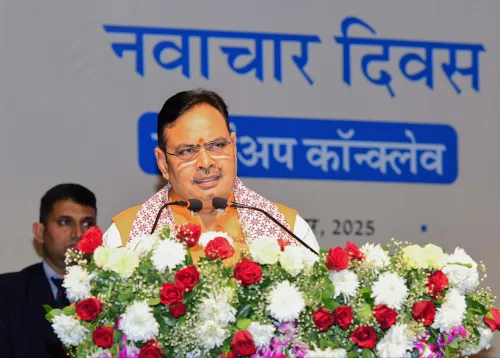
Rajasthan is staking its technology future on a cluster of frontier sectors — and the state's own accelerator is the vehicle driving that bet. The Chief Minister's Office of Rajasthan highlighted on 14 August 2026 that work is actively underway in AI, AVGC-XR, gaming, and robotics through the Atal Innovation Studio and Accelerator, tagging Chief Minister Bhajanlal Sharma in the post under the campaign hashtag #आपणो_अग्रणी_राजस्थान ('Our Leading Rajasthan').
What the Atal Innovation Studio and Accelerator covers
The Atal Innovation Studio and Accelerator is a Rajasthan government initiative designed to channel support — mentorship, infrastructure, and ecosystem access — toward startups and young innovators working in high-growth technology verticals. The four sectors named in the post are deliberate choices: Artificial Intelligence, AVGC-XR (Animation, Visual Effects, Gaming and Comics, extended into extended reality), gaming, and robotics together represent the industries that global forecasters and Indian policymakers have identified as the next major employment and export frontiers.
Rajasthan's play within a national innovation arc
The programme draws its name and conceptual lineage from the National Atal Innovation Mission, launched in 2016 by NITI Aayog to seed entrepreneurship and innovation across India. Rajasthan's state-level studio extends that architecture into a hands-on accelerator format, targeting sectors where the state currently has limited but growing industrial presence. The AVGC-XR segment in particular aligns with a central government push to make India a global content-production hub — a policy direction that has gained significant momentum in recent years.
CM Bhajanlal Sharma and the 'Agrani Rajasthan' push
Chief Minister Bhajanlal Sharma, who leads the BJP government in Rajasthan, has anchored several state development narratives around the 'Agrani Rajasthan' ('Leading Rajasthan') brand — a framing that positions the state as a proactive, forward-looking economy rather than a laggard catching up. The CMO's post on the eve of Independence Day 2026 is timed to reinforce that image: technology self-reliance as a form of national aspiration, not just administrative routine.
The immediate question for observers is whether programme implementation — funding allocations, cohort sizes, and industry partnerships — matches the ambition of the sectors named. Those details remain to be disclosed publicly, but the political signal is clear: Rajasthan is positioning its innovation identity around the technologies that will define the next decade.
Point of View
Aligning Rajasthan with the national technology self-reliance narrative. By naming AVGC-XR alongside AI and robotics, the state is signalling ambition in sectors where central policy support is strong but state-level execution remains uneven. For CM Bhajanlal Sharma, the 'Agrani Rajasthan' branding serves a dual purpose: differentiating the BJP government's development record and attracting investor attention in high-visibility tech verticals. The real test will be whether programme outcomes — startups funded, jobs created, partnerships signed — are disclosed with the same visibility as the announcement.
NationPress
28 Sept 2026
Frequently Asked Questions
What is the Atal Innovation Studio and Accelerator in Rajasthan?
It is a Rajasthan government initiative that supports startups and young innovators in emerging technology sectors including AI, AVGC-XR, gaming, and robotics, drawing inspiration from the national Atal Innovation Mission.
What does AVGC-XR stand for in Rajasthan's tech programme?
AVGC-XR stands for Animation, Visual Effects, Gaming and Comics extended into Extended Reality — a high-growth sector that the central government has also identified as a priority for India's content and technology exports.
Who is Bhajanlal Sharma and what is his role in this initiative?
Bhajanlal Sharma is the Chief Minister of Rajasthan representing the BJP. The CMO tagged him in the post, associating the Atal Innovation Studio and Accelerator directly with his administration's development agenda.
What is the 'Agrani Rajasthan' campaign?
Agrani Rajasthan ('Leading Rajasthan') is a branding campaign used by the Rajasthan government to frame the state as a proactive, forward-looking economy, particularly in the context of development and technology initiatives.
How does Rajasthan's Atal Innovation Studio relate to the national Atal Innovation Mission?
The national Atal Innovation Mission was launched by NITI Aayog in 2016 to promote entrepreneurship across India. Rajasthan's studio extends that framework at the state level with a focus on frontier technology sectors.