Rajasthan CMO reaffirms focus on poor, youth, farmers, women
Synopsis
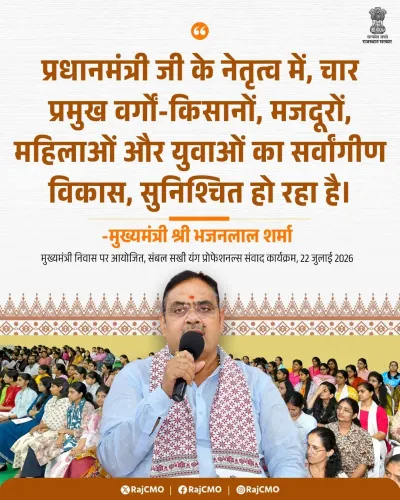
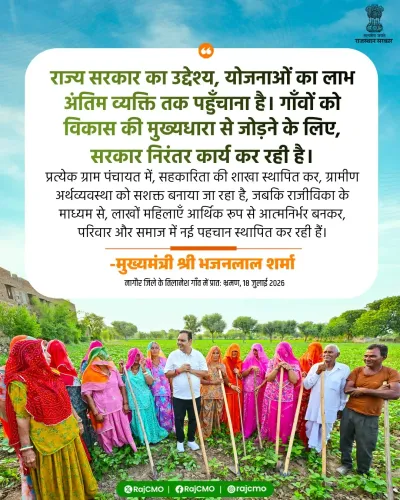
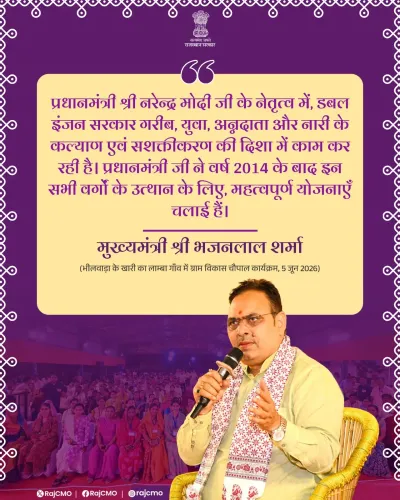
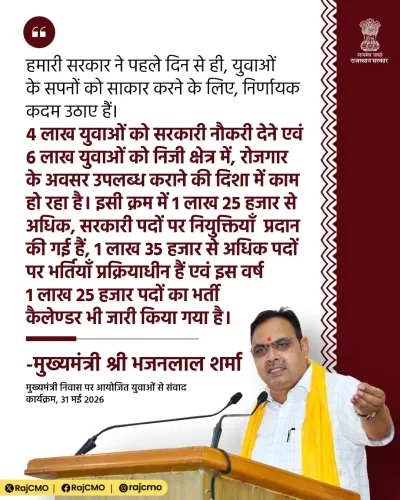
The Chief Minister's Office of Rajasthan on 11 June 2026 reaffirmed that CM Bhajan Lal Sharma's government is placing the poor, youth, farmers, and women at the centre of its policies, framing the approach as aligned with Prime Minister Narendra Modi's governance vision.
Key Takeaways
The Chief Minister's Office of Rajasthan posted the statement on 11 June 2026 , attributing the governance direction to PM Narendra Modi's stated intent.
CM Bhajan Lal Sharma has led Rajasthan since December 2023 , when the BJP won the state assembly elections.
The four priority groups named are the poor, youth, farmers (annadata) , and women (nari shakti) — a framework consistent with BJP governance communication nationally since 2014.
The post was tagged under #AapnoAgrani_Rajasthan , the current administration's state-branding hashtag.
No specific new scheme or financial outlay was announced; the statement articulates an overarching policy orientation.
Concrete translation of these priorities will be visible in upcoming state budget documents and cabinet decisions .
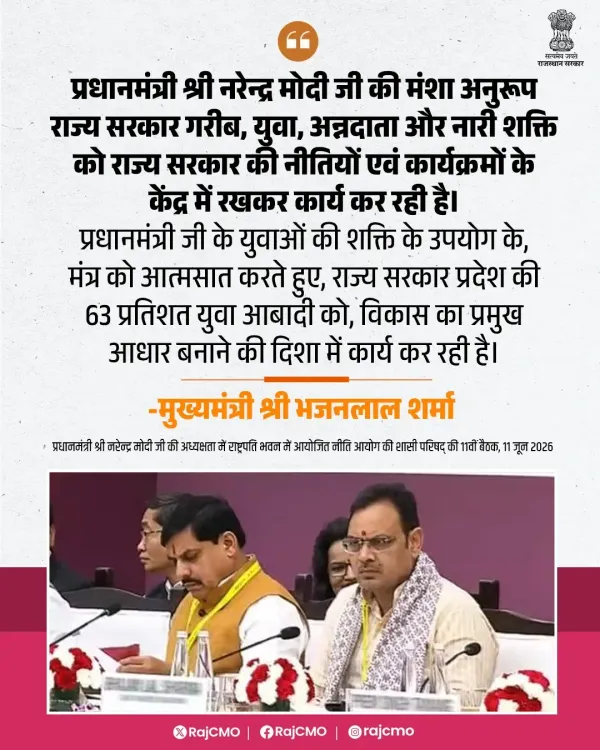
The Chief Minister's Office of Rajasthan on Thursday, 11 June 2026 reaffirmed that the state government is working with the poor, youth, farmers, and women at the centre of its policies and programmes, framing this approach as aligned with the vision of Prime Minister Narendra Modi.
The post, attributed to the office of Chief Minister Bhajan Lal Sharma and tagged to his official handle @BhajanlalBjp, stated in Hindi: 'Pradhan Mantri Shri Narendra Modi ji ki mansha anurup rajya sarkar garib, yuva, annadata aur nari shakti ko, rajya sarkar ki neetiyon evam karyakramon ke kendra mein rakhkar karya kar rahi hai' — meaning, 'In keeping with the intent of Prime Minister Shri Narendra Modi, the state government is working by keeping the poor, youth, farmers (annadata) and women's power (nari shakti) at the centre of the state government's policies and programmes.'
Context
The statement was posted under the hashtag #AapnoAgrani_Rajasthan (Aapno Agrani Rajasthan, meaning 'Our Leading Rajasthan'), a branding phrase the current administration has used to signal a forward-looking governance identity for the state. The post does not announce a specific scheme or budget outlay but articulates the overarching priority framework the government says guides its decisions.
Bhajan Lal Sharma took charge as Chief Minister of Rajasthan in December 2023 after the BJP won the state assembly elections, ending the previous Congress government's term. Since assuming office, the administration has publicly positioned its welfare agenda as complementary to central government priorities.
Policy Backdrop
The four demographic categories named in the post — the poor, youth, farmers, and women — have been a recurring framework in BJP-led governance communications at both the national and state levels since 2014. The formulation draws on Prime Minister Modi's stated development philosophy, which groups these four constituencies as primary beneficiaries of government action.
At the national level, flagship programmes such as direct benefit transfers, crop insurance, skill development initiatives, and women-centric welfare schemes have been grouped under this broad framework. State governments aligned with the BJP have increasingly mirrored this language to present their own programmes as part of a unified national development narrative.
Stakeholders and Impact
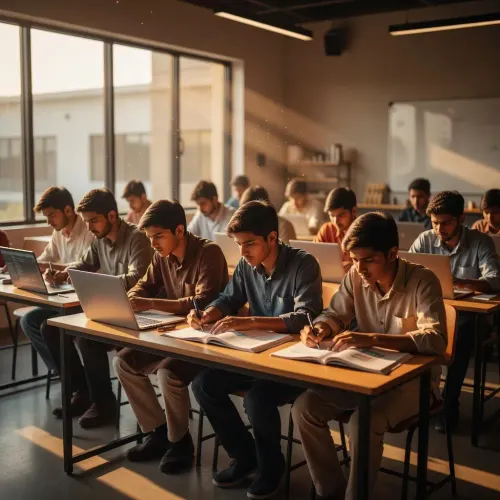
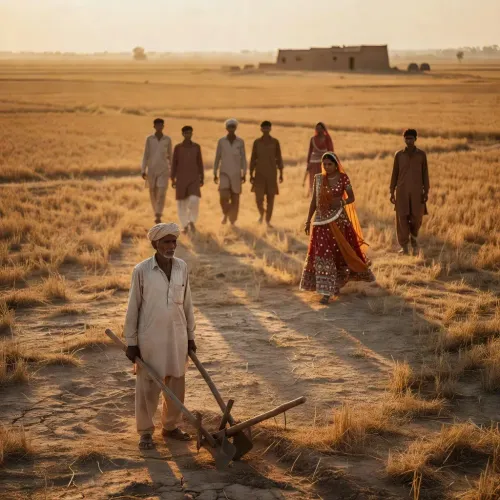
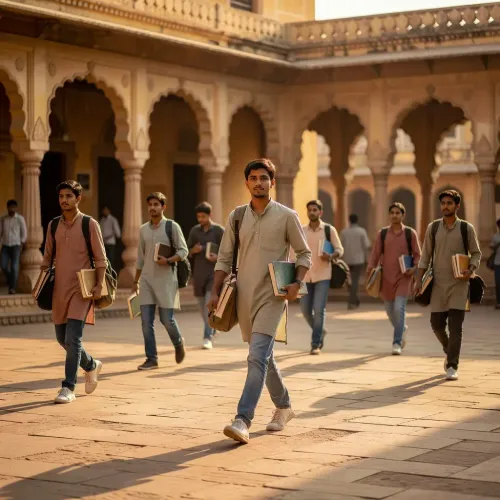
The groups directly invoked in the statement — poor citizens, youth, farmers (referred to in Hindi as annadata, literally 'the giver of food'), and women (referred to as nari shakti, meaning 'women's power') — together represent the vast majority of Rajasthan's population. The state has a large agrarian base and a significant proportion of citizens dependent on government welfare programmes.
For farmers in particular, Rajasthan's semi-arid geography makes state policy on irrigation, crop support, and insurance a critical concern. Similarly, youth employment and women's economic participation have been identified as priority areas by the current administration since it took office.
What's Next
The statement is a broad governance-intent communication rather than a specific policy announcement. Observers will watch for state budget documents, cabinet decisions, and scheme-level outlays that translate these stated priorities into concrete allocations and measurable targets. The framing also sets expectations for how the Rajasthan government will present its administrative record ahead of future political cycles. Whether the rhetoric is matched by programme-level delivery will be the test that stakeholders — particularly farmers, women's groups, and youth organisations — are likely to apply.
Point of View
Signalling ideological coherence to both the party's national command and the state electorate. By invoking PM Modi's 'intent' as the anchor for state policy, CM Bhajan Lal Sharma's office positions Rajasthan as a model implementer of the national development narrative rather than an independent policy actor. This is a deliberate political strategy: it allows the state government to borrow the Prime Minister's approval ratings while also insulating itself against criticism by framing any shortfall as a shared national challenge. The broader pattern, consistent across BJP-ruled states since 2014, suggests this messaging will intensify ahead of accountability periods such as budget sessions or mid-term political reviews.
NationPress
26 Oct 2026
Frequently Asked Questions
What did the Rajasthan CMO post about on 11 June 2026?
The Chief Minister's Office of Rajasthan posted that the state government is working with the poor, youth, farmers, and women at the centre of its policies and programmes, in keeping with the vision of Prime Minister Narendra Modi.
Who is the Chief Minister of Rajasthan in 2026?
Bhajan Lal Sharma of the BJP is the Chief Minister of Rajasthan, having assumed office in December 2023 after the state assembly elections.
What does 'annadata' mean in the Rajasthan CMO post?
'Annadata' is a Hindi term meaning 'giver of food' and is commonly used to refer to farmers, recognising their role in feeding the nation.
What is the hashtag #AapnoAgrani_Rajasthan about?
'Aapno Agrani Rajasthan' translates to 'Our Leading Rajasthan' and is a branding phrase used by the current Rajasthan government to communicate a forward-looking governance identity for the state.
What specific schemes did the Rajasthan government announce in this post?
No specific new scheme or financial outlay was announced in this post; it is a broad governance-intent statement affirming the priority groups the state government says guide its policies.