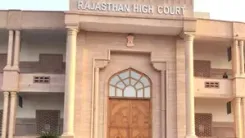
Rajasthan Denies Punjab's Water Royalty Demand as Unconstitutional
Synopsis
In a significant political development, Rajasthan has rejected Punjab's hefty water royalty claim, citing constitutional violations. This dispute underscores regional tensions over water rights and resource management, with Punjab vowing to escalate the issue legally.
Key Takeaways
Rajasthan firmly rejects Punjab's water royalty claim.
Claims deemed unconstitutional and legally unfounded .
Historical agreements govern water distribution without royalty clauses.
Punjab may escalate the issue legally .
Water management remains a contentious political issue in India.
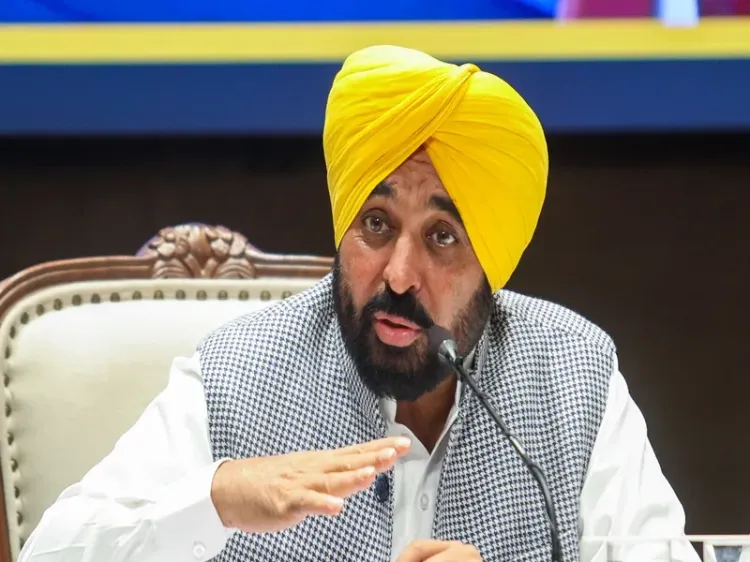
Jaipur, March 20 (NationPress) The government of Rajasthan has firmly dismissed the demand from Punjab Chief Minister Bhagwant Mann for Rs 1.44 lakh crore in water royalties, labeling it as unconstitutional and devoid of legal merit.
CM Mann referenced a 1920 agreement involving the British government, the princely state of Bikaner, and Bahawalpur (present-day Pakistan), insisting that Rajasthan either settle the alleged dues or cease its water extraction.
In a statement, Rajasthan's Water Resources Minister Suresh Singh Rawat clarified that the original agreement stipulated payments to the British government rather than to Punjab.
“Three agreements made post-Independence in 1955, 1959, and 1981 regarding the allocation and distribution of water from the Ravi, Beas, and Sutlej rivers lack any clauses concerning royalties or extra charges. Thus, Punjab's claim is factually incorrect and illegal,” asserted the minister.
Citing Article 262 of the Constitution, Rawat emphasized that inter-state river water is regarded as a national asset governed by Parliament, rather than a tradable commodity between states.
“For any individual state to demand a royalty on shared river water contradicts the Constitution and well-established legal principles,” he stated, reaffirming Rajasthan's dedication to safeguarding its farmers' rights.
Regarding water distribution, Rawat highlighted Rajasthan’s allotment of 8.00 MAF under the 1955 agreement and 8.60 MAF under the 1981 agreement, neither of which includes any royalty provisions.
Rajasthan currently receives its water supply via the Bikaner Canal, Rajasthan Feeder, Bhakra Main Line, and Sirhind Feeder, all under the auspices of the Bhakra Beas Management Board (BBMB) of the Government of India.
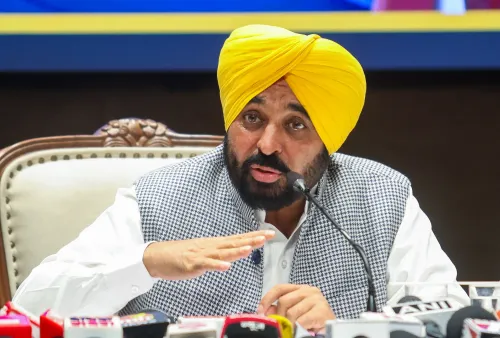
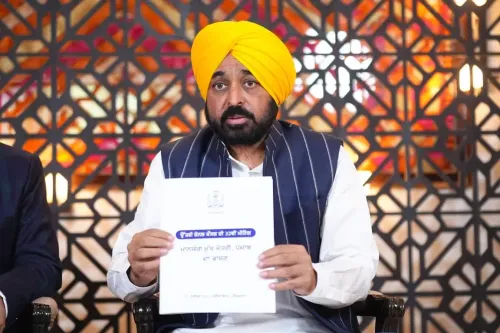
Following Rajasthan’s rebuttal, Punjab Chief Minister Bhagwant Mann declared during a press conference in Chandigarh that his government intends to take the matter to court.
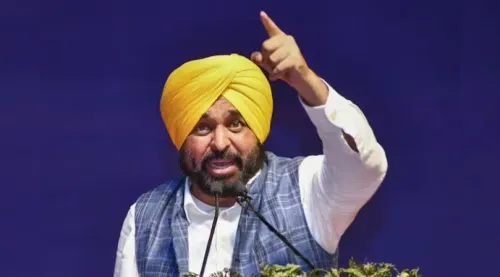
“Let them express their views there,” he remarked.
Mann previously contended that Rajasthan paid water royalties to Punjab until 1960 but ceased thereafter, leading to outstanding dues from 1960 to 2026 totaling Rs 1.44 lakh crore.
Water from Punjab is channeled to Rajasthan’s arid regions through the Indira Gandhi Canal.
Point of View
The outcome will significantly impact farmers and water management policies in the region.
NationPress
23 Sept 2026
Frequently Asked Questions
What prompted the water royalty dispute between Rajasthan and Punjab?
The dispute arose from Punjab's Chief Minister Bhagwant Mann's demand for Rs 1.44 lakh crore in water royalties, citing a historical agreement, which Rajasthan has rejected as unconstitutional.
What agreements govern water distribution between these states?
Three post-Independence agreements from 1955, 1959, and 1981 outline water use from the Ravi, Beas, and Sutlej rivers, without any provision for royalties.
How does Rajasthan receive its water supply?
Rajasthan obtains water through the Bikaner Canal, Rajasthan Feeder, Bhakra Main Line, and Sirhind Feeder, all regulated by the Bhakra Beas Management Board.
What legal actions is Punjab considering?
Following Rajasthan's rejection, Punjab plans to pursue the matter in court, as stated by Chief Minister Mann.
What is the historical context of the royalty claim?
Mann claims Rajasthan paid royalties until 1960 but has since stopped, leading to significant alleged dues accumulating over the years.