Rajnath Singh honours Sardar Patel on Rashtriya Ekta Diwas
Synopsis
Union Defence Minister Rajnath Singh honoured Sardar Vallabhbhai Patel on Rashtriya Ekta Diwas, saluting the Iron Man's role in uniting over 500 princely states and his enduring legacy of national unity and visionary leadership.
Key Takeaways
Rajnath Singh posted a Hindi tribute to Sardar Vallabhbhai Patel on his birth anniversary, October 31, 2026 .
Patel served as India's first Deputy Prime Minister and Home Minister , integrating over 500 princely states after independence in 1947 .
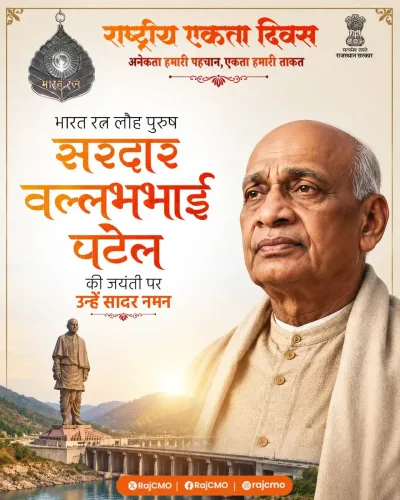
October 31 is observed as Rashtriya Ekta Diwas (National Unity Day) since 2014 in Patel's honour.
Singh praised Patel's 'unparalleled contribution to the freedom struggle' and his 'visionary leadership and organisational ability.' Annual ceremonies, including events at the Statue of Unity in Gujarat , mark the day across India.
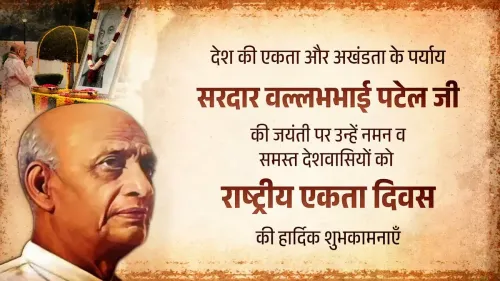
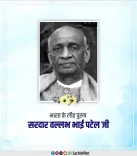
On the 150th birth anniversary of Sardar Vallabhbhai Patel — the man who stitched a fractured subcontinent into a single republic — Union Defence Minister Rajnath Singh paid his tribute on Saturday, October 31, 2026, saluting the Iron Man of India's indomitable courage, iron will, and unbroken devotion to the nation.
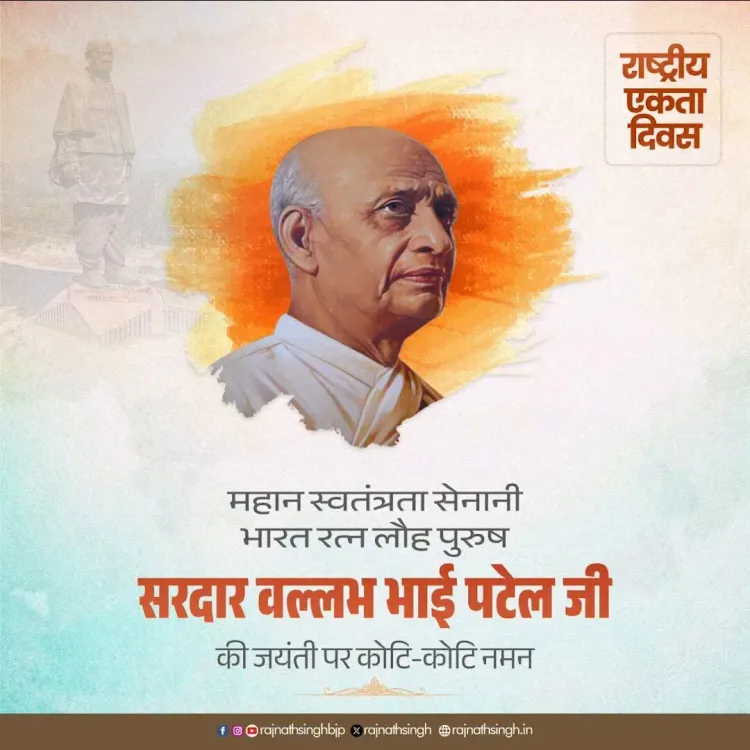
Posting in Hindi on X, Rajnath Singh wrote: 'भारत की एकता और अखंडता के शिल्पकार, लौह पुरुष सरदार वल्लभभाई पटेल जी की जयंती पर उन्हें कोटि-कोटि नमन' — 'Heartfelt salutations to Sardar Vallabhbhai Patel, the architect of India's unity and integrity, the Iron Man, on his birth anniversary.' He added that Patel's 'visionary leadership, extraordinary organisational ability, and spirit of national service will always inspire generations to come.'
The man who unified 500-plus princely states
Sardar Vallabhbhai Patel served as India's first Deputy Prime Minister and Home Minister after independence in 1947. His defining achievement was the integration of over 500 princely states into the Indian Union — a political feat that historians rank among the most consequential acts of statecraft in the 20th century. Where brute geography alone could not compel allegiance, Patel deployed a combination of persuasion, diplomacy, and, where necessary, decisive force.
Singh specifically invoked two pillars of Patel's legacy: his 'unparalleled contribution to the freedom struggle' and the 'integration of hundreds of princely states in independent India.' Together, those two chapters define why Patel's stature has only grown in India's national memory.
Rashtriya Ekta Diwas and the Statue of Unity
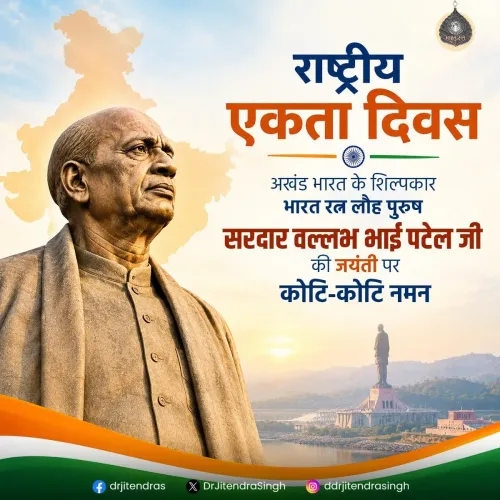
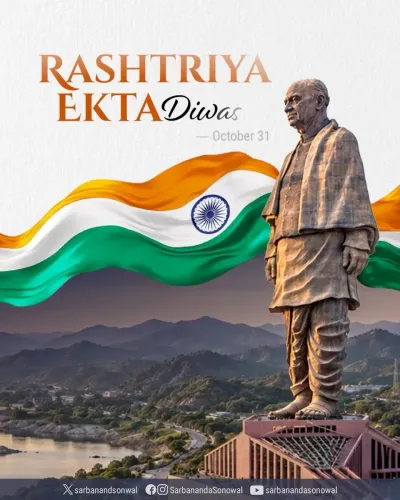
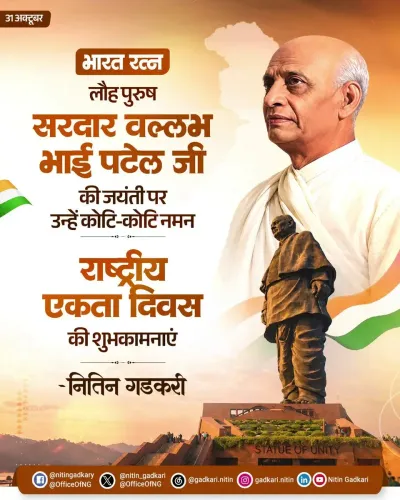
October 31 was declared Rashtriya Ekta Diwas (National Unity Day) in 2014 to formally commemorate Patel's birth anniversary and anchor his legacy in the official calendar. Every year, the day draws large-scale ceremonies — most visibly at the Statue of Unity in Gujarat, the world's tallest statue, built as a permanent monument to the Iron Man's memory. Run-and-unity marches, school pledges, and ministerial tributes roll out across the country in a coordinated act of national remembrance.
Singh's tribute is consistent with the broader official emphasis on Patel's role as the architect of territorial consolidation — a framing that successive governments have leaned into as both historical record and political inspiration.
Seventy-nine years after he began the task of building one India out of many, Sardar Patel's blueprint for unity remains the country's most durable political inheritance.
Point of View
Decade-long official project to elevate Patel's stature in India's founding narrative. Declaring October 31 a national unity day in 2014 was a policy choice that anchored Patel's legacy to the state calendar, ensuring annual, visible remembrance at the highest levels. For the BJP, Patel's emphasis on a strong, unified state and his administrative decisiveness resonates closely with the party's ideological posture on national integration. The tribute, therefore, is simultaneously historical reverence and a live articulation of governing philosophy.
NationPress
31 Oct 2026
Frequently Asked Questions
Why is October 31 celebrated as Rashtriya Ekta Diwas?
October 31 is observed as Rashtriya Ekta Diwas (National Unity Day) because it marks the birth anniversary of Sardar Vallabhbhai Patel . The day was officially declared in 2014 to honour his contribution to the unity and integrity of India.
What did Sardar Patel do for India after independence?
As India's first Deputy Prime Minister and Home Minister , Sardar Vallabhbhai Patel oversaw the integration of over 500 princely states into the Indian Union after 1947 , a process widely regarded as one of the greatest feats of modern statecraft.
Why is Sardar Patel called the Iron Man of India?
Sardar Vallabhbhai Patel is called the 'Iron Man of India' for his resolute determination in consolidating the nation after independence, particularly his firm handling of the integration of hundreds of princely states through diplomacy and decisive action.
What is the Statue of Unity and where is it?
The Statue of Unity is a monument dedicated to Sardar Vallabhbhai Patel located in Gujarat , India. It is the world's tallest statue and serves as the focal point of Rashtriya Ekta Diwas ceremonies every year on October 31 .
What did Rajnath Singh say about Sardar Patel on his birth anniversary?
Union Defence Minister Rajnath Singh praised Sardar Patel's 'unparalleled contribution to the freedom struggle,' his integration of hundreds of princely states, and called his visionary leadership and spirit of national service an eternal inspiration for future generations.