Will the Rajya Sabha Resolve the SIR Debate Amidst Tensions?
Click to start listening
Synopsis
The Rajya Sabha is embroiled in a contentious debate over the Special Intensive Revision (SIR) of electoral rolls, with opposition leaders demanding immediate discourse due to serious allegations of suicides and disenfranchisement. As tensions flare, the government's prioritization of Vande Mataram's anniversary sparks further conflict, highlighting deep divisions in the current session.
Key Takeaways
- Rajya Sabha Debates: Tension over electoral roll revisions.
- Opposition's Concerns: Claims of voter disenfranchisement and suicides.
- Government's Position: Prioritizing Vande Mataram's commemoration.
- Parliament Dynamics: Importance of procedural priorities amidst urgent issues.
- Future Discussions: Potential for comprehensive electoral reform dialogue.
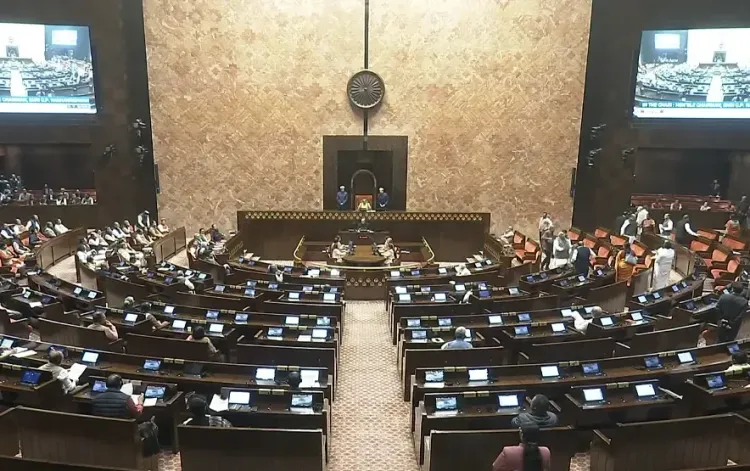
New Delhi, Dec 2 (NationPress) The Rajya Sabha found itself embroiled in a tense confrontation on Tuesday, as opposition figures, spearheaded by Congress stalwart Mallikarjun Kharge, demanded an immediate discussion regarding the Special Intensive Revision (SIR) of electoral rolls. They claimed that this process has led to tragic outcomes, including suicides and voter disenfranchisement affecting 12 states and union territories.
In contrast, the government acknowledged the concern but refrained from facilitating an immediate debate on the SIR.
The clash erupted shortly after 2:00 p.m., as proceedings resumed, with the opposition advocating for urgent measures while the government insisted on prioritizing a commemorative dialogue on the 150th anniversary of Vande Mataram.
Parliamentary Affairs Minister Kiren Rijiju's calm yet resolute rebuttal did little to quell the agitation, leading to points of order, reprimands from the Chair, and an eventual shift to legislative discussions, reflecting the widening divisions on the second day of the Winter Session.
As the session recommenced at 2 p.m., Chairman C.P. Radhakrishnan, amidst ongoing tensions from disruptions the previous day, granted the floor to Minister Rijiju.
Rijiju reaffirmed the government's willingness, stating, "We are prepared for an all-encompassing discussion on electoral reforms, including SIR. However, addressing Vande Mataram, a symbol that galvanized our freedom struggle and millions, first, is essential. This isn't the first time I've assured you; no need for overreactions, as it benefits no one."
He referenced the inaugural Business Advisory Committee (BAC) meeting, where the government suggested the Vande Mataram discussion slot, allocating time for listed items such as the Manipur Goods and Services Tax (Amendment) Bill. "In the all-party meeting yesterday, we engaged thoroughly. The opposition proposed commencing tomorrow at 2:00 p.m. to conclude by Thursday -- a reasonable suggestion. We'll finalize a date in consultation with leaders and the Chair. But please, no conditions on timelines. All issues matter: Vande Mataram honors our heritage; reforms assure our democracy's future," he conveyed.
Trinamool Congress' Derek O’Brien, invoking Rule 176, underscored the human stakes involved, stating, "Over 14 parties demand this due to the lives at stake. BLOs are buckling under pressure."
Chairman Radhakrishnan swiftly dismissed the point, replying, "You sought the minister's response; he has articulated it. Repeatedly raising the same issue disrupts the House."
Mallikarjun Kharge then addressed the matter, stating, "What our Parliamentary Affairs Minister mentioned is that whatever the agenda is placed before the House should receive priority. However, Rule 267 stipulates that all other issues should be set aside, giving precedence to the 267 discussion, which is why we issued notice; otherwise, it was unnecessary to submit a 267 notice... The government must prioritize discussion under 267, as it is critical. Grant us permission to initiate a discussion under 267."
DMK's Tiruchi Siva echoed this request, asserting, "We never opposed proceeding with Vande Mataram first. Sunday's all-party meeting initiated this; three days have passed. Our request for a two-day debate starting tomorrow is equitable -- how can it be dismissed?"
However, Speaker Radhakrishnan, stressing procedural integrity, declined any further indulgence. "The House must operate as agreed upon," he declared, shifting focus to the discussion on the Manipur GST (Amendment) Bill.
Point of View
It is vital to recognize the significance of the ongoing debate in the Rajya Sabha. While the opposition raises critical concerns about the electoral revision process and its societal impacts, the government's insistence on procedural priorities highlights the complexities of legislative governance. Striking a balance between urgent public issues and ceremonial observances is crucial for a functioning democracy.
NationPress
02/12/2025
Frequently Asked Questions
What is the Special Intensive Revision (SIR)?
The Special Intensive Revision (SIR) is a process aimed at updating electoral rolls to ensure accurate voter representation.
Why are opposition leaders calling for an urgent debate on SIR?
Opposition leaders argue that the SIR process has led to severe issues such as suicides and disenfranchisement of voters in multiple states.
What is the government's stance on the SIR debate?
The government acknowledges the importance of discussing electoral reforms but prefers to prioritize the commemoration of Vande Mataram first.
Who is Mallikarjun Kharge?
Mallikarjun Kharge is a senior leader of the Congress party and has been vocal in demanding an urgent discussion on electoral issues.
What is the significance of Vande Mataram in this context?
Vande Mataram is a historic song that symbolizes India's freedom struggle, and its commemoration is deemed important by the government.