Why is Yes Bank's Rana Kapoor Being Questioned in the Anil Ambani Group Money Laundering Case?

Synopsis
The Enforcement Directorate has questioned Yes Bank's co-founder, Rana Kapoor, in a money laundering investigation linking him to the Reliance Anil Ambani group. This inquiry focuses on substantial financial transactions during 2017-2019, raising serious concerns about public fund management and possible conflicts of interest.
Key Takeaways
Rana Kapoor questioned by the ED regarding money laundering.
Investigations focus on financial transactions with Reliance Anil Ambani group .
Yes Bank's investments turned into non-performing assets .
Public funds exceeding Rs 11,000 crore were involved.
Ongoing scrutiny of fund flows and regulatory compliance.
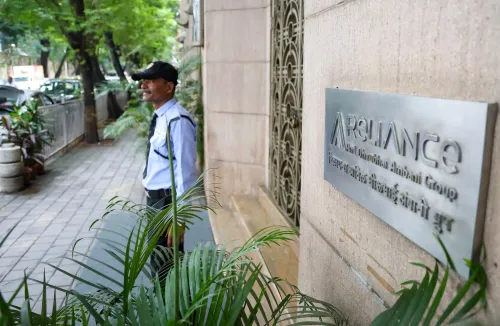
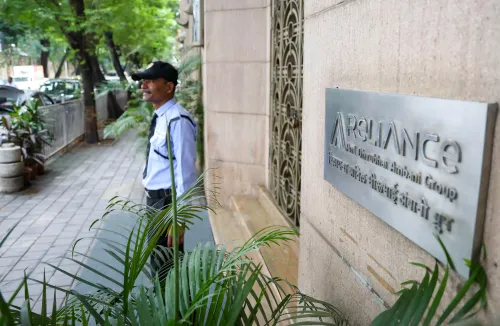
Mumbai, Dec 15 (NationPress) The Enforcement Directorate interrogated Rana Kapoor, the co-founder of Yes Bank, on Monday regarding a money laundering investigation tied to entities within the Reliance Anil Ambani group.
According to sources, Kapoor's testimony was documented under the Prevention of Money Laundering Act as part of a thorough investigation into substantial financial dealings between Yes Bank and group companies from 2017 to 2019.
The inquiry indicates that Yes Bank invested approximately Rs 2,965 crore in financial instruments associated with Reliance Home Finance Limited and around Rs 2,045 crore in Reliance Commercial Finance Limited during that timeframe.
By December 2019, these investments had reportedly transformed into non-performing assets, as claimed by the agency.
Further information reveals that the outstanding exposure amounted to Rs 1,353.5 crore for Reliance Home Finance and Rs 1,984 crore for Reliance Commercial Finance.
“While Rana Kapoor led Yes Bank, the institution had a significant exposure of about Rs 6,000 crore to the Reliance Anil Ambani Group as of March 31, 2017, which doubled to Rs 13,000 crore by March 31, 2018,” sources disclosed.
“During this time frame, the bank allocated over Rs 5,000 crore to Reliance Home Finance Limited and Reliance Commercial Finance Limited, both of which are part of the ADAG Group,” they added.
The investigation also uncovered that these two firms collectively received public funds exceeding Rs 11,000 crore.
The ED is scrutinizing the flow of funds prior to Yes Bank's investments. Sources indicate that Yes Bank had received significant capital from the former Reliance Nippon Mutual Fund before channeling investments into the Anil Ambani group finance companies.
As per Securities and Exchange Board of India regulations, Reliance Nippon Mutual Fund was prohibited from directly investing or redirecting funds into Anil Ambani's financial firms due to conflict-of-interest policies.
Sources suggest that the agency suspects public funds from mutual fund schemes were diverted indirectly, with Yes Bank facilitating these transactions.
The investigation remains ongoing, and subsequent actions will be determined by the inquiry's findings, sources added.
Point of View
I affirm our commitment to providing unbiased reporting. The ongoing investigation into Rana Kapoor and Yes Bank highlights the intertwined nature of finance and regulatory compliance, emphasizing the need for accountability in banking institutions. We will continue to monitor this critical issue closely, ensuring that our audience remains informed with factual updates.
NationPress
20 Sept 2026
Frequently Asked Questions
What is the basis of the ED's investigation into Rana Kapoor?
The Enforcement Directorate's investigation is based on alleged money laundering activities connected to significant financial transactions between Yes Bank and companies within the Reliance Anil Ambani group.
How much did Yes Bank invest in Reliance companies?
Yes Bank invested approximately Rs 2,965 crore in Reliance Home Finance Limited and around Rs 2,045 crore in Reliance Commercial Finance Limited during the 2017-2019 period.
What are non-performing assets?
Non-performing assets (NPAs) refer to loans or advances that are in default or in arrears, meaning that the borrower is not making interest payments or repaying any principal.
What regulations govern these financial transactions?
The Securities and Exchange Board of India (SEBI) regulations prohibit certain investments to prevent conflicts of interest, specifically concerning mutual funds and related financial institutions.
What could be the implications of this investigation?
The implications could be significant, potentially affecting public trust in financial institutions and leading to stricter regulatory measures to ensure transparency and accountability.