Rijiju Hails Leander Paes on Birthday, Recalls 1996 Olympic Bronze
Synopsis
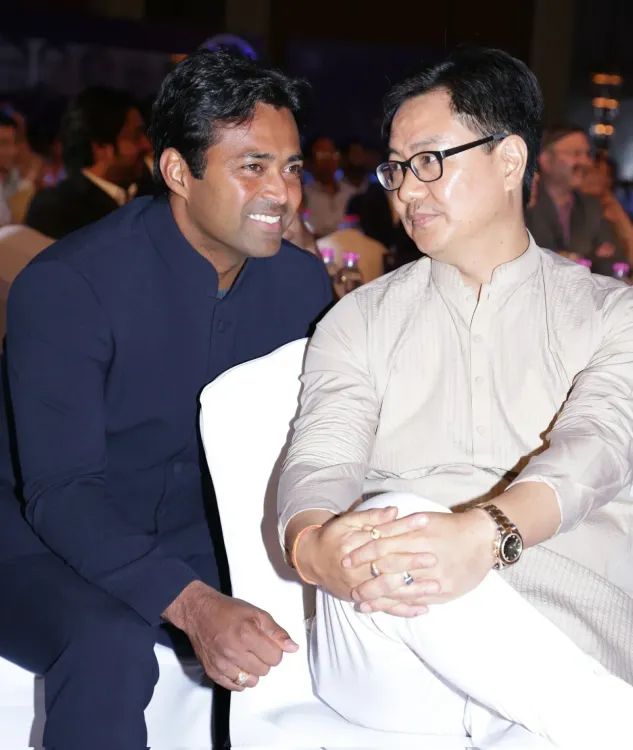
Union Parliamentary Affairs Minister Kiren Rijiju wished tennis legend Leander Paes on his birthday on 17 June 2026, honouring his 1996 Atlanta Olympics bronze — India's first individual Olympic medal in 44 years — and his record seven Olympic appearances for India.
Key Takeaways
Union Minister Kiren Rijiju publicly wished Leander Paes on his birthday on 17 June 2026 via X.
Paes won India's first individual Olympic medal in 44 years — a bronze in men's singles tennis at the 1996 Atlanta Olympics .
Paes represented India at a record seven Olympics , from 1992 Barcelona to 2016 Rio de Janeiro.
He won multiple gold medals at the Asian Games and Commonwealth Games during his career.
Paes was awarded the Arjuna Award (1991) and the Rajiv Gandhi Khel Ratna (1996-97) by the Government of India.
Rijiju described Paes as a 'legend and dear friend,' reflecting a broader governmental tradition of honouring veteran Indian Olympians.
Union Parliamentary Affairs Minister Kiren Rijiju on Wednesday, 17 June 2026, took to X to wish tennis legend Leander Paes on his birthday, calling him a 'legend and dear friend' and recalling his historic bronze medal at the 1996 Atlanta Olympics — India's first individual Olympic medal in 44 years.
Context
Rijiju's post described Paes as the man who 'gave India the first Olympic medal after a gap of 44 years by winning Bronze medal in 1996 Atlanta Olympics.' The minister also highlighted that Paes 'won multiple Gold medals in Asian Games, CWG and represented India for a record 7 times in Olympics.' The tribute underscores the enduring public memory of Paes's contribution to Indian sport across three decades.
Paes's 1996 Atlanta bronze in men's singles tennis remains one of the most celebrated moments in Indian Olympic history. Before that medal, India's last individual Olympic medal had come in 1952, making the achievement a watershed moment for the country's sporting identity.
Policy Backdrop
Paes was honoured with the Arjuna Award in 1991 and the Rajiv Gandhi Khel Ratna in 1996-97, the government's highest sporting honour at the time, in recognition of his tennis achievements. These awards are part of a national framework for recognising sportspersons that has been in place since the 1960s.
Since the early 2000s, successive governments have made a sustained effort to celebrate past Olympic and multi-sport achievements while simultaneously expanding sports infrastructure and athlete welfare programmes. Public tributes by ministers on social media have become a visible part of this broader push to elevate the status of Indian sport in public discourse.
Stakeholders and Impact
For India's tennis community and the wider sporting fraternity, tributes from senior ministers such as Rijiju — who has previously served as Minister of Youth Affairs and Sports — carry particular weight, given his direct engagement with athlete welfare policy during that tenure. Paes himself competed at seven Olympics, a record for an Indian athlete, spanning from 1992 Barcelona to 2016 Rio de Janeiro.
Younger athletes and aspiring Olympians continue to look to Paes's career as a benchmark. His record of Asian Games and Commonwealth Games gold medals, alongside his Olympic bronze, represents a standard of sustained excellence rarely matched in Indian individual sport.
What's Next
With India's sporting calendar increasingly focused on preparation for upcoming Olympic cycles, the role of veterans like Paes in mentoring, coaching, or ambassadorial capacities remains a subject of interest within sports policy circles. Any parliamentary or sports ministry discussions on formally recognising the contributions of veteran Olympians could bring figures such as Paes back into the institutional spotlight. Rijiju's public acknowledgement on a high-visibility platform reinforces the government's interest in keeping the legacies of India's sporting icons alive in national memory.
Point of View
The post carries institutional resonance beyond social-media courtesy. It also signals continued political goodwill toward veteran athletes, which could translate into formal recognition or advisory roles within the sports ecosystem. The spotlight on Paes's seven-Olympics record is a reminder that longevity and consistency, not just peak performance, are values the establishment now actively champions.
NationPress
16 Sept 2026
Frequently Asked Questions
What medal did Leander Paes win at the 1996 Atlanta Olympics?
Leander Paes won a bronze medal in men's singles tennis at the 1996 Atlanta Olympics, giving India its first individual Olympic medal in 44 years.
How many times did Leander Paes compete in the Olympics?
Leander Paes represented India at a record seven Olympics, from the 1992 Barcelona Games through to the 2016 Rio de Janeiro Games.
Why was Leander Paes's 1996 Olympic medal so significant for India?
Before Paes's 1996 bronze, India had not won an individual Olympic medal since 1952 — a gap of 44 years — making his achievement a landmark moment in Indian sporting history.
What awards has Leander Paes received from the Indian government?
Leander Paes received the Arjuna Award in 1991 and the Rajiv Gandhi Khel Ratna — India's highest sporting honour — in 1996-97 for his tennis achievements.
Why did Kiren Rijiju post about Leander Paes?
Union Parliamentary Affairs Minister Kiren Rijiju posted a birthday tribute to Leander Paes on 17 June 2026, calling him a 'legend and dear friend' and honouring his contributions to Indian sport across seven Olympic appearances.