Rijiju hails Abhay Singh's Asian Games 2026 squash silver
Synopsis
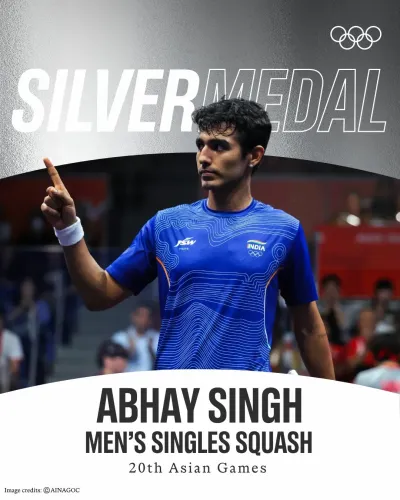
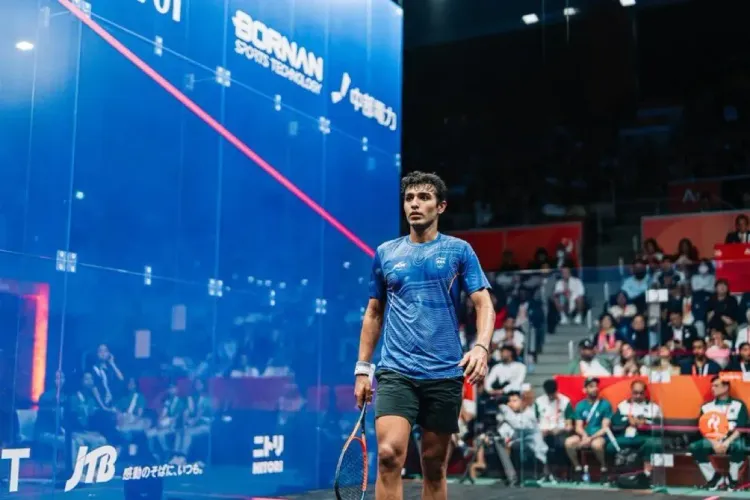
Union Minister Kiren Rijiju publicly congratulated squash player Abhay Singh for winning the silver medal in Men's Singles at the Asian Games 2026, calling it 'a superb performance on the court' under the government's #Cheer4Bharat campaign.
Key Takeaways
Abhay Singh won the silver medal in Men's Singles Squash at the Asian Games 2026 .
Union Minister Kiren Rijiju posted his congratulations on X on 27 September 2026 .
Rijiju described Singh's performance as 'a superb performance on the court.' The post was tagged with the government's sports cheer campaign hashtag #Cheer4Bharat .
Indian ministers routinely acknowledge Asian Games achievements as part of broader government engagement with sport.
A silver medal in Men's Singles Squash at the Asian Games 2026 — and the congratulations from the corridors of power came swiftly. Union Parliamentary Affairs and Minority Affairs Minister Kiren Rijiju took to X on Sunday, 27 September 2026, to celebrate Abhay Singh's podium finish, calling it 'a superb performance on the court.'
Abhay Singh's silver — a squash milestone at the Asian Games
Squash has long been one of India's more quietly consistent disciplines at multi-sport events, and Abhay Singh's silver in Men's Singles adds another chapter to that story. Reaching the final of an Asian Games squash draw demands navigating some of the continent's sharpest racquet talent — from powerhouses in Egypt-trained circuits to the formidable depth of Malaysian and Pakistani squash traditions that dominate the Asian tier.
A silver medal at this level is no consolation prize. It means Singh won every match but one — and did so on the continental stage where reputations are made.
Rijiju's congratulations — routine gesture, real signal
Indian ministers routinely acknowledge athlete achievements at events like the Asian Games, and Rijiju, a senior BJP leader from Arunachal Pradesh with a long track record of amplifying sporting moments, is among the most consistent voices in that tradition. His post under the hashtag #Cheer4Bharat — the government's signature cheer campaign for Indian athletes — signals the broader institutional effort to keep sporting morale visible in public discourse.
For a sport like squash, which rarely commands prime-time attention despite producing world-class Indian talent, a minister's public acknowledgement carries its own quiet weight — a nudge toward mainstream recognition.
What this means for Indian squash
Indian squash has punched above its weight for years, with players like Saurav Ghosal blazing trails at the world level. Abhay Singh's Asian Games silver extends that lineage and raises a timely question: will moments like these translate into sustained institutional support — more funding, more infrastructure, more slots in national sporting schemes — for a discipline that has earned them?
The medal is won. The follow-through is the next match.
Point of View
Ministerial acknowledgement — however brief — functions as soft institutional endorsement. The #Cheer4Bharat framing also reflects the government's deliberate effort to present India's multi-sport identity as a unified, pride-driven project. Whether that visibility converts into structural support for squash — funding, infrastructure, federation backing — remains the harder, longer question.
NationPress
27 Sept 2026
Frequently Asked Questions
What did Abhay Singh win at Asian Games 2026?
Abhay Singh secured the silver medal in the Men's Singles Squash event at the Asian Games 2026.
Why did Kiren Rijiju congratulate Abhay Singh?
Union Minister Kiren Rijiju congratulated Abhay Singh on his silver medal in Men's Singles Squash at the Asian Games 2026, calling it a superb performance.
What is #Cheer4Bharat?
#Cheer4Bharat is a hashtag campaign used by the Indian government and ministers to publicly support and celebrate Indian athletes competing in international multi-sport events.
Has India won medals in squash at the Asian Games before?
India has featured in squash events at multiple Asian Games editions, with players like Saurav Ghosal previously representing the country at the highest continental level.