Rijiju Recalls Brazil's 1970 Greats After World Cup 2026 Loss
Synopsis
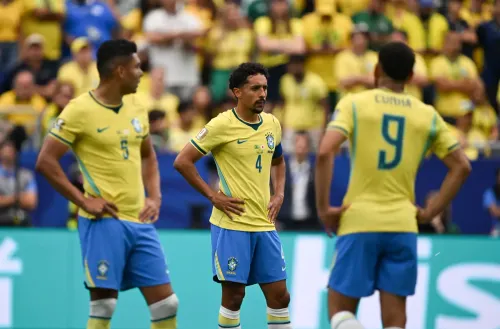
Union Parliamentary Affairs Minister Kiren Rijiju honoured Brazil's iconic 1970 World Cup squad on July 6, 2026, after Brazil lost to Norway at the 2026 FIFA World Cup, naming Pelé, Jairzinho, and seven teammates as the greatest football team ever.
Key Takeaways
Kiren Rijiju , Union Parliamentary Affairs Minister, posted a tribute to the 1970 Brazil football team on July 6, 2026 .
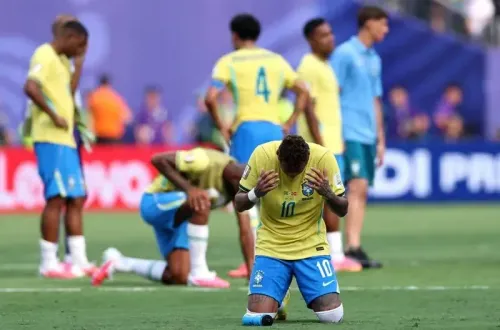
The tribute was prompted by Brazil's loss to Norway at the 2026 FIFA World Cup .
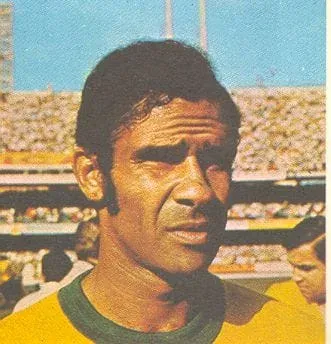
Rijiju named nine players: Pelé, Jairzinho, Alberto Carlos, Tostão, Everaldo, Clodoaldo, Brito, Gérson, and Rivellino .
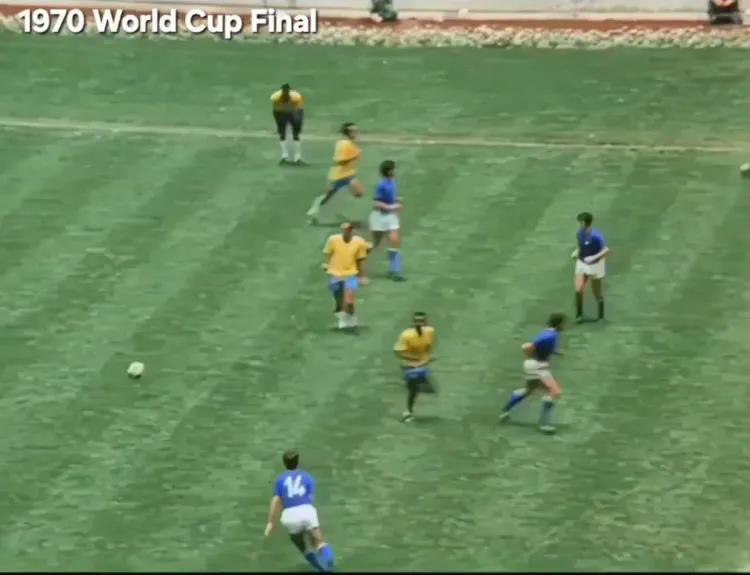
The 1970 Brazil team won the World Cup in Mexico without losing a single match, scoring 19 goals in six games.
Brazil is a five-time FIFA World Cup winner , making the 2026 Norway defeat a notable upset.
The 2026 FIFA World Cup is the first edition of the expanded 48-team format , co-hosted by Canada, Mexico, and the United States .
Union Parliamentary Affairs Minister Kiren Rijiju took to X on Monday, July 6, 2026, to pay tribute to the legendary 1970 Brazil football team after Brazil's elimination by Norway at the 2026 FIFA World Cup, calling that half-century-old squad the greatest football team ever assembled.
Context
Rijiju's post came in the immediate aftermath of Brazil's exit from the 2026 FIFA World Cup, the first edition of the expanded 48-team tournament co-hosted by Canada, Mexico, and the United States. The result against Norway ended Brazil's campaign and triggered widespread reflection among football lovers globally. The minister, writing from New Delhi, channelled that emotion into a nostalgic tribute rather than a commentary on the modern game.
In his post, Rijiju wrote: 'Brazil lost to Norway in 2026 World Cup. I'm remembering the Brazil team of 1970, The Greatest Football Team ever with the legendary players Pelé, Jairzinho, Alberto Carlos, Tostão, Everaldo, Clodoaldo, Brito, Gérson and Rivellino.' The roll-call of names reads like a who's-who of football's golden era.
Policy Backdrop
Indian political figures — including ministers with sports portfolios — have increasingly used personal social media accounts to engage with international sporting events, reflecting a broader cultural investment in global football among Indian audiences. Rijiju himself has a long record of sporting enthusiasm, having previously held the Ministry of Youth Affairs and Sports portfolio, which gave him a platform to champion both domestic and international athletic achievement.
The 1970 FIFA World Cup, held in Mexico, is widely regarded as the pinnacle of attacking football. Brazil's squad that year won the tournament without losing a single match, scoring 19 goals across six games. Pelé, who went on to win three World Cups in total, is considered by many analysts and former players as the greatest footballer of all time — a view Rijiju's post implicitly endorses by singling out that vintage side.
Stakeholders and Impact
The post resonated with football fans across India, a constituency that has grown substantially over the past decade driven by live broadcasting of European club football and successive World Cup cycles. For this audience, the 1970 Brazil team — with its 4-2-4 formation, flamboyant attacking play, and iconic yellow jersey — represents an aspirational benchmark that modern teams are perennially measured against.
Brazil's exit at the 2026 World Cup at the hands of Norway marks a significant upset, given Brazil's historical dominance as a five-time World Cup winner. The result is likely to fuel debate about the evolution of football tactics and whether the sport's current structure favours technically disciplined European sides over traditionally flair-driven South American teams.
What's Next
With the 2026 FIFA World Cup still ongoing, attention will shift to which nations advance deep into the knockout rounds. For Indian football observers, the tournament also serves as a reference point for the country's own long-term development ambitions. Any follow-up remarks by Rijiju connecting this moment to India's football development programmes or grassroots investment would be closely watched by sports policy stakeholders.
The minister's nostalgic tribute underscores a recurring question in world football: whether the sport's commercial and tactical evolution has made it harder for a team of pure, expressive genius — in the mould of Brazil 1970 — to ever dominate a major tournament again.
Point of View
But it also reflects how senior Indian political figures now routinely engage global sporting audiences through social media — a soft-power adjacency that builds relatability beyond domestic policy debates. The specific invocation of the 1970 Brazil squad, rather than any modern era, signals a generational affinity and an implicit critique of the direction contemporary football has taken. For a minister who once held the sports portfolio, the tribute carries added weight: it gestures, however indirectly, toward the kind of expressive, skill-first football culture that India's own development programmes aspire to nurture. The timing — immediately after a high-profile upset — ensures maximum engagement from a global football-watching audience.
NationPress
5 Oct 2026
Frequently Asked Questions
Why did Kiren Rijiju post about Brazil's 1970 football team?
Rijiju posted about the 1970 Brazil team after Brazil lost to Norway at the 2026 FIFA World Cup, calling that vintage squad the greatest football team ever assembled.
Who were the players in the 1970 Brazil World Cup team mentioned by Rijiju?
Rijiju named Pelé, Jairzinho, Alberto Carlos, Tostão, Everaldo, Clodoaldo, Brito, Gérson, and Rivellino as the legendary members of the 1970 Brazil squad.
Did Brazil lose to Norway at the 2026 FIFA World Cup?
According to Rijiju's post dated July 6, 2026, Brazil lost to Norway during the 2026 FIFA World Cup tournament.
How many times has Brazil won the FIFA World Cup?
Brazil has won the FIFA World Cup five times, with their 1970 victory in Mexico widely regarded as the most dominant and stylistically brilliant of those campaigns.
What is the 2026 FIFA World Cup format?
The 2026 FIFA World Cup is the first edition to feature an expanded 48-team format and is co-hosted by Canada, Mexico, and the United States.