CM Saini Sets Alliance Terms: Accept Viksit Bharat, Enter Punjab Pact
Synopsis
Haryana CM Nayab Singh Saini has publicly set a non-negotiable condition for any BJP alliance in Punjab: unconditional acceptance of PM Modi's 'Viksit Bharat, Viksit Punjab' vision. The statement reframes Punjab coalition talks as an ideological test rather than a seat-sharing negotiation.
Key Takeaways
Haryana CM Nayab Singh Saini declared on 30 July 2026 that BJP will ally only with parties that accept Modi's 'Viksit Bharat, Viksit Punjab' vision unconditionally.
No specific partner party was named in the post, but the public terms force prospective allies to respond on record.
The 'Viksit Bharat' framework originates from PM Modi's Independence Day and Budget addresses of 2023-24 and has become the BJP's ideological benchmark for coalition partners.
Punjab has been difficult electoral terrain for BJP, which contested the 2022 assembly election largely without a major partner and returned limited seats.
The BJP's broader strategy across northern and western states ties alliances to endorsement of the central development narrative, not seat arithmetic alone.
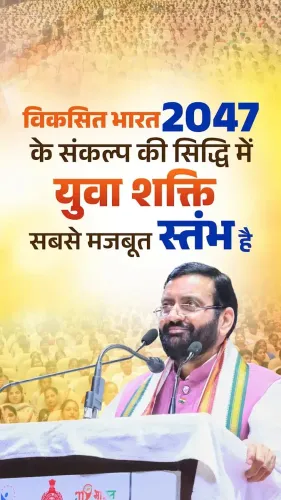
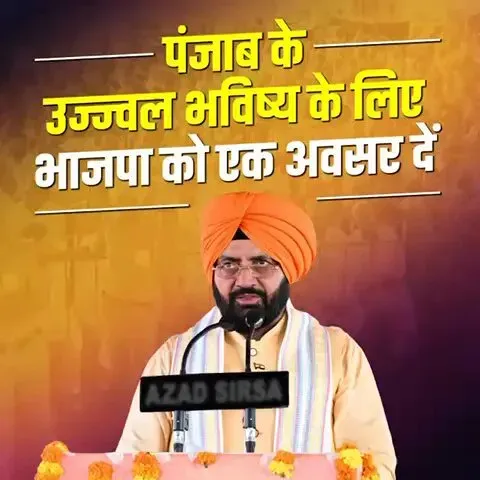
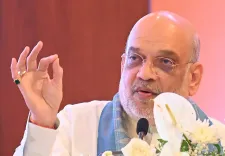
A coalition offer with a non-negotiable price tag — that is the signal Haryana Chief Minister Nayab Singh Saini sent on Thursday, 30 July 2026, when he declared that any alliance in Punjab must come with unconditional acceptance of Prime Minister Modi's 'Viksit Bharat, Viksit Punjab' ('Developed India, Developed Punjab') vision.
Saini's post in Hindi was blunt and brief: 'Gathbandhan us dal se, jise Modi ka Viksit Bharat, Viksit Punjab bina shart manzoor.' Translation: 'Alliance with that party which accepts Modi's Viksit Bharat, Viksit Punjab — unconditionally.' No party was named. The condition, however, was unmistakable.
The Viksit Bharat plank and what it demands of partners
Prime Minister Narendra Modi first wove the 'Viksit Bharat' (Developed India by 2047) framework into national policy through his Independence Day addresses and Union Budget speeches of 2023 and 2024, framing it as a civilisational mission rather than a campaign slogan. For the BJP, it has since become the ideological litmus test for coalition partners — accept the development narrative, and a seat at the table follows. Reject it, and the door stays shut.
Saini, as Haryana's chief minister and a senior BJP voice on northern-state politics, is extending that template explicitly to Punjab. The move is deliberate: it shifts the alliance conversation from the transactional arithmetic of seat-sharing to a values-first framework where the BJP controls the terms of entry.
Punjab — where BJP coalitions have always been fragile
Punjab has historically been difficult terrain for the BJP. The party's alliance architecture there has shifted repeatedly — through the Akali era, post-farm-law turbulence, and the 2022 assembly election in which it contested largely alone and returned a thin tally. Building a stable, ideologically coherent coalition ahead of the next assembly cycle is a stated priority.
By anchoring the alliance offer to the Viksit Punjab component of Modi's broader vision, Saini is doing two things at once: signalling to potential partners that the BJP will not dilute its core agenda for coalition comfort, and sending a message to Punjab voters that any future alliance government would be development-oriented rather than driven by regional horse-trading.
Which party is being courted remains officially unnamed — and the research does not confirm a specific target. But the public framing itself is the political move. An open declaration of terms forces prospective partners to respond publicly, putting them on record either endorsing or distancing themselves from Modi's national development plank.
In Punjab's next electoral cycle, that record will matter. Saini has just made sure of it.
Point of View
Saini denies potential partners the luxury of a private negotiation where the Viksit Bharat plank might be quietly diluted. For Punjab, where the BJP has lacked a durable coalition anchor since the breakdown of its long-standing alliance, this signals that the party intends to enter the next electoral cycle on its own terms or not at all. The unnamed-party framing also keeps political pressure diffuse — every regional player in Punjab must now calculate whether endorsing Modi's vision costs them more votes than it wins.
NationPress
13 Sept 2026
Frequently Asked Questions
What did Haryana CM Nayab Singh Saini say about Punjab alliance?
CM Saini stated that BJP will form an alliance only with a party that unconditionally accepts PM Modi's 'Viksit Bharat, Viksit Punjab' vision, setting it as a non-negotiable condition for any coalition.
What is Viksit Bharat and why is it important for BJP alliances?
'Viksit Bharat' (Developed India by 2047) is PM Modi's national development vision articulated in Independence Day and Budget speeches from 2023 onwards. BJP has made endorsement of this framework a standard condition for coalition partners across multiple states.
Which party is BJP looking to ally with in Punjab?
CM Saini's post did not name a specific party. The research does not confirm a named target, so the specific potential partner remains publicly unidentified at this stage.
Why has BJP struggled to form alliances in Punjab?
BJP's coalition history in Punjab has been turbulent, marked by the breakdown of its long-standing partnership with the Shiromani Akali Dal and a largely solo campaign in the 2022 assembly election, which returned limited seats for the party.
What are the conditions BJP sets for state-level alliances?
Beyond seat-sharing, BJP requires partners to publicly align with PM Modi's national development agenda — currently the Viksit Bharat framework — ensuring coalition governments do not dilute the party's core policy narrative.