Himanta Biswa Sarma Wraps Up First Delhi Visit of Second Term
Synopsis
Assam Chief Minister Himanta Biswa Sarma said on X that he had concluded a productive first Delhi visit of his second term, thanking BJP leaders for poll support and meeting key stakeholders to align the state's 'Double Engine' growth agenda with the Centre for the next five years.
Key Takeaways
Himanta Biswa Sarma announced the conclusion of his first Delhi visit after being sworn in for a second term as Assam Chief Minister.
He said he thanked BJP leaders for their support during the recent Assam assembly elections.
Sarma described meetings with 'key stakeholders' aimed at five-year growth outcomes under a 'Double Engine Govt'.
The post referred to the Chief Minister's role using the Hindi term 'Mukhya Sewak' (chief servant).
The visit follows a pattern of early-term Delhi trips by BJP chief ministers to align state priorities with the Centre.
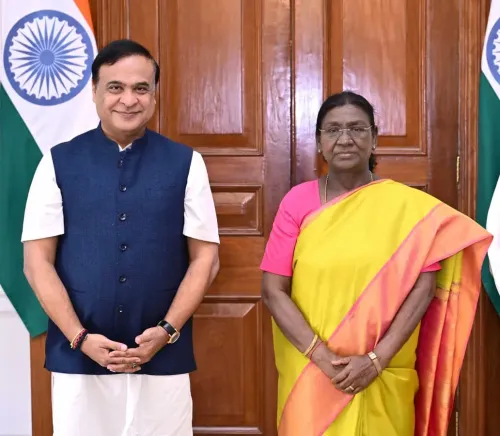
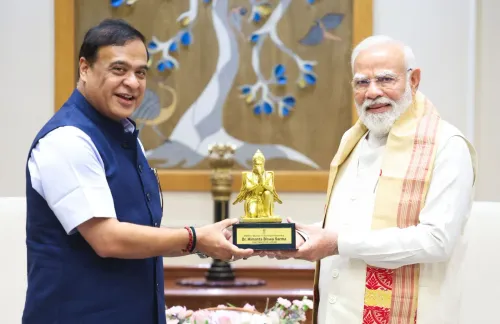
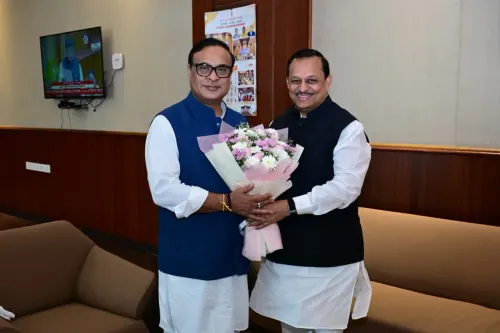
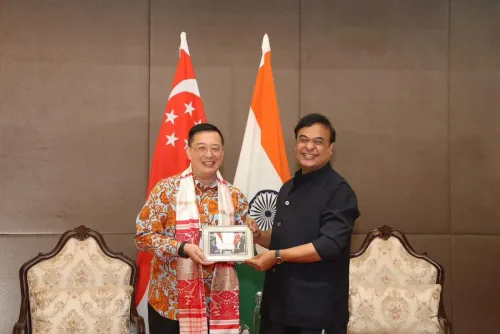
Assam Chief Minister Himanta Biswa Sarma on Wednesday said he had concluded a 'very productive' visit to New Delhi, his first trip to the national capital since being sworn in for a second consecutive term as head of the Assam government. In a post on X, Sarma said he used the visit to thank senior BJP leaders for their support during the recent assembly elections and to meet key stakeholders on the state's development roadmap for the next five years.
'Concluded a very productive visit to Delhi, my first after taking oath as Assam's Mukhya Sewak for a second term,' Sarma wrote, using the Hindi phrase Mukhya Sewak (chief servant) instead of the conventional title for Chief Minister. He added that he had 'interacted with key stakeholders to ensure that our Double Engine Govt can deliver the best growth outcomes over the next 5 years'.
Context
The Delhi visit comes shortly after Sarma was sworn in for a second term following the 2026 Assam Legislative Assembly election. He first became Chief Minister of Assam in May 2021 after the BJP retained power in the state, and he also serves as convenor of the North-East Democratic Alliance (NEDA), the party's regional umbrella grouping.
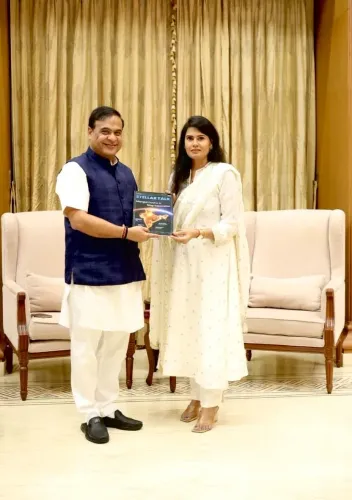
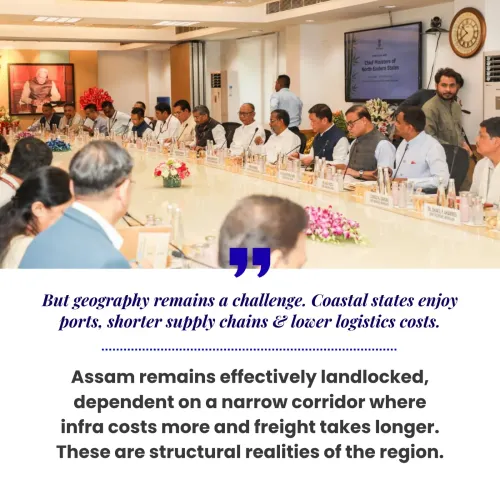
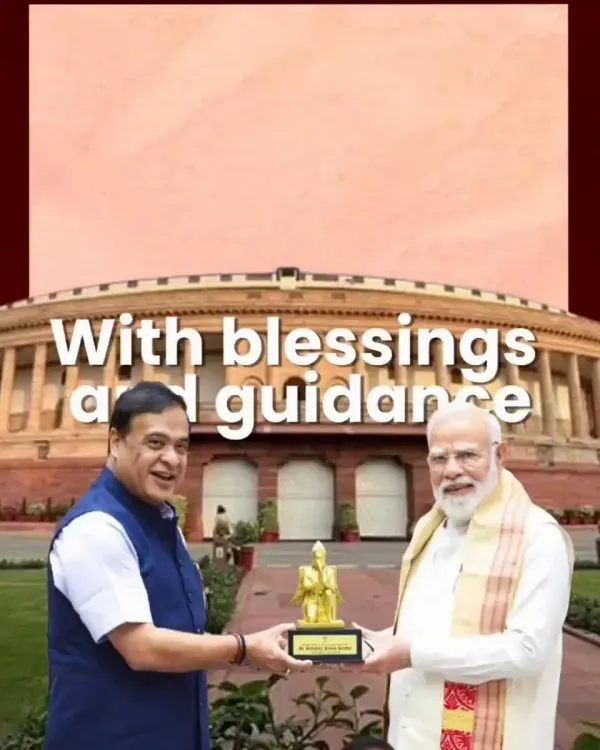
Sarma's post did not name the leaders he met or list specific files discussed, framing the visit instead around gratitude for electoral support and forward-looking coordination. The accompanying video, attached to the post, offered visual context but no further policy detail.
Policy backdrop
The phrase 'Double Engine Govt' is shorthand used by the BJP for situations where the same party governs both at the Centre and in a state, a framing the party argues speeds up project clearances, fund flows and scheme rollouts. Sarma has consistently invoked the term to link Assam's development trajectory to central support on infrastructure, welfare delivery and security.
Early-term Delhi visits by BJP chief ministers have become a recurring feature since 2014, particularly across the northeastern states, where coordination with the Centre shapes capital expenditure and connectivity projects. These meetings typically precede the firming up of state demands in the run-up to central budget cycles and ministry-level reviews.
Stakeholders and impact
For the Assam administration in Dispur, alignment with central ministries matters for flagship areas including highways, railways, healthcare, flood management and border infrastructure. The state has in recent years sought central backing for projects ranging from the expansion of AIIMS Guwahati-linked health systems to road and bridge connectivity across the Brahmaputra.
Central BJP leadership, in turn, treats Assam as the party's anchor state in the Northeast and the political base for NEDA, which coordinates allied parties across the region. A smooth state-Centre interface in Sarma's second term is therefore politically as well as administratively significant for the alliance's footprint in neighbouring states.
What's next
The Chief Minister has signalled that the meetings in Delhi were aimed at locking in 'the best growth outcomes' over a five-year horizon, suggesting more detailed announcements may follow at the state level. Observers will watch for cabinet decisions in Dispur, fresh memoranda of understanding with central ministries, and the next round of central scheme approvals routed to Assam.
Any new coordination mechanisms between the state and the Centre, along with the pace of centrally supported infrastructure and welfare projects in Assam during the 2026-2031 period, will be the practical test of the partnership Sarma described in his post.
Point of View
He is reinforcing that Assam's second-term agenda will be tightly coupled to central scheme delivery and BJP high-command priorities. The use of 'Mukhya Sewak' also fits a broader BJP vocabulary that recasts elected office as service. The real test, however, will lie in whether the visit translates into specific project clearances and fiscal commitments for Assam over the 2026-2031 cycle.
NationPress
21 Oct 2026
Frequently Asked Questions
Who is the current Chief Minister of Assam?
Himanta Biswa Sarma is the Chief Minister of Assam and is currently serving his second consecutive term in the role. He first took oath as Chief Minister in May 2021 after the BJP retained power in the state.
What did Himanta Biswa Sarma say about his Delhi visit?
Sarma said he had concluded a 'very productive' visit to Delhi, his first since being sworn in for a second term. He said he met BJP leaders to thank them for election support and interacted with key stakeholders on the state's five-year growth agenda.
What does 'Double Engine Govt' mean?
'Double Engine Govt' is BJP terminology for a situation where the same party governs both at the Centre and in a state. The party argues this enables faster coordination on schemes, funding and project clearances between the two levels of government.
What is NEDA and what is Himanta Biswa Sarma's role in it?
NEDA, or the North-East Democratic Alliance, is the BJP-led umbrella grouping of parties in the northeastern states. Himanta Biswa Sarma serves as its convenor, giving him a coordinating role across the region beyond his duties as Assam Chief Minister.
Why did Sarma call himself 'Mukhya Sewak' instead of Chief Minister?
In his post, Sarma referred to himself as Assam's 'Mukhya Sewak', a Hindi phrase meaning 'chief servant'. The term is used in BJP political vocabulary to frame elected office as public service rather than authority.