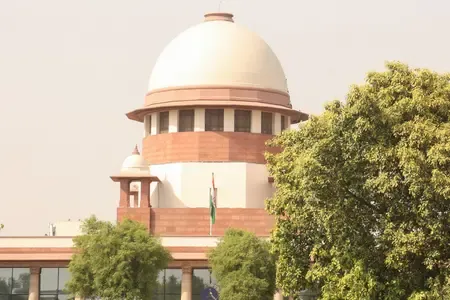
Supreme Court questions OBC creamy layer: Why reserve seats for IAS officers' children?
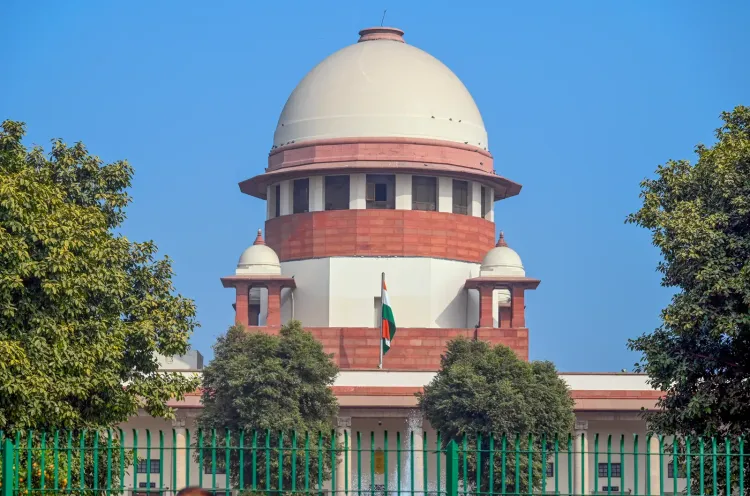
Synopsis
The Supreme Court has asked the question India's reservation debate has long avoided: if both your parents are IAS officers who rose through affirmative action, why should you get the same benefit? The bench's oral observations — and their echo of a recent Constitution Bench ruling on SC/ST sub-classification — suggest the judiciary is moving toward a harder line on inherited reservation entitlement.
Key Takeaways
The Supreme Court on 22 May questioned whether children of IAS officers who benefited from reservation should continue to receive it.
A Bench of Justice B.V.
Nagarathna and Justice Ujjal Bhuyan made the remarks while hearing an SLP against a Karnataka High Court order.
The petitioner, from the Kuruba caste , was excluded from OBC reservation after his parents' income exceeded the ₹8 lakh creamy layer ceiling.
The court issued notice on the plea; the next hearing is tentatively scheduled for 13 July .
The case follows a 6:1 Constitution Bench ruling that suggested applying the creamy layer principle to SCs and STs as well.
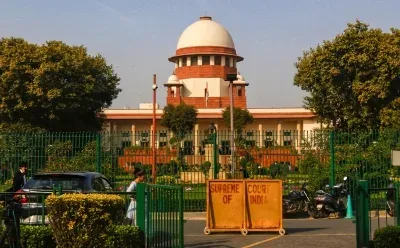
The Supreme Court of India on Friday, 22 May raised pointed questions about whether children of families that have already climbed the social and economic ladder through reservation should continue to benefit from it, observing that such advancement ought to place them squarely within the creamy layer category. The remarks signal a sharpening judicial focus on the boundaries of affirmative action in India.
What the Court Said
A Bench comprising Justice B.V. Nagarathna and Justice Ujjal Bhuyan made the observations while hearing a Special Leave Petition (SLP) challenging a Karnataka High Court judgment that had upheld the exclusion of a candidate from OBC reservation on creamy layer grounds.
'If both parents are IAS officers, why should they have reservations? With education and economic empowerment, there is social mobility. So then again, to seek reservation for the children, we will never get out of it,' the Bench remarked orally during the hearing.
The court further observed: 'There has to be some balance. Socially and educationally backward, yes, but once the parents have attained a level because of taking advantage of reservation, if they are both in government service and very well placed, social mobility is there. Now they are questioning the exclusion. This also has to be kept in mind.'
Background of the Case
The petitioner, belonging to the Kuruba caste, had applied for the post of Assistant Engineer (Electrical) with the Karnataka Power Transmission Corporation Limited (KPTCL) under the reserved category. The District Caste and Income Verification Committee rejected his claim after finding that his parents' combined annual income exceeded the prescribed creamy layer ceiling of ₹8 lakh.
Both parents are government employees whose annual salaries individually surpassed the threshold, as established in the Karnataka High Court records. The Karnataka High Court, in its ruling of 3 December 2025, set aside a single-judge order and upheld the exclusion, prompting the appeal before the Supreme Court.
The Petitioner's Arguments
Before the apex court, the petitioner argued that salary income of government employees alone should not determine creamy layer status, citing Karnataka government clarifications and earlier judicial precedents. It was further contended that factoring in all forms of income would erase the distinction between OBC reservation and Economically Weaker Section (EWS) reservation, and that creamy layer norms for OBCs must remain more liberal than those applied to the general category.
Wider Constitutional Significance
The case assumes heightened relevance in the wake of a landmark Constitution Bench ruling — decided 6:1 — which suggested that the creamy layer principle could apply even to Scheduled Castes (SCs) and Scheduled Tribes (STs) while permitting sub-classification within those categories.
In that ruling, Justice B.R. Gavai had asked pointedly: 'Can a child of IAS/IPS or Civil Service officers be equated with a child of a disadvantaged member belonging to the Scheduled Castes, studying in a Gram Panchayat/Zilla Parishad school in a village?' He had further observed that those who, after availing reservation, 'have reached the high echelons in life cannot be considered to be socially, economically and educationally backward, so as to continue availing the benefit of affirmative action' and that 'they have already reached a stage where on their own accord they should walk out of the special provisions and give way to the deserving and needy.'
What Happens Next
The Supreme Court has issued notice on the plea and, according to the computerised case status, the matter is tentatively listed for further hearing on 13 July. The outcome could have far-reaching implications for how creamy layer norms are defined and applied across OBC, SC, and ST categories nationwide.
Point of View
But they carry unmistakable direction. Two sitting justices have now publicly questioned whether second-generation beneficiaries of reservation — whose parents hold senior civil service posts — can claim the same entitlement as the genuinely disadvantaged. This tracks a broader judicial trend: the 6:1 Constitution Bench ruling on SC/ST sub-classification already cracked open the idea that reservation is not a permanent, heritable entitlement. What mainstream coverage misses is the structural tension this creates: the ₹8 lakh creamy layer ceiling for OBCs has not been revised in years, making it an increasingly blunt instrument. The real policy gap is the absence of a dynamic, periodically reviewed threshold — not the principle of exclusion itself.
NationPress
22 Sept 2026
Frequently Asked Questions
What did the Supreme Court say about OBC reservation for IAS officers' children?
The Supreme Court bench of Justice B.V. Nagarathna and Justice Ujjal Bhuyan orally observed on 22 May that if both parents are IAS officers who advanced through reservation, their children should not continue to receive the same benefit. The court said such families have achieved social mobility and should fall within the creamy layer, excluding them from further reservation.
What is the creamy layer and how is it determined for OBCs?
The creamy layer refers to the more affluent and socially advanced section within OBC communities who are excluded from reservation benefits. Currently, the income threshold is set at ₹8 lakh per year; families whose annual income exceeds this ceiling are classified as creamy layer and are ineligible for OBC reservation.
What is the Karnataka KPTCL case about?
A petitioner from the Kuruba caste applied for the post of Assistant Engineer (Electrical) with Karnataka Power Transmission Corporation Limited (KPTCL) under OBC reservation. He was excluded after the District Caste and Income Verification Committee found his parents' combined government salaries exceeded the ₹8 lakh creamy layer ceiling. The Karnataka High Court upheld this exclusion on 3 December 2025, and he appealed to the Supreme Court.
How does this case connect to the Constitution Bench ruling on SC/ST sub-classification?
A Constitution Bench ruled 6:1 that the creamy layer principle could apply even to SC and ST communities while allowing sub-classification within those groups. Justice B.R. Gavai specifically questioned whether children of IAS/IPS officers could be equated with genuinely disadvantaged SC/ST members. The current OBC case raises a parallel question, suggesting the judiciary is applying consistent logic across reservation categories.
When is the next hearing in this Supreme Court case?
The Supreme Court has issued notice on the plea and the matter is tentatively listed for further hearing on 13 July, according to the computerised case status.