SC plea seeks monitoring panel for Bengal polls, flags 2021 post-poll violence
Synopsis
A Supreme Court plea is seeking a retired judge-led monitoring committee to oversee law and order during and after the ongoing West Bengal elections — invoking the spectre of the 2021 post-poll violence, where an inquiry found FIRs were not registered in 60% of examined cases. The petition signals that the wounds of 2021 remain legally and politically unresolved.
Key Takeaways
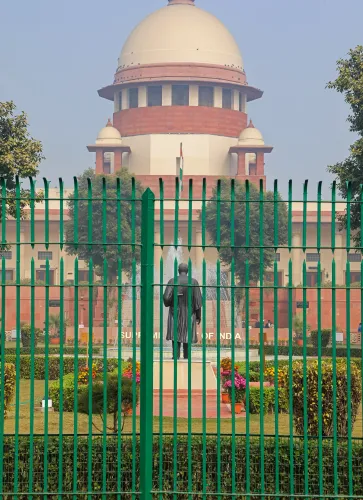
Sanatani Sangsad has filed an interlocutory application before the Supreme Court seeking a high-level monitoring committee headed by a retired apex court judge for the ongoing West Bengal Assembly elections .
The plea alleges that violence, voter intimidation, and property destruction have continued despite assurances given by the West Bengal government to the court.
An inquiry committee under Calcutta High Court orders reportedly found FIRs were not registered in 60% of post-poll violence cases examined after the 2021 elections.
The application seeks deployment of CAPF personnel, constitution of SITs , fast-track courts in every district, and witness protection measures.
The plea also alleges that compensation directed for victims of 2021 post-poll violence has not been fully disbursed, with contempt proceedings reportedly initiated.
West Bengal Chief Minister Mamata Banerjee's alleged remarks at a public rally in March are cited as contributing to a "chilling effect" on political participation.
An interlocutory application has been moved before the Supreme Court in a pending petition concerning alleged electoral violence in West Bengal, seeking the constitution of a high-level monitoring committee headed by a retired apex court judge to oversee law and order arrangements during and after the ongoing West Bengal Assembly elections. The plea, filed by organisation Sanatani Sangsad, was reported on 29 April from New Delhi.
What the Plea Demands
The applicant contended that despite assurances allegedly given by the West Bengal government before the Supreme Court, incidents of violence, intimidation of voters and election officials, and destruction of property have reportedly continued on the ground. The plea argued that "mere assurances given by the Government of West Bengal to this Hon'ble Court are not being backed by appropriate action on the ground."
Among the key reliefs sought, the application requested the apex court to direct deployment of adequate Central Armed Police Forces (CAPF) personnel in vulnerable areas for a period determined by the proposed monitoring committee. It also sought directions preventing the transfer of law enforcement officials without the committee's prior concurrence, and the establishment of a robust complaint and grievance redressal mechanism for citizens.
Further prayers included the constitution of Special Investigation Teams (SITs) for heinous crimes such as murder and rape, powers to transfer suitable cases to central agencies, disciplinary action against delinquent police officials, and the establishment of fast-track courts in every district for expeditious trial of post-poll violence cases. Witness protection measures for victims and witnesses, as well as safeguards for officials deployed by the Election Commission of India (ECI) on election duty, were also sought.
Shadow of 2021 Post-Poll Violence
The application extensively referred to the alleged post-poll violence following the 2021 West Bengal Assembly elections, citing proceedings before the National Human Rights Commission (NHRC) and the Calcutta High Court. According to the plea, an enquiry committee constituted pursuant to orders of the Calcutta High Court had found a large number of incidents involving violence, arson, vandalism, murder, rape, and attempts to rape, while alleging that FIRs were not registered in 60 per cent of the cases examined.
The application further claimed that compensation directed to be paid to victims of political violence had not been fully implemented till date, and that contempt proceedings were also initiated in that regard. "The memory of the post-poll violence that engulfed the State of West Bengal immediately after the declaration of result of West Bengal Assembly election in May 2021 still hounds the people of West Bengal," the application stated.
Allegations of Voter Enrolment Irregularities
The plea alleged that acts of violence and intimidation were aimed at ensuring enrolment of persons supporting the ruling dispensation as voters "irrespective of whether or not they fulfil the eligibility criteria." It added that fear among voters continues as several criminal cases are still pending trial and many accused persons are reportedly out on bail.
The plea also referred to an alleged statement made by West Bengal Chief Minister Mamata Banerjee at a public rally in March this year, claiming it amounted to a reminder of the alleged post-poll violence witnessed after the previous elections. The applicant described the overall situation as having a "chilling effect" on political participation.
Constitutional Basis and What Comes Next
The applicants grounded their demand in the constitutional principle that free and fair elections form part of the Constitution's basic structure, asserting that "the people are reassured of governance by rule of law during and after the elections." This comes amid heightened scrutiny of electoral processes in West Bengal, a state that has witnessed repeated allegations of political violence across multiple election cycles. The Supreme Court is yet to formally list the application for hearing, and the West Bengal government's response to these specific claims is awaited.
Point of View
Or as a matter already addressed through existing ECI and NHRC mechanisms. Notably, the 60% FIR non-registration figure, if verified, represents a serious institutional failure that no amount of assurance can paper over. What this plea really tests is whether the apex court's supervisory jurisdiction over elections can be activated pre-emptively — before violence occurs — rather than only in its aftermath.
NationPress
16 Sept 2026
Frequently Asked Questions
What has been sought in the Supreme Court plea regarding West Bengal elections?
The plea seeks the constitution of a high-level monitoring committee headed by a retired Supreme Court judge to oversee law and order during and after the ongoing West Bengal Assembly elections. It also demands CAPF deployment, SIT formation for serious crimes, fast-track courts, and witness protection measures.
Who filed the Supreme Court plea on West Bengal election violence?
The interlocutory application was filed by an organisation called Sanatani Sangsad in a pending petition before the Supreme Court concerning alleged electoral violence in West Bengal.
What were the findings on the 2021 West Bengal post-poll violence?
According to the plea, an inquiry committee constituted under Calcutta High Court orders found a large number of incidents involving violence, arson, murder, rape, and vandalism after the May 2021 elections. It alleged that FIRs were not registered in 60% of the cases examined.
Why is the 2021 post-poll violence relevant to the current West Bengal elections?
The applicants argue that the memory of 2021 violence continues to create a chilling effect on political participation, with many criminal cases still pending trial and accused persons reportedly out on bail. They contend special safeguards are necessary to prevent a recurrence after the current election results are declared.
What is the current status of the Supreme Court plea?
As of 29 April, the application has been moved before the Supreme Court but has not yet been formally listed for hearing. The West Bengal government's response to the specific claims made in the application is awaited.