Supreme Court: Private schools must admit RTE-allotted students immediately
Synopsis
The Supreme Court has made it unambiguous: private neighbourhood schools cannot refuse or delay admission to children allotted by state governments under the RTE Act's 25 per cent quota. In dismissing Lucknow Public School's plea, the bench called it a national mission — signalling zero tolerance for schools that use procedural objections to sidestep a constitutional mandate.
Key Takeaways
The Supreme Court on 29 April 2025 dismissed a plea by Lucknow Public School, Eldeco that had refused RTE-quota admission.
Schools are bound under Article 21A and Section 12 of the RTE Act, 2009 to admit state-allotted students immediately.
Schools may raise representations with authorities but cannot withhold admission pending the outcome of such disputes.
The 25 per cent reservation in private unaided schools is described by the court as a national mission to dismantle caste, class, and gender barriers.
Schools must publish available seats, process admissions transparently, and provide written reasons for any denial, subject to regulatory review.
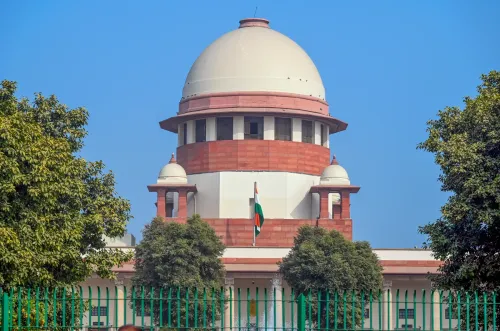
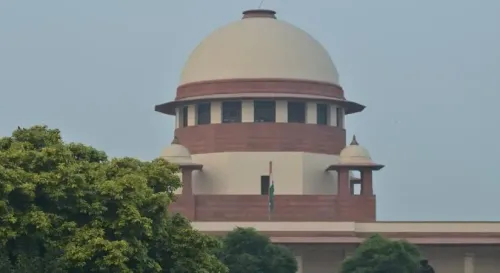
The Supreme Court of India on Tuesday, 29 April 2025, reiterated that neighbourhood schools have a binding constitutional and statutory obligation to grant immediate admission to students allotted by state governments under the Right of Children to Free and Compulsory Education (RTE) Act, 2009. The ruling came as the apex court dismissed a plea by Lucknow Public School, Eldeco, a private school in Lucknow, Uttar Pradesh, that had refused to admit a child selected under the 25 per cent quota for weaker and disadvantaged sections.
Background: How the Dispute Arose
The case originated when a pre-primary student applied through Uttar Pradesh's prescribed admission process and was duly selected by the Basic Education Department for the 2024–25 academic session at Lucknow Public School, Eldeco. Despite the state government forwarding the child's name, the school refused admission, citing uncertainty about the child's eligibility.
The student subsequently approached the Allahabad High Court, which ruled in the child's favour, holding that once the admission process was completed and the allocation list forwarded, the school had no option but to admit the student. The school then moved the Supreme Court, which has now upheld the High Court's direction.
What the Supreme Court Said
A bench of Justice P.S. Narasimha and Justice Alok Aradhe firmly rejected the school's position, affirming that such obligations are consistent with Article 21A of the Constitution, Section 12 of the RTE Act, 2009, and Rule 8 of the Uttar Pradesh RTE Rules, 2011.
Point of View
But the real question is enforcement. Across India, private schools routinely exploit procedural gaps — eligibility disputes, documentation delays, seat-count disagreements — to stall RTE admissions, often past the academic year's start. The court's instruction that schools must admit first and dispute later is sound, but without a fast-track redressal mechanism and real penalties for non-compliance, the constitutional promise of Article 21A will continue to be tested one child at a time. The framing of the 25 per cent quota as a national mission is significant — it signals the court's intent to treat non-compliance not as a civil dispute but as a constitutional dereliction.
NationPress
19 Sept 2026
Frequently Asked Questions
What did the Supreme Court rule on RTE admissions?
The Supreme Court ruled that neighbourhood private schools are constitutionally and statutorily obligated to immediately admit students allotted by state governments under the RTE Act's 25 per cent quota. Schools cannot refuse or delay admission on grounds of eligibility disputes or pending representations.
What is the 25 per cent RTE quota for private schools?
Under Section 12 of the Right of Children to Free and Compulsory Education Act, 2009, private unaided schools must reserve at least 25 per cent of entry-level seats for children from economically weaker sections and disadvantaged groups. Admission costs are reimbursed by the state government.
Can a private school refuse admission to an RTE-allotted student?
No. The Supreme Court has held that once the state government scrutinises an application and forwards a child's name, the school is duty-bound to grant admission without delay. If the school has objections, it may raise a representation with authorities but must simultaneously admit the student.
What was the Lucknow Public School RTE case about?
Lucknow Public School, Eldeco refused to admit a pre-primary student selected by the Uttar Pradesh Basic Education Department under the RTE quota for the 2024–25 session, citing eligibility uncertainty. The Allahabad High Court ordered admission, and the Supreme Court upheld that order on 29 April 2025.
What are private schools required to do under the Supreme Court's direction?
Schools must publish available seats in advance, process RTE admissions transparently, admit allotted students without delay, and provide written reasons for any denial. Any denial is subject to strict review by educational authorities.