Supreme Court takes suo motu cognisance of blind man's plight in Odisha, issues notice
Synopsis
The Supreme Court did not wait for a petition — it stepped in on its own. CJI Surya Kant's bench has taken suo motu cognisance of a congenitally blind man's destitution in Odisha, ordering the state to prove it has delivered every rupee and every benefit it owes him, and directing that he be employed as a para-legal voice for disabled citizens across the state.
Key Takeaways
The Supreme Court initiated suo motu proceedings on 16 June over the welfare of Japa Bhue , a congenitally blind man in Odisha living in extreme poverty.
A bench of CJI Surya Kant and Justice V.
Mohana issued notice to the Odisha government and directed immediate provision of all basic amenities.
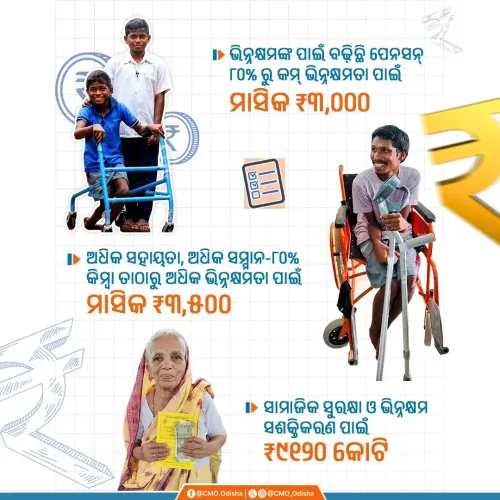
Japa Bhue and his mother Radhika Bhue currently receive ₹3,500 per month each in disability and old-age pension respectively, plus free rice.
The state must file an affidavit through an officer of at least Additional Chief Secretary rank on all pending pension arrears and welfare benefits.
The court directed Japa Bhue be engaged as a para-legal volunteer at no less than Odisha's statutory minimum wage.
The next hearing is scheduled for 13 July .
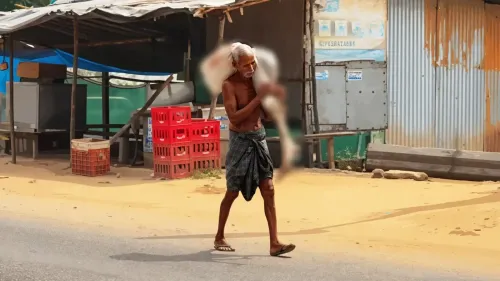
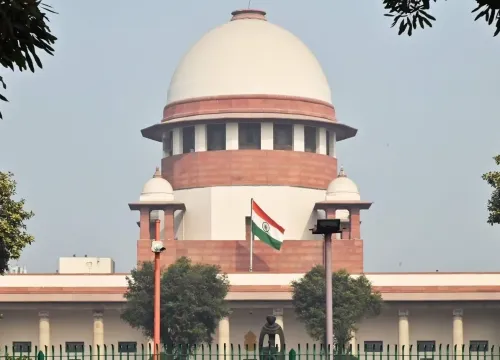
The Supreme Court of India on Tuesday, 16 June initiated suo motu proceedings concerning the welfare and social security of Japa Bhue, a man blind since birth living in extreme poverty in Odisha, issuing notice to the Odisha government and directing state authorities to ensure all basic amenities are provided to him and his 80-year-old mother, Radhika Bhue. The case, titled 'In Re: Ensuring Basic Human Dignity and Social Security for Differently Abled Citizens Living in Extreme Poverty and Other Ancillary Issues', was taken up by a bench of Chief Justice of India (CJI) Surya Kant and Justice V. Mohana.
Background: A Family on the Margins
State counsel informed the apex court that a dwelling unit had been allotted to Radhika Bhue, and that separate units had been assigned to Japa Bhue's two brothers. The state also disclosed that Radhika Bhue receives ₹3,500 per month as old-age pension, while Japa Bhue receives an equal amount as disability pension, in addition to free rice under a government welfare scheme.
The Supreme Court, however, made clear that existing support did not fully address its primary concern — 'the sustenance and dignified life' of Japa Bhue, who has been blind since birth, and his elderly mother.
Key Directions Issued by the Court
The CJI Kant-led bench directed the Odisha government to file an affidavit through an officer not below the rank of Additional Chief Secretary, disclosing whether all pension arrears and social security benefits due to the mother and son have been released. The court also sought a comprehensive account of welfare schemes available to Japa Bhue as a person with visual impairment, and whether he has received all benefits to which he is entitled.
The Odisha State Legal Services Authority (OSLSA) was directed to immediately visit the family and assess their condition. OSLSA Member Secretary Aurbindo Pattanaik, present via video conferencing, was instructed to ensure the Secretary of the concerned District Legal Services Authority visits the family on the same day. The court further ordered that if any immediate medical assistance is required, the District Legal Services Authority shall coordinate with the Chief Medical Officer of the area to make necessary arrangements.
Housing Entitlement Under Scrutiny
The bench observed, prima facie, that Japa Bhue appears entitled to a separate dwelling unit under applicable government schemes — an aspect it specifically directed the State Legal Services Authority to examine. The authority has been asked to submit a separate report on housing benefits available to the family and, if entitlement is confirmed, to take up the matter with the state government for appropriate relief.
A Role for Japa Bhue: Para-Legal Volunteer
In a notable directive, the apex court ordered that Japa Bhue be engaged as a para-legal volunteer, specifically tasked with sensitising differently-abled persons about their rights and entitlements under Central and state government schemes. The court stipulated that the honorarium paid to him 'shall not be less than the minimum wages notified by the State of Odisha under the Minimum Wages Act', and must be paid without interruption.
The matter is next listed for hearing on 13 July, when the state's affidavit and the legal services authority's report are expected to be placed before the bench.
Point of View
Yet the bench found that insufficient. The real question this case surfaces is systemic: how many Japa Bhues exist across India's disability rolls, receiving partial benefits while full entitlements go unclaimed for want of awareness or advocacy? The para-legal volunteer directive is an imaginative judicial response, but its impact depends entirely on whether the honorarium is paid consistently and the role is given genuine institutional backing — two things Indian legal services authorities have historically struggled to deliver at the district level.
NationPress
16 Sept 2026
Frequently Asked Questions
What is the Supreme Court's suo motu case involving Japa Bhue?
The Supreme Court took suo motu cognisance of the extreme poverty and welfare deprivation faced by Japa Bhue, a congenitally blind man in Odisha, and his 80-year-old mother Radhika Bhue. The bench of CJI Surya Kant and Justice V. Mohana issued notice to the Odisha government on 16 June, directing immediate provision of all basic amenities.
What benefits does Japa Bhue currently receive from the Odisha government?
According to the state government's submission in court, Japa Bhue receives ₹3,500 per month as disability pension and free rice under a government welfare scheme. His mother Radhika Bhue receives ₹3,500 per month as old-age pension, and a dwelling unit has been allotted to her.
What has the Supreme Court directed the Odisha government to do?
The court directed the Odisha government to file an affidavit through an officer not below the rank of Additional Chief Secretary, disclosing whether all pension arrears and social security benefits have been released. It also ordered the Odisha State Legal Services Authority to immediately visit the family and assess their condition.
Why did the Supreme Court appoint Japa Bhue as a para-legal volunteer?
The court directed Japa Bhue to be engaged as a para-legal volunteer to sensitise other differently-abled persons about their rights and welfare entitlements under Central and state schemes. His honorarium must be paid without interruption and cannot be less than the minimum wages prescribed by Odisha under the Minimum Wages Act.
When will the Supreme Court hear the Japa Bhue case next?
The matter has been posted for further consideration on 13 July, when the state's affidavit and the State Legal Services Authority's report on housing and welfare benefits are expected to be placed before the bench.