Has the SC Challenged Kerala's Reservation Denial for Public Prosecutors?
Synopsis
The Supreme Court has intervened after a lawyer with benchmark disability challenged Kerala's High Court ruling denying reservation in public prosecutor appointments. This case could reshape the interpretation of the Rights of Persons with Disabilities Act, emphasizing the need for inclusion in governmental positions. Stay updated on this critical legal battle.
Key Takeaways
The Supreme Court is evaluating a significant case regarding disability rights.
A lawyer with benchmark disability has challenged the Kerala High Court's ruling.
Reservation under the RPwD Act is a crucial issue in this legal battle.
The case could redefine interpretations of the 2016 Act .
The outcome may influence future government appointments.
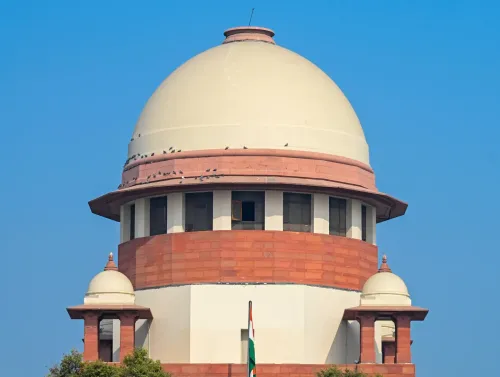
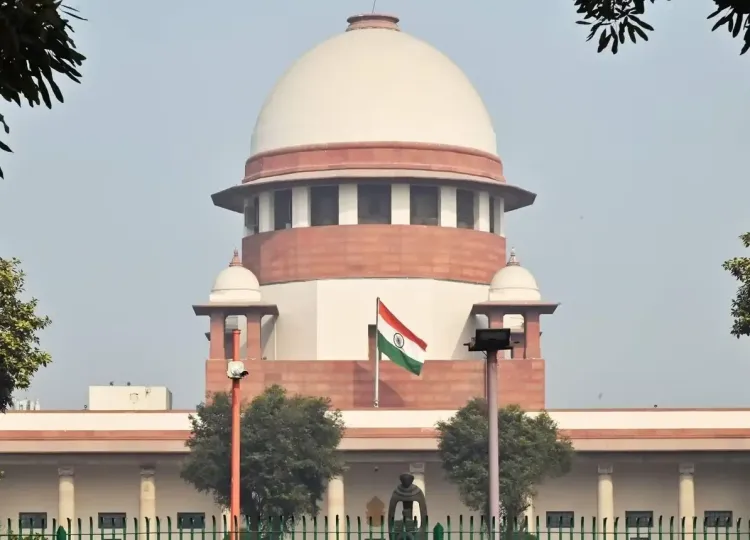
New Delhi, Dec 3 (NationPress) The Supreme Court has sent a notice to the Kerala government concerning a petition lodged by a lawyer with benchmark disability. This plea challenges a judgment from the Kerala High Court, which denied the allocation of reservations under the Rights of Persons with Disabilities (RPwD) Act, 2016, for appointments of additional public prosecutors and government pleaders.
A bench consisting of Justices Vikram Nath and Sandeep Mehta has requested the state government to provide a response within four weeks. The petitioners contended that India is a signatory to the UN Convention on the Rights of Persons with Disabilities (2006) and asserted that the 2016 legislation, which implements the Convention, takes precedence over Kerala's 1978 Rules regarding the appointment of law officers.
Advocate Abhilash M R, representing the petitioner, emphasized that Section 34 of the RPwD Act is compulsory, mandating a minimum of four percent reservation in all government establishments for individuals with benchmark disabilities, without differentiation between permanent, temporary, or contractual positions.
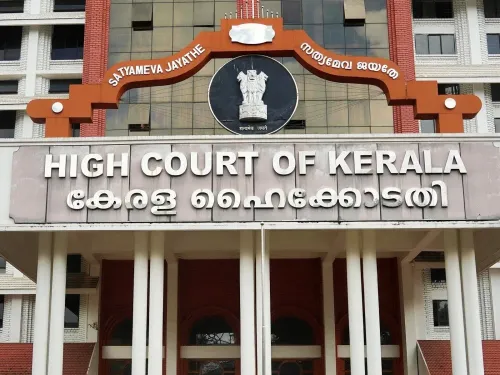
On April 3, the Kerala High Court rejected the petitioner’s writ appeal, stating that the appointments of additional government pleaders and public prosecutors under the Kerala Government Law Officers (Appointment and Conditions of Service) Rules, 1978 were not considered as part of a “cadre,” but rather as contractual arrangements made at the “pleasure of the Government.” Hence, the government is entitled to select the “best advocates” for legal representation.
The Kerala High Court ruled that these positions do not qualify as “civil posts,” and therefore, Section 34 of the 2016 Act regarding reservations is not applicable.
The special leave petition (SLP) before the Supreme Court challenges this ruling, describing it as “perverse and contrary to the intent of the 2016 Act.” It argues that the Kerala High Court “incorrectly equated ‘cadre strength’ with permanent positions” and overlooked statutory definitions.
It further stated that the 2016 Act, designed to implement the UN Convention, is pivotal legislation aimed at ensuring inclusion and equal opportunity. “The High Court’s narrow interpretation of Section 34 of the Rights of Persons with Disabilities Act, 2016—that reservations do not apply to the posts of 13 Government Pleaders and Public Prosecutors because these posts are not permanent—is erroneous. The necessity for reservation is independent of the permanency of posts,” the plea asserted, emphasizing that the doctrine of “client’s choice” cannot supersede constitutional and statutory requirements.
Point of View
This case highlights the ongoing struggle for equality and representation for individuals with disabilities in India. The Supreme Court's involvement signifies the importance of adhering to international standards, ensuring that laws are interpreted in favor of inclusivity. The outcome of this case holds potential ramifications for future appointments in government roles.
NationPress
8 Oct 2026
Frequently Asked Questions
What is the significance of the RPwD Act?
The RPwD Act aims to ensure that individuals with disabilities have equal opportunities and access to various sectors, including government jobs, thereby promoting inclusivity.
Why did the Kerala High Court deny reservation?
The Kerala High Court ruled that the positions of additional public prosecutors are contractual and do not fall under 'civil posts,' thus not qualifying for reservations under the RPwD Act.
What is the role of the Supreme Court in this case?
The Supreme Court's role is to review the Kerala High Court's decision and determine whether the denial of reservation is consistent with the RPwD Act and India's commitments under international law.
How does this case affect future appointments in government?
The outcome could set a precedent for how disability rights are interpreted in relation to government appointments, potentially expanding opportunities for individuals with disabilities.
What are the next steps in the legal process?
The Supreme Court has requested the Kerala government to respond within four weeks, after which further proceedings will take place.