SEBI bars Punit Goenka, Subhash Chandra from markets for 12 months
Synopsis
SEBI has hit Zee Entertainment's top brass with one of the sharpest regulatory actions in Indian media: a 12-month market bar on Punit Goenka and Subhash Chandra, and a ₹1.48 crore penalty, over a ₹726 crore loan deal where ZEEL's own Hyderabad land was mortgaged — reportedly without the board or shareholders ever knowing.
Key Takeaways
SEBI barred Punit Goenka and Subhash Chandra from the securities market for 12 months each.
ZEEL is restrained from market access for two months .
A combined penalty of ₹1.48 crore was imposed — ₹30 lakh on ZEEL, ₹58 lakh on Goenka, and ₹60 lakh on Chandra — payable within 45 days .
The case centres on a ₹726 crore loan availed by four Essel Group companies from IHFL in December 2016 , secured by ZEEL's Hyderabad land without proper approvals.
SEBI found no evidence of prior approval from ZEEL's Audit Committee , Board , or shareholders for the mortgage.
Violations cited: LODR Regulations, 2015 and PFUTP Regulations, 2003 .
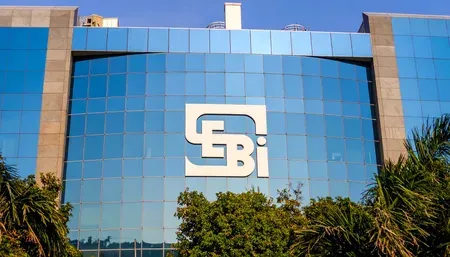
Market regulator Securities and Exchange Board of India (SEBI) has barred Zee Entertainment Enterprises Ltd (ZEEL) and its top executives Punit Goenka and Subhash Chandra from the securities market, after finding that ZEEL's Hyderabad land was mortgaged against loans availed by Essel Group entities without the requisite corporate approvals. The quasi-judicial order restrains ZEEL from market access for two months and bars Goenka and Chandra for 12 months each.
Penalties Imposed
SEBI imposed a combined penalty of ₹1.48 crore across the three entities. ZEEL was fined ₹30 lakh, Punit Goenka was penalised ₹58 lakh, and Subhash Chandra faces the steepest individual penalty of ₹60 lakh. The regulator directed all three to pay within 45 days, citing violations of the Listing Obligations and Disclosure Requirements (LODR) Regulations, 2015 and the Prohibition of Fraudulent and Unfair Trade Practices (PFUTP) Regulations, 2003.
How the Case Unfolded
The probe traces its origins to ZEEL's FY2018-19 statutory audit, which flagged missing title deeds for certain immovable properties. Investigators found that four Essel Group companies had borrowed ₹726 crore from Indiabulls Housing Finance Ltd (IHFL) in December 2016, with Essel Home Pvt. Ltd. as co-borrower. According to SEBI, the borrowing entities were ultimately controlled by the accused and their family members through multiple corporate layers.
When the borrowers failed to maintain the required security cover, IHFL issued notices in November 2018 seeking additional collateral. On 27 December 2018, a Declaration and Acknowledgement was executed on behalf of ZEEL, depositing the original title deed of the company's Hyderabad land with IHFL to create a first-ranking mortgage over the property as additional security for the outstanding loans.
No Approvals Found
ZEEL maintained that it had obtained all necessary corporate approvals for the mortgage. However, SEBI's investigation found no evidence of prior approval from the company's Audit Committee, Board of Directors, or shareholders. Notably, ZEEL itself later informed the regulator that its management and board were unaware of the mortgage and had never authorised the transaction — a position that directly contradicts the company's earlier defence.
Under ZEEL's financial statements for FY19 and FY20, the mortgage qualified as a related-party transaction, requiring specific approvals and disclosures under applicable regulations — obligations that were not met, according to the SEBI order.
What Happens Next
The penalties and market-access bars take effect immediately upon the final order. ZEEL, Goenka, and Chandra retain the right to appeal before the Securities Appellate Tribunal (SAT). This case adds to a pattern of regulatory scrutiny on media conglomerates with complex inter-group financial arrangements, and is likely to intensify investor and institutional focus on related-party transaction disclosures across listed entities.
Point of View
Invisible to the very board that is legally responsible for them. That ZEEL's own management later told SEBI it was unaware of the mortgage is either a damning admission of governance failure or a calculated legal defence — and neither reading is reassuring for minority shareholders. The ₹726 crore loan and the layered corporate structures used to control the borrowing entities reflect a broader pattern of promoter-driven financial engineering that SEBI has been trying to curb through LODR tightening. The 12-month bar is significant, but the deeper question is whether the penalty quantum — ₹1.48 crore against a ₹726 crore exposure — is a credible deterrent.
NationPress
1 Aug 2026
Frequently Asked Questions
Why did SEBI bar Punit Goenka and Subhash Chandra from the securities market?
SEBI barred Punit Goenka and Subhash Chandra for 12 months each after finding that ZEEL's Hyderabad land was mortgaged to secure ₹726 crore in loans taken by Essel Group entities, without approval from ZEEL's Audit Committee, Board of Directors, or shareholders. The regulator held that this violated LODR Regulations, 2015 and PFUTP Regulations, 2003.
What penalty has SEBI imposed on ZEEL, Goenka, and Chandra?
SEBI imposed a total penalty of ₹1.48 crore: ₹30 lakh on ZEEL, ₹58 lakh on Punit Goenka, and ₹60 lakh on Subhash Chandra. All three have been directed to pay within 45 days of the final order.
What was the Hyderabad land mortgage case about?
Four Essel Group companies borrowed ₹726 crore from Indiabulls Housing Finance Ltd in December 2016. When the borrowers failed to maintain the required security cover, ZEEL's Hyderabad land title deed was deposited with IHFL on 27 December 2018 to create a first-ranking mortgage — reportedly without the knowledge or authorisation of ZEEL's board or management.
How long is ZEEL barred from the securities market?
ZEEL has been restrained from accessing the securities market for two months under SEBI's final order. Punit Goenka and Subhash Chandra face the longer bar of 12 months each.
Can ZEEL or its executives appeal the SEBI order?
Yes. ZEEL, Punit Goenka, and Subhash Chandra can challenge the order before the Securities Appellate Tribunal (SAT), which is the designated appellate body for SEBI decisions.