Ram Temple embezzlement probe: Seva Samiti seeks Centre's CBI or ED intervention
Synopsis
A senior Shri Ram Janmabhoomi Seva Samiti official has publicly demanded that the Centre hand over the Ram Temple donation-embezzlement probe to the CBI or ED, arguing the Trust was a federal creation and the case should not remain a state matter. Eight people have already been arrested by a UP Police SIT — but the Samiti's call for central agency oversight signals deepening institutional fault lines around Ayodhya's most powerful religious body.
Key Takeaways
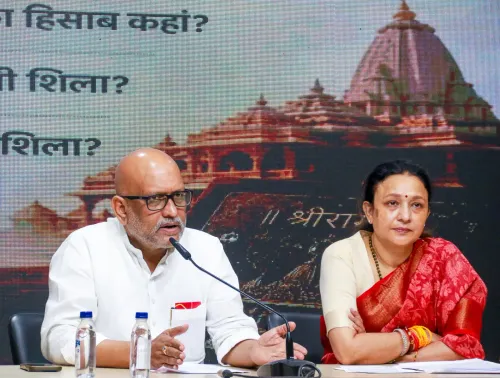
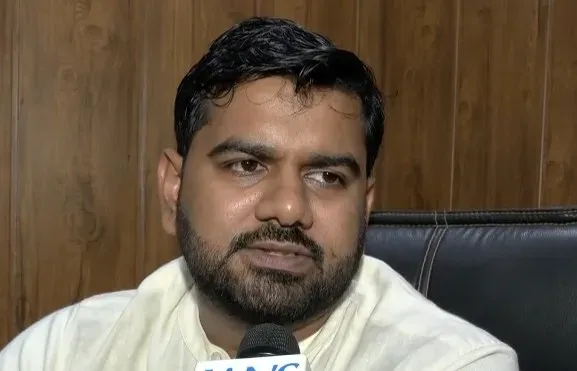
Achyut Shankar Shukla , general secretary of the Shri Ram Janmabhoomi Seva Samiti , on 1 July called for Central government intervention in the Ram Temple funds embezzlement probe.
He suggested the Centre could transfer the case to the CBI or ED , arguing the Shri Ram Janmabhoomi Teerth Kshetra Trust was a federal creation.
A UP Police SIT has so far arrested eight individuals accused of conspiring to siphon cash and valuables from the temple's donation pool.
Shukla said all arrested persons held Trust-issued identity cards and were employed by the Trust.
The Samiti general secretary stated the organisation 'never received the desired assistance from the Ram Mandir Trust', pointing to institutional friction beyond the probe.
Shukla opposed bureaucratic oversight of temple worship, insisting religious governance must remain with Hindu religious leaders .
The Shri Ram Janmabhoomi Seva Samiti on Wednesday, 1 July called on the Central government to step into the ongoing probe into the alleged misappropriation of funds and donations at the Ram Temple in Ayodhya, arguing that federal oversight would lend greater credibility to the investigation. Achyut Shankar Shukla, general secretary of the Samiti, made the appeal amid growing scrutiny over the financial management of the Shri Ram Janmabhoomi Teerth Kshetra Trust.
Why the Samiti Wants Central Oversight
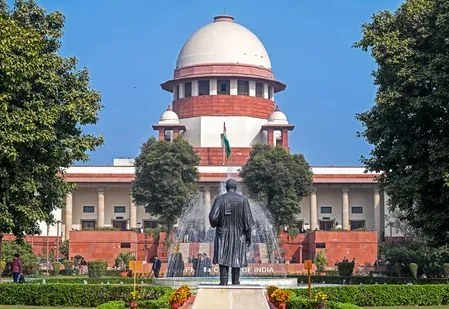
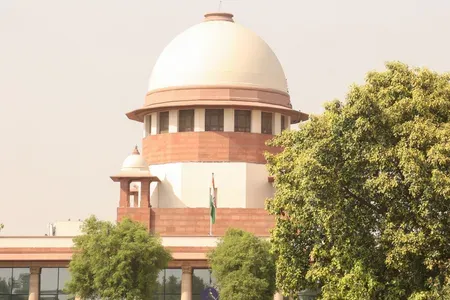
Shukla grounded his demand in the Trust's origins: the body was constituted on the direction of the Supreme Court and formally established by the Central government. He argued that this lineage gives New Delhi both the authority and the responsibility to intervene. 'Accordingly, the Central government had formed the Trust. So now if the Centre itself conducts an investigation into the matter, then it would no longer remain a state subject,' he said.
He added that the Centre could hand over the probe to the Central Bureau of Investigation (CBI) or the Enforcement Directorate (ED) if it chose to do so. At present, a Special Investigation Team (SIT) constituted by the Uttar Pradesh Police is handling the case.
Eight Arrested in Alleged Donation Siphoning Case
Following the SIT's formation, police have arrested eight individuals — Avinash Shukla, Anukalp Mishra, Lav Kush Mishra, Manish Kumar Yadav, Karunesh Pandey, Ramashankar Mishra, Subhash Srivastava, and Ramshankar Yadav alias Tinnu Yadav. All eight are accused of conspiring to siphon off cash and valuables from the temple's donation pool. According to Shukla, all those arrested held Trust-issued identity cards, which were required for entry given the heavy security at the premises.
Shukla offered specific details about one of the accused. He said Ramshankar Yadav alias Tinnu Yadav possessed a wireless set and represented the Trust at functions organised by the Samiti. 'Whenever our Samiti organised a religious function, we used to go to the Trust with a kalash. Along with police officials, Tinnu Yadav and another Trust member came to receive us on behalf of the organisation,' he said. He noted that archival footage of these interactions exists, though he stated he had no knowledge of whose instructions the accused may have followed.
Saints, Not Bureaucrats, Should Lead Temple Affairs
Responding to suggestions that the Trust's functioning should be placed under bureaucratic supervision, Shukla was categorical in his opposition. 'It is a religious matter, and those in the knowledge of it should do it. It is the responsibility of our religious leaders to perform the worship of the Lord according to the scriptures and not of any bureaucracy,' he said.
He did, however, carve out a limited role for administrative machinery — specifically in managing the security of funds and logistics for pilgrims visiting the temple. The distinction he drew was between spiritual governance, which he said must remain with Hindu religious leaders, and operational management, where he acknowledged bureaucratic competence.
Strained Relations With the Trust
Shukla's remarks also surfaced what appears to be a longstanding friction between the Samiti and the Trust. He stated that festivities had largely been carried out with support from the police and local administration rather than the Trust itself. 'It is not hidden that we never received the desired assistance from the Ram Mandir Trust,' he said, a comment that points to institutional tensions beyond the immediate embezzlement allegations.
He also stressed that a proper investigation is already underway, and was careful to add that raising questions over the faith of Prime Minister Narendra Modi or Uttar Pradesh Chief Minister Yogi Adityanath in this context was, in his view, 'improper'. As the SIT probe continues, the Samiti's demand for central agency involvement is likely to intensify political and institutional scrutiny around the management of one of India's most prominent religious sites.
Point of View
Which is an unusual dynamic. The public acknowledgement that the Samiti 'never received the desired assistance from the Ram Mandir Trust' is the more revealing detail: it suggests the embezzlement case has exposed a deeper governance vacuum at Ayodhya's most high-profile institution. The Trust was born of a Supreme Court order and Central notification, yet its accountability architecture appears to have lagged far behind the scale of donations it now handles. Whether the Centre acts on the Samiti's demand or leaves it with the UP SIT will itself be a political statement about who controls the narrative around the Ram Temple.
NationPress
30 Sept 2026
Frequently Asked Questions
What is the Ram Temple embezzlement case in Ayodhya?
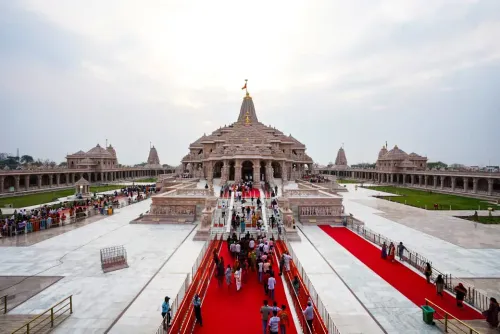
The case involves the alleged misappropriation of cash and valuables from the donation pool of the Ram Temple in Ayodhya, managed by the Shri Ram Janmabhoomi Teerth Kshetra Trust. A UP Police SIT has been formed to investigate, and eight individuals have been arrested so far on charges of conspiring to siphon funds.
Why is the Seva Samiti demanding Central government intervention?
The Shri Ram Janmabhoomi Seva Samiti argues that since the Trust was constituted by the Central government on Supreme Court directions, the Centre has the authority to take over the probe. General secretary Achyut Shankar Shukla said federal oversight would remove the case from being treated as a purely state matter.
Who has been arrested in the Ram Temple funds case?
Eight individuals have been arrested: Avinash Shukla, Anukalp Mishra, Lav Kush Mishra, Manish Kumar Yadav, Karunesh Pandey, Ramashankar Mishra, Subhash Srivastava, and Ramshankar Yadav alias Tinnu Yadav. All are accused of conspiring to siphon cash and valuables from the temple's donations.
Could the CBI or ED take over the Ram Temple embezzlement probe?
According to Seva Samiti general secretary Achyut Shankar Shukla, the Centre has the option to hand the case to the CBI or ED if it chooses to intervene. As of 1 July, the probe remains with a UP Police SIT and no formal transfer has been announced.
What is the Shri Ram Janmabhoomi Teerth Kshetra Trust?
The Trust is the body mandated to oversee the construction and management of the Ram Temple in Ayodhya. It was established by the Central government following a Supreme Court directive and is responsible for administering the temple premises, including the handling of donations.