CM Rekha Gupta Amplifies Shah's Five-Year Drug Warning to Punjab
Synopsis
Delhi CM Rekha Gupta amplified Union Home Minister Amit Shah's sharp rebuke of Punjab's AAP government, invoking its 2022 promise to end the drug trade in three months — a pledge now five years old and, the BJP argues, thoroughly unfulfilled.
Key Takeaways
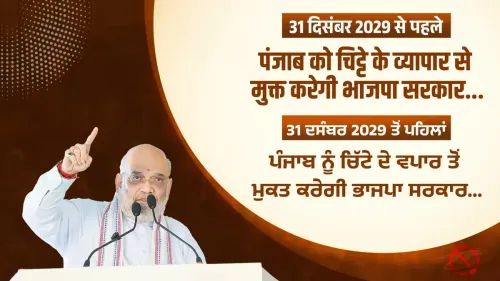
Delhi CM Rekha Gupta shared Amit Shah 's direct attack on the Punjab AAP government over drug-trade failure on 20 October 2026 .
AAP's 2022 election manifesto pledged to eliminate Punjab's drug trade within three months of forming the government.
CM Bhagwant Mann 's administration is now in its fifth year ; BJP leaders argue the drug trade has grown, not shrunk.
The post carries the hashtag #NashaMuktPunjab , repurposing the government's own anti-drug campaign label as a critique.
Drug trafficking across the India-Pakistan border through Punjab has been a decade-long Centre-state flashpoint.
The next Narcotics Control Bureau annual report and the winter session of Parliament are the immediate milestones to watch.
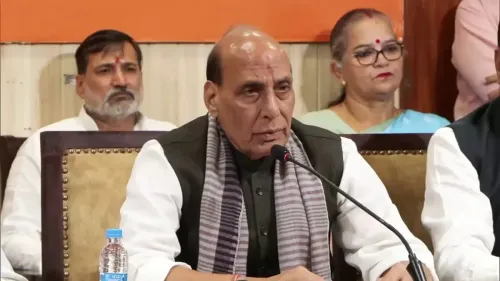
A three-month promise. Five years gone. Delhi Chief Minister Rekha Gupta on Tuesday, 20 October 2026 shared a sharp rebuke from Union Home Minister Amit Shah, directing it squarely at the AAP-led Punjab government — a reminder that the clock started long ago and the drug trade, by the Centre's reckoning, has only grown.
The post quotes Amit Shah in pointed Hindi: 'आप तीन महीने में नशे के कारोबार को समाप्त करने का वादा कर पंजाब की गद्दी पर बैठे हो।' — 'You came to power in Punjab on the promise of ending the drug trade within three months. Five years have passed, and the trade is growing day by day.' The hashtag #NashaMuktPunjab gives the attack a campaign-slogan edge even as it borrows the ruling party's own anti-drug branding.
The promise that launched a government
When Aam Aadmi Party swept Punjab in 2022, its campaign was built in part on an audacious guarantee: dismantle the state's notorious drug economy within three months of taking office. Chief Minister Bhagwant Mann and the party's top leadership made the pledge an electoral centrepiece, tapping into deep anxiety among Punjab families who had watched the crisis hollow out a generation.
Four-and-a-half years on, the AAP administration points to its own rehabilitation drives and police operations under the Nasha Mukt Punjab initiative as evidence of intent. But BJP leaders, including now CM Rekha Gupta amplifying Shah's words, argue that intent without results is just a broken contract.
Delhi's CM, Punjab's politics
It is no accident that a Delhi chief minister is keeping score on Punjab. BJP and AAP remain fierce rivals across multiple states, and Delhi itself was governed by AAP for a decade before Rekha Gupta's party reclaimed it. The post is as much about framing the national anti-drug narrative as it is about Punjab governance — a signal that BJP intends to press this accountability argument hard into the next electoral cycle.
Drug trafficking across the India-Pakistan border runs through Punjab's heartland and has been a persistent flashpoint between the Centre and state administrations for over a decade, regardless of which party held Chandigarh. What has changed is the precision of the political targeting: an explicit countdown — the original three-month vow — gives the opposition a ready-made yardstick that cannot be reframed.
What the numbers still don't settle
The next Narcotics Control Bureau annual seizure data will be a genuine test of competing narratives. High seizure figures can be read either way — more drugs caught, or more drugs flowing. The real metric Punjab's critics demand is a sustained fall in consumption and trafficking, the kind that changes life expectancy and employment in border districts. That verdict is still outstanding.
With the winter session of Parliament approaching, expect state-central coordination on narcotics enforcement to return as a floor issue — and expect this clip, and this five-year counter, to be replayed loudly.
Point of View
BJP avoids needing to construct an attack line — the opposition simply holds the government to its own words. The move also positions Delhi's BJP leadership as a national watchdog on AAP governance, not just a local rival. With Punjab's next election on the horizon and the drug crisis remaining a lived reality for border-district families, the 'broken promise' framing is likely to intensify rather than recede. The real test will be whether seizure data and ground-level indicators shift the argument from rhetoric to evidence.
NationPress
20 Oct 2026
Frequently Asked Questions
What promise did AAP make about Punjab's drug trade in 2022?
AAP promised during its 2022 Punjab election campaign to eliminate the drug trade in the state within three months of forming the government, a pledge made by top party leaders including CM Bhagwant Mann.
What is Nasha Mukt Punjab?
Nasha Mukt Punjab is a state-level anti-drug campaign promoted by the Punjab government with central support, aimed at rehabilitation of drug users and enforcement action against traffickers.
Why is Delhi CM Rekha Gupta commenting on Punjab politics?
BJP and AAP are direct political rivals at the national and state levels. CM Rekha Gupta amplifying Amit Shah's critique of Punjab's AAP government is part of a broader BJP strategy to hold AAP accountable for governance pledges across states.
What did Amit Shah say about Punjab's drug problem?
Amit Shah stated that the AAP government came to power in Punjab on a promise to end the drug trade in three months, but five years have passed and the drug trade is growing day by day, not declining.
Why is Punjab's drug problem linked to the India-Pakistan border?
Punjab shares a long border with Pakistan, and cross-border drug trafficking — particularly heroin — has been a persistent security and social crisis in the state for over a decade, making it a recurring issue between the central government and Punjab's state administration.