Rajnath Singh hails Tejaswin Shankar's historic CWG decathlon bronze
Synopsis
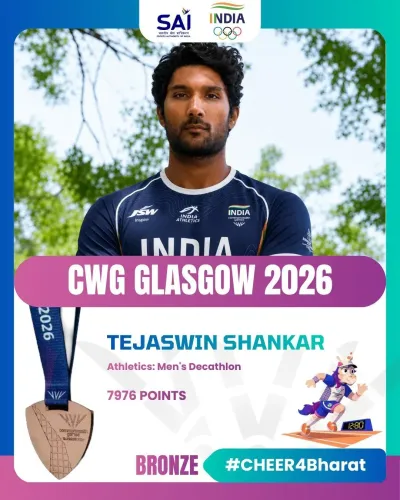
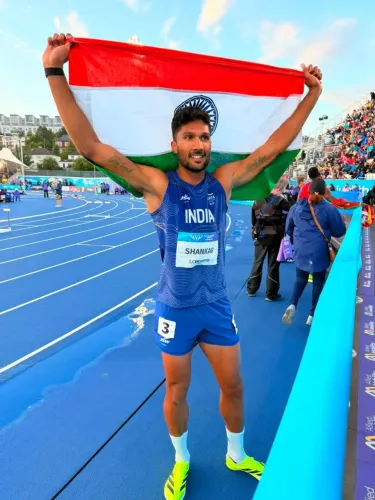
Tejaswin Shankar won bronze in the men's decathlon at Commonwealth Games 2026, becoming the first Indian to medal in the event despite competing through injury. Union Defence Minister Rajnath Singh praised his resilience and historic achievement in a post on 1 August 2026.
Key Takeaways
Tejaswin Shankar won the bronze medal in the men's decathlon at the Commonwealth Games 2026 .
He is the first Indian athlete ever to win a Commonwealth Games medal in the decathlon.
Shankar competed through an injury , completing all ten events to secure the podium finish.
Union Defence Minister Rajnath Singh congratulated Shankar on 1 August 2026 , calling it a 'historic achievement.' Singh also wished Shankar a speedy recovery, highlighting that the injury sustained during competition requires attention.
Competing through injury and refusing to quit, Tejaswin Shankar has etched his name into Indian athletics history — becoming the first Indian athlete ever to win a Commonwealth Games medal in the men's decathlon, claiming bronze at the Commonwealth Games 2026.
A milestone no Indian decathlete had reached before
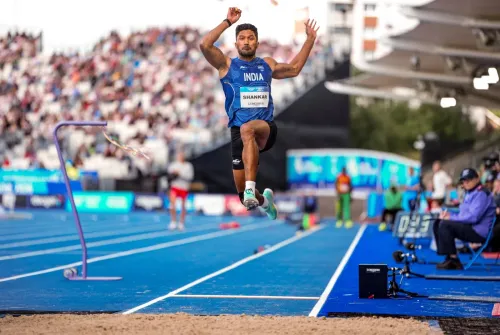
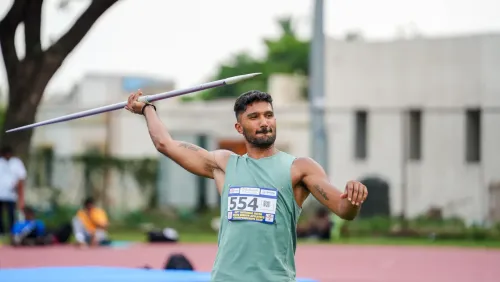
The decathlon — ten gruelling disciplines across two days, from sprints and hurdles to the pole vault and 1500 metres — has long been one of the most demanding tests in track and field. For India, a country whose Commonwealth Games medals have historically clustered in weightlifting, wrestling, shooting, and sprints, a podium finish in the decathlon is genuinely uncharted territory. Shankar's bronze is not just a personal triumph; it shifts what Indian athletics believes is possible in a combined-events discipline.
What makes the achievement sharper is the context: Shankar battled an injury through the competition, grinding out points across all ten events when withdrawal would have been the easier call. That refusal to concede is precisely the quality Union Defence Minister Rajnath Singh spotlighted in his congratulatory post on Saturday, 1 August 2026, calling the finish 'well-earned' and praising Shankar's 'resilience and fighting spirit in the face of adversity.'
Singh's tribute and what it signals for multi-sport athletes
Rajnath Singh — a senior BJP leader who has previously served as Union Home Minister and Chief Minister of Uttar Pradesh — has consistently used his platform to amplify individual sporting achievements, particularly from athletes competing in disciplines outside cricket's glare. His message closed with a wish for Shankar's 'speedy recovery and many more milestones,' an acknowledgement that the injury sustained during competition still requires attention.
That detail matters. The Commonwealth Games decathlon demands athletes push through fatigue and physical stress across two full days; competing injured through such a format to secure a historic medal underlines a level of commitment that goes beyond the scoreboard.
Shankar's road ahead — Olympics and Asian Games in view
The Commonwealth Games, held every four years among nations of the Commonwealth, have served since 1930 as a proving ground for athletes from smaller sporting programmes to build international credentials. For Shankar, this bronze arrives at a moment when the decathlon's Olympic and Asian Games cycles offer the next logical targets. A first Commonwealth medal in the event raises both his ranking profile and the visibility of combined-events athletics in India's national programme. The question now is straightforward: how quickly can he recover, and how high can the ceiling go?
Point of View
In a discipline that demands versatility Indian programmes have rarely prioritised. Singh's public acknowledgement reflects a deliberate governmental pattern of spotlighting multi-sport achievements to broaden the country's athletic identity beyond its traditional medal-earning events. The injury angle adds a layer of narrative that resonates with a government keen to project resilience as a national sporting value. For Indian athletics administrators, the result is both a vindication and a prompt: combined-events athletes now have a credible pathway and a case for structured support.
NationPress
15 Sept 2026
Frequently Asked Questions
Who is Tejaswin Shankar?
Tejaswin Shankar is an Indian track and field athlete who specialises in the decathlon and high jump at international competitions.
What did Tejaswin Shankar win at Commonwealth Games 2026?
Shankar won the bronze medal in the men's decathlon at the Commonwealth Games 2026, making him the first Indian athlete to win a Commonwealth Games medal in that event.
Why is Tejaswin Shankar's bronze medal historic?
It is the first time any Indian athlete has won a medal in the decathlon at the Commonwealth Games, a multi-discipline event considered one of the toughest in athletics.
What did Rajnath Singh say about Tejaswin Shankar's medal?
Union Defence Minister Rajnath Singh called it a 'historic achievement,' praised Shankar's 'resilience and fighting spirit,' and wished him a speedy recovery from the injury he battled during competition.
What is the decathlon at the Commonwealth Games?
The decathlon is a combined-events competition consisting of ten track and field disciplines contested over two days, including sprints, hurdles, jumps, throws, and the 1500 metres.