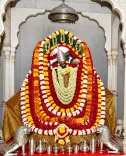
Shekhawat marks Navami with Maa Siddhidatri prayers
Synopsis
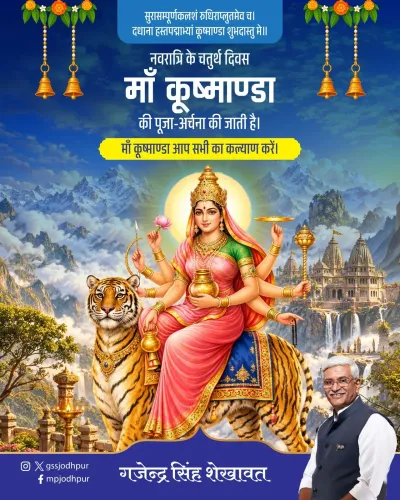
Union Culture and Tourism Minister Gajendra Singh Shekhawat marked the ninth day of Shardiya Navratri by invoking a Sanskrit shloka and seeking Maa Siddhidatri's blessings for all devotees, as the nine-night festival culminates ahead of Vijayadashami.
Key Takeaways
Gajendra Singh Shekhawat , Union Culture and Tourism Minister, posted Navami greetings on October 19, 2026 .
He invoked a Sanskrit shloka honouring Maa Siddhidatri , the ninth form of Goddess Durga worshipped on Navami .
Shardiya Navratri spans nine nights, each dedicated to a distinct form of Goddess Durga, culminating in Navami.
Siddhidatri translates as 'the bestower of supernatural accomplishments and fulfilment,' considered the most complete divine form in the cycle.
The festival concludes with Vijayadashami (Dussehra) , one of India's most widely observed national celebrations.
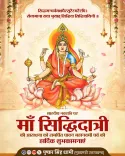
On the ninth and final day of Shardiya Navratri, Union Culture and Tourism Minister Gajendra Singh Shekhawat offered devotional greetings to the nation, invoking the blessings of Maa Siddhidatri — the last of Goddess Durga's nine sacred forms.
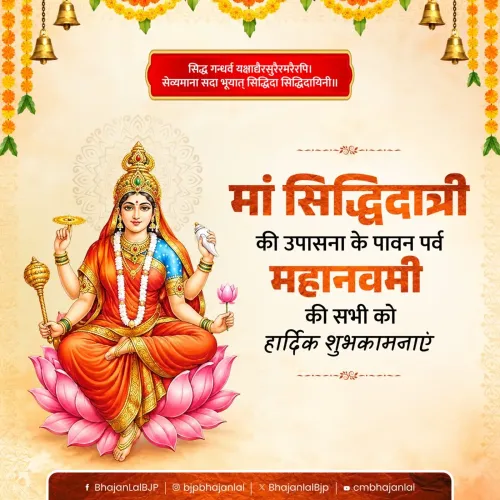
Shekhawat shared a Sanskrit shloka on X (formerly Twitter) on Monday, October 19, 2026, that reads: 'Siddhagandharva yakshādyair asurair amarair api, sevyamānā sadā bhūyāt siddhidā siddhidāyinī' — roughly, 'May she who is worshipped by the Siddhas, Gandharvas, Yakshas, Asuras, and the immortals alike, always bestow upon us accomplishment and fulfilment.' He added a prayer that Maa Siddhidatri's grace remain upon all devotees always.
Navami: The Culmination of Nine Nights
Shardiya Navratri, observed in the autumn lunar month, is among the most widely celebrated Hindu festivals in India. Spread across nine nights, each day is dedicated to a distinct form of Goddess Durga. The ninth day, Navami, is considered the pinnacle of the festival — the moment the cycle of nine divine forms completes. Maa Siddhidatri, whose name translates to 'the bestower of supernatural powers and accomplishments,' is worshipped as the embodiment of perfection and fulfilment.
Culture Ministry's role in festival observance
Union ministers marking major Hindu festivals through public devotional posts has become a consistent practice, reflecting the cultural outreach mandate of the central government. The Ministry of Culture, which Shekhawat heads, has in recent years positioned heritage promotion and living traditions — including classical festivals — as a central pillar of India's soft-power and cultural-preservation agenda. Navratri celebrations across states, many supported by government cultural bodies, draw millions of participants and serve as showcases of regional folk arts, classical dance, and devotional music.
As the festival concludes today, the minister's message carries the traditional spirit of kripa-drishti — the divine grace that devotees seek as Navratri draws to a close and the festivities move toward Vijayadashami (Dussehra).
Point of View
And Shekhawat's Navami post fits a deliberate pattern of public devotional outreach that blurs the line between personal faith and institutional messaging. As the head of the Ministry of Culture, his invocations carry an implicit signal about the government's framing of Hindu festivals as living heritage worthy of state acknowledgement. This aligns with a broader policy arc in which cultural ministry budgets have increasingly supported festival infrastructure, classical arts tied to religious calendars, and heritage tourism routes anchored in pilgrimage sites. The message is devotional on the surface but quietly reinforces the ministry's 'culture as soft power' posture heading into Dussehra season.
NationPress
19 Oct 2026
Frequently Asked Questions
Who is Maa Siddhidatri and why is she worshipped on Navami?
Maa Siddhidatri is the ninth and final form of Goddess Durga, worshipped on the last day of Navratri. Her name means 'the bestower of supernatural powers,' and she is considered the embodiment of divine fulfilment and perfection that completes the nine-night worship cycle.
What did Gajendra Singh Shekhawat post for Navratri Navami 2026?
Union Culture and Tourism Minister Gajendra Singh Shekhawat shared a Sanskrit shloka invoking Maa Siddhidatri on X on October 19, 2026, the ninth day of Shardiya Navratri, praying that her grace remain on all devotees.
What is the significance of the ninth day of Shardiya Navratri?
The ninth day, called Navami, marks the culmination of the nine-night festival. Each day venerates a distinct form of Goddess Durga, and Navami represents the completion of the divine cycle before Vijayadashami (Dussehra).
What Sanskrit verse did Shekhawat quote for Siddhidatri?
The shloka he shared translates as: 'May she who is worshipped by Siddhas, Gandharvas, Yakshas, Asuras, and the immortals, always bestow accomplishment and fulfilment upon us' — a traditional invocation of Maa Siddhidatri.
What is the Ministry of Culture's role in Navratri celebrations?
The Ministry of Culture supports promotion of traditional festivals as part of India's heritage preservation agenda. Government cultural bodies have backed festival infrastructure, classical performances, and devotional events tied to Navratri across states.