Shiv Sena UBT Questions Electoral Integrity Amid Mandatory Voting Debate
Synopsis
In response to the Supreme Court's remarks on mandatory voting, Shiv Sena UBT critiques the electoral system's integrity, emphasizing the need for comprehensive reforms over mere voting mandates.
Key Takeaways
Shiv Sena UBT questions the effectiveness of mandatory voting.
Calls for comprehensive reforms in the electoral system.
Critiques the declining credibility of the Election Commission.
Advocates for a return to traditional ballot papers.
Highlights the urban-rural voting participation gap.
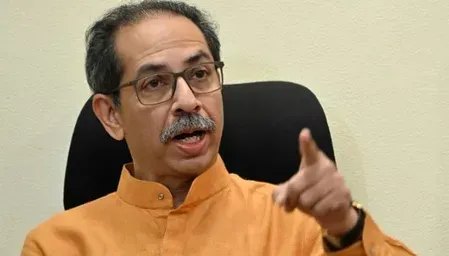
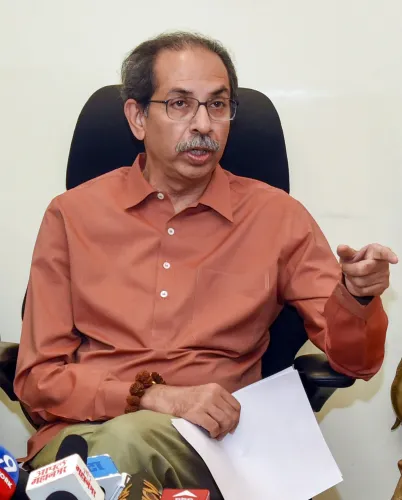
Mumbai, February 27 (NationPress) The Shiv Sena Uddhav Balasaheb Thackeray (UBT) has reacted to the Supreme Court’s recent remarks regarding mandatory voting, raising questions about the very essence of India’s electoral framework. The party recognized the court's aim to fortify democracy but argued that such initiatives are ineffective while the system remains “ensnared in the clutches of a dictatorial and corrupt” regime.
An editorial published in the party's official publication, 'Saamana', on Friday, came in response to comments made by Chief Justice Surya Kant and Justice Bagchi. The judges indicated that mandatory voting might be necessary to bolster democratic integrity, highlighting a troubling trend where “educated and affluent voters” in urban areas participate less frequently compared to their rural counterparts.
The Thackeray faction acknowledged the court's observation regarding the “voting paradox”, noting that despite numerous electoral reform initiatives over the decades, the participation gap has not shown significant improvement. They posed a critical question: “Can democracy be truly strengthened in our nation merely by enforcing mandatory voting?”
“The credibility of the Election Commission has deteriorated. Issues such as confusion in voter lists, manipulation of vote counts, ballot thefts, and EVM scandals have led to a loss of transparency in our electoral process, stifling the essence of democracy. While the Supreme Court's proposal for mandatory voting is not flawed, it begs the question: what about the elections from Delhi to local neighborhoods that are ensnared in a dictatorial and corrupt system?”
The Uddhav Thackeray-led Shiv Sena asserted that for democracy to genuinely flourish, the electoral process must be “thoroughly cleansed”. They advocated for a return to ballot papers instead of Electronic Voting Machines (EVMs), directly questioning the judiciary: “My Lord, will this ever happen?”
“Since our independence, every election, big or small, has sparked debates regarding the disparity between urban and rural voter turnout, which fails to rise beyond a certain threshold. Despite numerous programs aimed at electoral reform, this situation regrettably remains unchanged. Thus, linking the constitutional right to vote with the necessity of strengthening democracy is not unjustified. There’s merit in considering that making voting compulsory could indeed empower democracy,” the editorial stated.
The editorial further condemned the ruling party for employing tactics of “Sama, Dama, Danda, Bheda” (persuasion, temptation, punishment, and division). It accused the government of labeling anyone opposing the BJP as a “traitor” and systematically working to eliminate any opposition.
“At present, neither democracy nor its four fundamental pillars remain intact,” the editorial lamented, noting that legal challenges to these issues often lead to nothing more than “Tariqh pe Tariqh” (endless court dates).
The Thackeray camp contended that while mandatory voting is a commendable “dreamy idealism”, it cannot yield results until the “hammer” falls on the current corrupt system, where institutions—including the Election Commission—are viewed as being “in the pockets” of those in power.
Point of View
The discussion surrounding mandatory voting touches on fundamental issues within India's electoral framework. While the initiative aims to improve participation rates, the underlying systemic corruption must be addressed to truly empower democracy and restore public trust.
NationPress
28 Sept 2026
Frequently Asked Questions
What is the Shiv Sena UBT's stance on mandatory voting?
The Shiv Sena UBT believes that while mandatory voting can seem beneficial, true democratic empowerment requires a thorough overhaul of the electoral system, currently viewed as corrupt.
How does the party view the Supreme Court's observations?
The party acknowledges the Supreme Court's intent to strengthen democracy but argues that such measures are ineffective if the electoral system remains flawed.
What are the main criticisms raised by the Shiv Sena UBT?
The Shiv Sena UBT criticizes the declining credibility of the Election Commission, manipulation of voting processes, and the ruling party's tactics against dissent.
What alternatives does Shiv Sena UBT suggest for voting?
The party advocates for a return to ballot papers over Electronic Voting Machines (EVMs) to enhance transparency in the voting process.
What does the editorial say about urban and rural voting discrepancies?
The editorial highlights ongoing debates about the gap in voting participation between urban and rural areas, suggesting that mandatory voting alone won't address these disparities.