Shivraj hails Rajya Sabha passage of exam anti-cheating bill
Synopsis
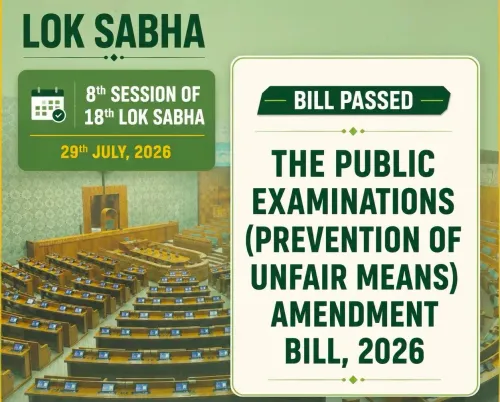
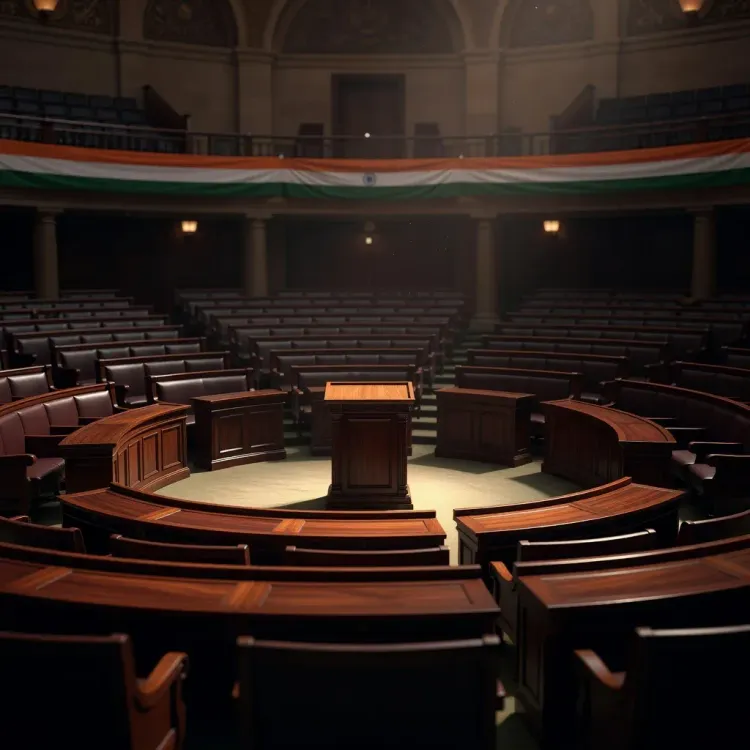
The Rajya Sabha passed the Public Examinations (Prevention of Unfair Means) Amendment Bill, 2026 on 30 July, strengthening the 2024 anti-paper-leak law with fast-track courts, special STFs, and biometric verification. Union Minister Shivraj Singh Chouhan called it a historic step for India's youth.
Key Takeaways
The Rajya Sabha passed the Public Examinations (Prevention of Unfair Means) Amendment Bill, 2026 on 30 July 2026 .
The bill amends the original 2024 Act enacted in response to the NEET and UGC-NET paper-leak controversies.
Key new provisions include fast-track courts , time-bound investigations , special STF deployment , and biometric verification of candidates.
Union Minister Shivraj Singh Chouhan described the passage as a 'historic step' under PM Narendra Modi's leadership.
The amendment targets organised cheating networks and impersonation at exam centres run by bodies such as UPSC , SSC , and NTA .
Enforcement — notification of biometric rules, constitution of fast-track courts, and first prosecutions — will determine the law's real-world impact.
A legislative milestone for millions of exam aspirants arrived on Thursday, 30 July 2026, when the Rajya Sabha passed the 'Public Examinations (Prevention of Unfair Means) Amendment Bill, 2026' — toughening an already landmark law that was born from the ashes of one of India's worst paper-leak crises. Union Agriculture Minister Shivraj Singh Chouhan hailed the passage as a historic step toward a transparent and credible examination system.
Posting in Hindi on X, Chouhan wrote that under the 'visionary leadership' of Prime Minister Narendra Modi, the amendment marks an 'aitihasik kadam' — a historic step — toward freeing the examination system from the fear of corruption and paper leaks. He listed the bill's key provisions: stringent penalties, time-bound investigations, fast-track courts, special STF (Special Task Force) deployment where needed, and biometric verification of candidates.
From NEET chaos to a stricter law
The 2026 amendment builds on the Public Examinations (Prevention of Unfair Means) Act, 2024, which Parliament enacted after a cascade of paper-leak scandals rocked high-stakes competitive exams — most visibly NEET and UGC-NET — triggering street protests and a nationwide demand for systemic reform. That original law was itself a watershed: for the first time, organised malpractice in exams conducted by bodies such as UPSC, SSC, and NTA became a cognisable central offence with serious criminal consequences.
The 2026 amendment sharpens those teeth. Fast-track courts mean cases will not languish for years. A special STF provision gives enforcement agencies a dedicated strike force when organised cheating networks are suspected. Biometric verification at examination centres directly targets impersonation — a loophole that paper-leak syndicates have exploited with near-industrial efficiency.
What the provisions mean for aspirants
For the crores of young Indians who spend years preparing for a single government examination, the stakes could not be higher. A leaked paper does not just hand an unfair advantage to a few — it erases years of honest effort for hundreds of thousands. Chouhan's post captured exactly this sentiment, stating that the provisions will ensure 'the hard work of youth is not diminished by any unfair means.'
The next test of the law's credibility will be operational: how quickly the government notifies rules for biometric verification, how fast-track courts are constituted, and whether the first prosecutions under the amended provisions actually reach conviction. Legislation is a signal; enforcement is the proof.
India's examination reform story is still being written — but with the upper house's stamp on this amendment, the chapter on impunity for paper-leak syndicates just got a lot shorter.
Point of View
Signalling that the 2024 paper-leak crisis remains a live political and governance liability. By layering fast-track courts and STFs onto the existing penal framework, the Centre is trying to shift the narrative from scandal-response to systemic deterrence — a harder case to make until actual prosecutions materialise. For an opposition that weaponised NEET-gate effectively in 2024, the bill's passage narrows the attack surface but does not close it: implementation gaps will remain a ready target. The broader arc here is the government's bet that visible institutional machinery — biometrics, specialised courts, task forces — can rebuild youth trust in merit-based selection before the next election cycle.
NationPress
31 Jul 2026
Frequently Asked Questions
What is the Public Examinations Prevention of Unfair Means Amendment Bill 2026?
It is a central legislation passed by the Rajya Sabha on 30 July 2026 that amends the 2024 Act to introduce fast-track courts, special STFs, biometric verification, and stricter penalties to curb cheating and paper leaks in competitive public examinations.
Why was the original Public Examinations Prevention of Unfair Means Act passed in 2024?
The 2024 Act was enacted after widespread paper-leak controversies in high-stakes exams such as NEET and UGC-NET triggered nationwide protests and demands for systemic reform in India's public examination system.
Which exams does the anti-cheating law cover?
The law covers public examinations conducted by central bodies including UPSC, SSC, and NTA, making organised malpractice in these exams a cognisable central offence.
What is the role of biometric verification under the new amendment?
Biometric verification at examination centres is designed to prevent impersonation, a common tactic used by cheating syndicates where a proxy candidate sits the exam in place of the actual candidate.
What did Shivraj Singh Chouhan say about the bill's passage?
Chouhan called it a 'historic step' under PM Modi's leadership, saying the provisions — including fast-track courts, special STFs, and biometric checks — will ensure that the hard work of youth is not undermined by unfair means.