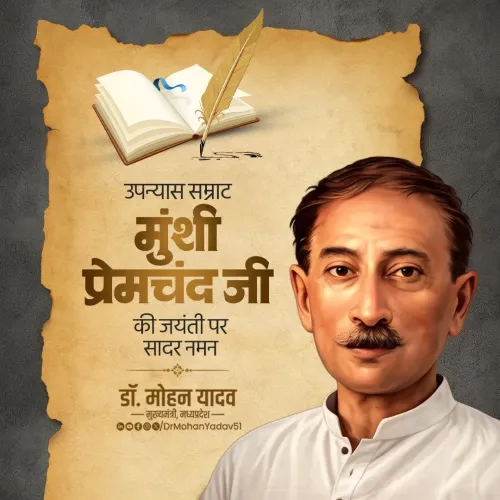
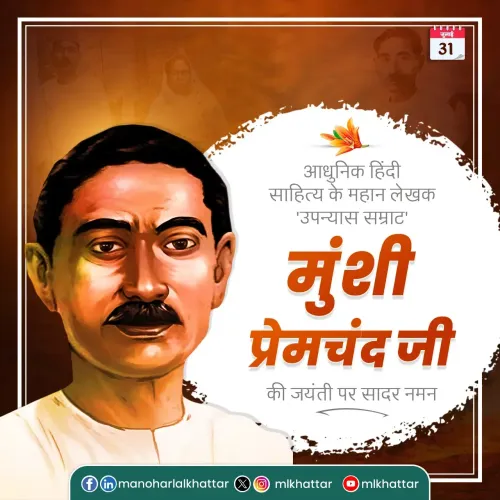
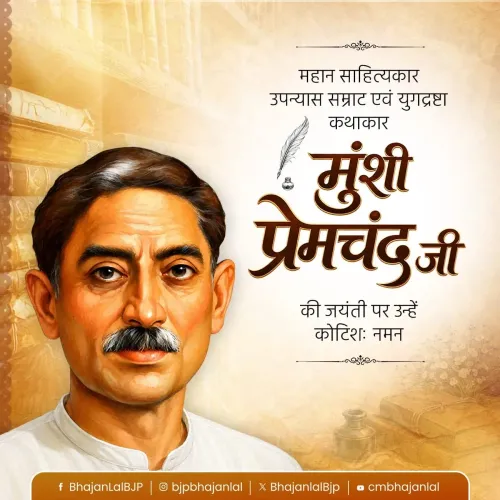
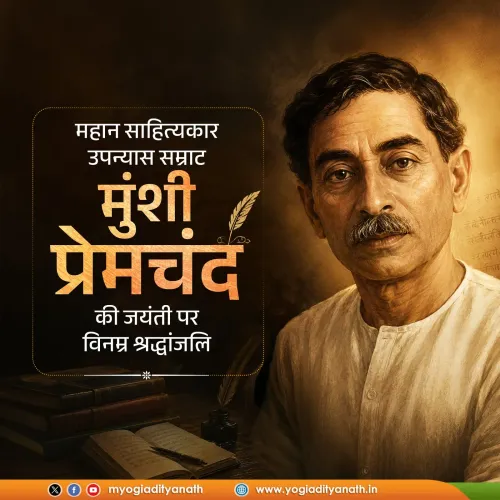
Shivraj Singh Chouhan pays tribute to Munshi Premchand on Jayanti
Synopsis
Union Agriculture Minister Shivraj Singh Chouhan marked Premchand Jayanti on 31 July with a tribute to the Hindi-Urdu literary giant, naming five landmark works including Godaan and Idgah as enduring pillars of India's literary heritage.
Key Takeaways
Shivraj Singh Chouhan paid tribute to Munshi Premchand on his birth anniversary, 31 July .
Chouhan specifically named five works: Godaan, Gaban, Nirmala, Idgah, and Boodhi Kaki .
Premchand, born 31 July 1880 in Lamhi, Varanasi , is regarded as the foremost realist writer in Hindi-Urdu literature.
His novel Godaan — centred on agrarian debt and the Indian farmer — holds particular resonance given Chouhan's role as Union Agriculture Minister.
Premchand Jayanti is observed annually by government and cultural institutions across India.
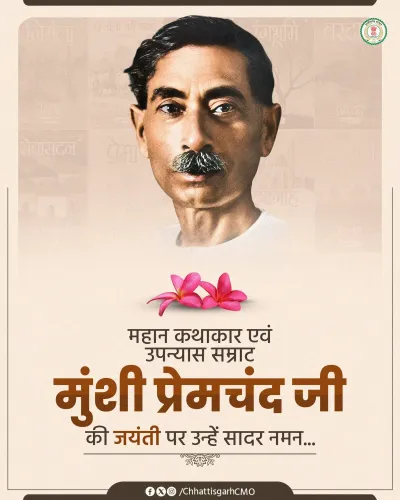
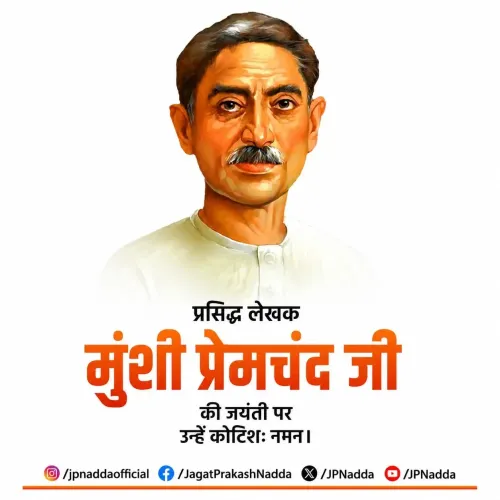
On the birth anniversary of one of Hindi literature's most enduring voices, Union Agriculture Minister Shivraj Singh Chouhan offered his tribute to Munshi Premchand on 31 July, honouring the writer who gave rural India its most powerful literary mirror.
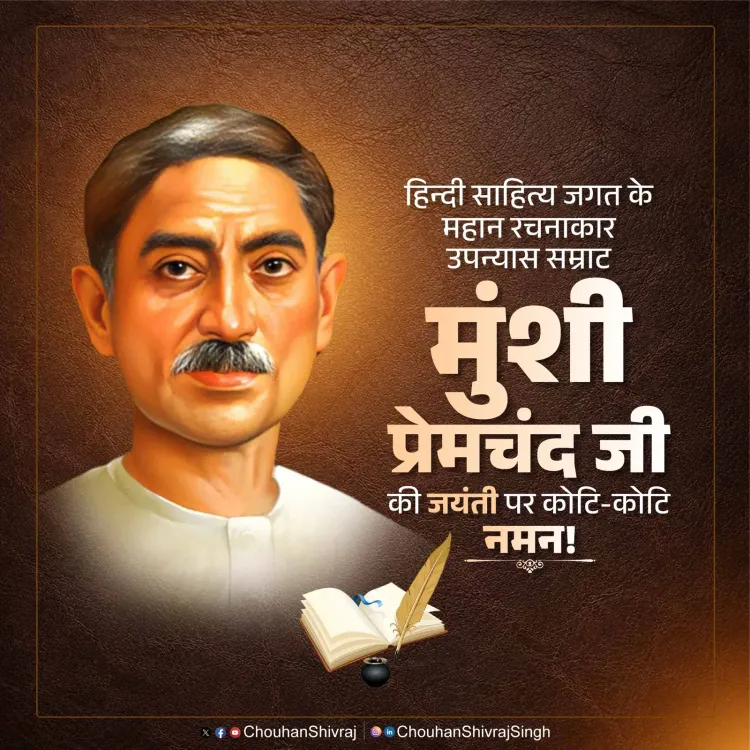
Chouhan wrote, 'हिन्दी साहित्य जगत के महान रचनाकार, उपन्यास सम्राट मुंशी प्रेमचंद जी की जयंती पर कोटि-कोटि नमन करता हूँ!' — 'I offer countless salutations on the birth anniversary of the great creator of the Hindi literary world, the emperor of novels, Munshi Premchand!' He singled out works including Godaan, Gaban, Nirmala, Idgah, and Boodhi Kaki as 'priceless creations' that will 'always remain a strong foundation of the enrichment of the literary world.'
Premchand, born 31 July 1880 in Lamhi, Varanasi, wrote under the pen name Munshi Premchand and became the defining voice of Hindi-Urdu realist fiction. His novels and short stories cut through the silence around caste, poverty, and the grinding weight of colonial-era rural life — giving ordinary Indians a literature that looked like them. Godaan, his final and perhaps greatest novel, remains a landmark study of agrarian debt and the dignity of the Indian farmer. The irony is not lost that a Union Agriculture Minister chose those very themes to anchor his tribute.
Premchand Jayanti on 31 July is observed annually by government bodies, literary institutions, and cultural organisations across the country. For India's political class, marking the occasion has become a standard expression of engagement with Hindi language heritage — but Chouhan's explicit naming of five specific works signals more than a ceremonial nod.
Point of View
Making it a consensus moment in the cultural calendar rather than a partisan one. Chouhan's tribute, however, carries a layer of institutional resonance: as Agriculture Minister, his invocation of Godaan — a novel that anatomises the despair of an indebted Indian farmer — connects his portfolio directly to the writer's most celebrated theme. The BJP has consistently emphasised Hindi language and literary heritage as cultural touchstones, and senior leaders citing specific works rather than offering generic praise signals a deliberate effort to appear substantively engaged with that heritage. Whether symbolic or sincere, such tributes reinforce the party's positioning on cultural nationalism.
NationPress
31 Jul 2026
Frequently Asked Questions
When is Munshi Premchand Jayanti celebrated?
Munshi Premchand Jayanti is celebrated on 31 July every year, marking the birth anniversary of the Hindi-Urdu literary giant born on 31 July 1880 in Lamhi, Varanasi .
What are Munshi Premchand's most famous works?
Premchand's most celebrated works include the novels Godaan, Gaban, and Nirmala , and the short stories Idgah and Boodhi Kaki , all of which depict rural and social life in colonial India with unflinching realism.
What did Shivraj Singh Chouhan say about Premchand?
Chouhan described Premchand as a 'great creator of the Hindi literary world' and the 'emperor of novels', saying his works 'will always remain a strong foundation of the enrichment of the literary world.'
What is the novel Godaan about?
Godaan is Premchand's final novel, widely regarded as his masterpiece. It tells the story of an Indian farmer crushed by debt and the social hierarchies of rural colonial India, and remains a landmark of Hindi literature.
Why is Premchand called 'Upanyas Samrat'?
Premchand is called Upanyas Samrat — 'Emperor of Novels' — because of the breadth, depth, and enduring influence of his fiction, which transformed Hindi-Urdu literature by centering the lives of ordinary, marginalised Indians.