J&K L-G Manoj Sinha pushes for climate-resilient agro-ecosystems at Jammu summit
Synopsis
J&K L-G Manoj Sinha used a national agriculture summit in Jammu to issue a pointed call to action — seven concrete commitments for scientists, banks, and policymakers — framing climate change as an existential threat to farming that India can no longer address with half-measures, even as he cited record 357 million tonne output under PM Modi's tenure.
Key Takeaways
J&K L-G Manoj Sinha addressed the National Summit on Sustainable & Climate Resilient Agroecosystems at SKUAST Jammu on 28 April 2025 .
India's agriculture output reached 357 million tonnes in 2024-25 , up 25 million tonnes year-on-year; horticulture stood at 362 million tonnes .
25 crore Soil Health Cards distributed; farmer credit limit raised from ₹3 lakh to ₹5 lakh ; ₹100 crore allocated for high-productivity seeds.
Pulses MSP procurement up 7,350% and oilseeds up 1,500% since 2013-14 , according to the L-G.
Sinha called for seven commitments including climate-resilient crops, farmer-led research, green credit, and transparent policy evaluation.
Small and marginal farmers identified as the most vulnerable group despite contributing least to climate change.
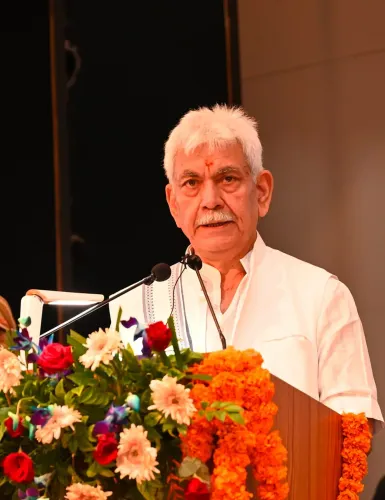
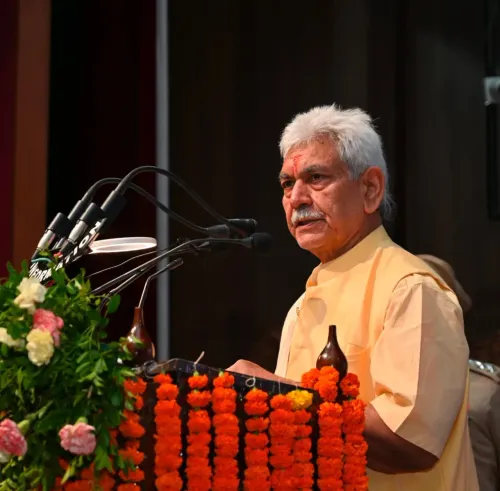
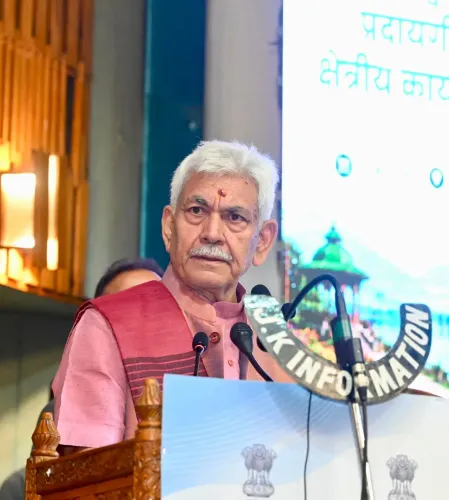
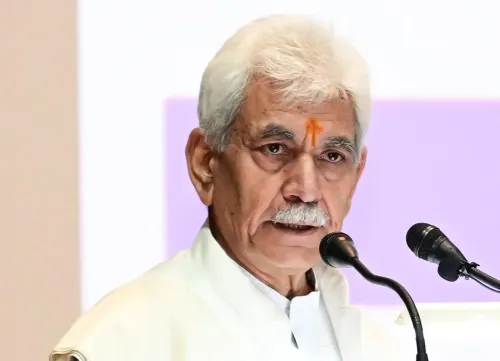
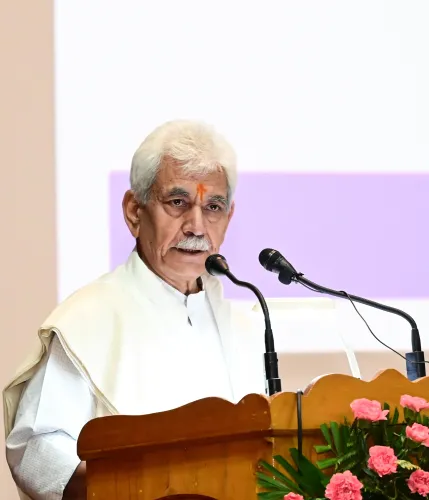
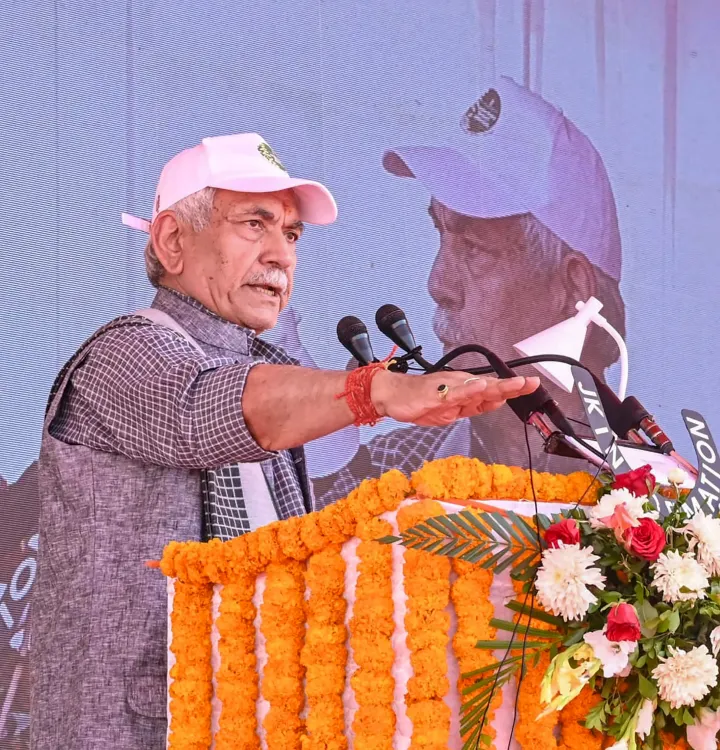
Jammu and Kashmir Lieutenant Governor Manoj Sinha on Tuesday, 28 April 2025, called upon scientists, innovators, and policymakers to urgently build climate resilience and transform sustainable agro-ecosystems, warning that the climate crisis leaves no room for delay. Sinha was addressing the National Summit on "Sustainable & Climate Resilient Agroecosystems: Innovations and Policy Framework" held at the Sher-e-Kashmir University of Agriculture Sciences & Technology (SKUAST), Jammu.
Key Message from the Summit
Sinha stressed that the time for incremental adjustments has passed. "The moment has come to move beyond minor adjustments and embrace bold, science-led, farmer-focused transformation," he said, adding that policies must champion climate-resilient crops and that the divide between laboratories and farmland must be closed.
He underscored that researchers must make the creation of climate-adapted crop varieties their highest priority, and that every farmer deserves real-time climate guidance while every field must be treated as a national asset.
India's Agricultural Achievements Under PM Modi
The L-G highlighted that under the leadership of Prime Minister Narendra Modi, India's agriculture production reached 357 million tonnes in 2024-25, up 25 million tonnes from the previous year, with horticulture output at 362 million tonnes, driven by high-value crop diversification.
He noted that India had launched nationwide soil testing ahead of other nations, distributing 25 crore Soil Health Cards. Farmer credit limits were raised from ₹3 lakh to ₹5 lakh, and ₹100 crore was allocated for high-productivity seeds under a national mission. Pulses procurement at Minimum Support Price reportedly jumped 7,350 per cent and oilseeds 1,500 per cent since 2013-14.
Seven Commitments Called For
Sinha urged scientists and innovators to honour seven specific commitments: climate-resilient agriculture, farmer-led research partnerships, expansion of climate-responsive insurance, green credit, localised climate advisories for all farmers, safeguarding traditional seeds, and policy integration with transparent evaluation.
He also emphasised the importance of precision and regenerative farming, water management, crop diversification, and technology integration, insisting that innovations must reflect real-world needs and not remain confined to seminar rhetoric.
Protecting Small and Marginal Farmers
Sinha drew attention to a critical inequity: small and marginal farmers contribute the least to climate change yet endure its harshest consequences. He called on banks to prioritise sustainable agricultural financing and urged governments to scale protection mechanisms to shield farmer livelihoods from escalating climate risks.
"Farmers are not merely producers of grain but custodians of tradition, culture, food security, and the promise of a sustainable future," he said, calling for heritage seed conservation as an anchor of resilience.
Dignitaries Present
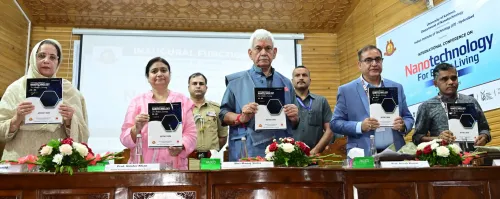
The inaugural session was attended by Satish Sharma, Minister for Food Civil Supplies & Consumer Affairs, Science & Technology; Prof B. N. Tripathi, Vice Chancellor, SKUAST Jammu; Dr Mrutyunjay Mohapatra, Director General of Meteorology, India Meteorological Department (IMD); Prof A. K. Dhawan, President, Indian Ecological Society; Dr S. K. Gupta, Director Research, SKUAST Jammu; and Dr Syed Sheraz Mahdi, Organising Secretary, along with scientists, academicians, policymakers, and students.
The summit signals growing institutional momentum around climate-smart agriculture in India, with its recommendations expected to feed into national and J&K-level policy frameworks in the months ahead.
Point of View
But the real question is whether it carries enforcement weight or remains aspirational. The headline agricultural numbers — record output, soil cards, credit hikes — are government achievements cited by a government appointee at a government-organised summit, which limits independent verification. More telling is the acknowledgement that climate impacts are intensifying even as output rises: growth and vulnerability are not mutually exclusive. India's small and marginal farmers, who operate the majority of its cultivated land, remain structurally exposed — and no amount of summit resolutions substitutes for binding insurance coverage and real-time advisory infrastructure at the village level.
NationPress
19 Sept 2026
Frequently Asked Questions
What was the National Summit on Sustainable & Climate Resilient Agroecosystems about?
The summit, held at SKUAST Jammu on 28 April 2025, focused on building climate-resilient and sustainable agricultural systems in India through innovations and a coordinated policy framework. It brought together scientists, policymakers, meteorologists, and agricultural experts to chart a path forward for farmer-focused climate adaptation.
What seven commitments did J&K L-G Manoj Sinha call for at the summit?
Sinha called for commitments on climate-resilient agriculture, farmer-led research partnerships, expansion of climate-responsive insurance, green credit, localised climate advisories for all farmers, safeguarding traditional seeds, and policy integration with transparent evaluation.
What are India's latest agriculture production figures cited at the summit?
According to Sinha, India's agriculture production reached 357 million tonnes in 2024-25, up 25 million tonnes from 2023-24, with horticulture output at 362 million tonnes, supported by high-value crop diversification.
Why are small and marginal farmers highlighted as a priority group?
Sinha noted that small and marginal farmers contribute the least to climate change yet bear its harshest consequences. He called on banks and governments to prioritise sustainable financing and scaled protection mechanisms specifically for this group.
What agricultural welfare measures were highlighted at the summit?
Key measures cited include the distribution of 25 crore Soil Health Cards, an increase in farmer credit limits from ₹3 lakh to ₹5 lakh, ₹100 crore allocated for high-productivity seeds, and significant jumps in pulses and oilseeds procurement at Minimum Support Price since 2013-14.