What are the responsibilities of the newly appointed special roll observers in Bengal?
Click to start listening
Synopsis
With the ongoing Special Intensive Revision (SIR) in West Bengal, five special roll observers have been appointed to identify intentional data entry errors. Their role is crucial in ensuring electoral integrity ahead of the upcoming Assembly elections. Discover how these observers will impact the electoral process in Bengal.
Key Takeaways
- Five special roll observers appointed in West Bengal.
- Focus on identifying intentional data entry errors.
- Performance evaluation of electoral officials will be conducted.
- Final electoral roll publication set for February 14.
- Polling booths in housing complexes scrapped due to inadequate identification.
Kolkata, Dec 9 (NationPress) The primary duty of the five newly appointed special roll observers tasked with reviewing the ongoing Special Intensive Revision (SIR) in West Bengal is to identify cases of intentional data entry mistakes during the second phase of the process, which will commence following the release of the draft voters' list on December 16.
According to sources from the Chief Electoral Officer (CEO) office in West Bengal, these observers will not only focus on finding specific and intentional data entry errors but will also identify individuals within the system responsible for these errors and recommend appropriate disciplinary measures.
It was noted that during the second phase of the revision exercise, a performance assessment will be conducted for booth-level officers (BLOs), Electoral Registration Officers (EROs), and Assistant Electoral Registration Officers (AEROs) from the first phase of the SIR.
The second stage of the SIR process will involve filing claims and objections alongside the notice phase, which includes issuing, hearing, verifying, and deciding on enumeration forms, all managed concurrently by the EROs.
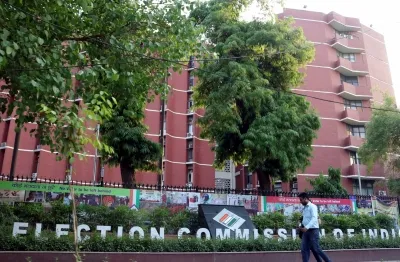
Upon completion of the second phase, the third and final stage, which entails the publication of the final electoral roll, is scheduled for February 14. The Election Commission of India (ECI) is anticipated to announce the dates for the significant Assembly elections in the state shortly after.
As of Monday afternoon, the count of booths in West Bengal that have been identified as lacking any deceased voters, duplicate voters with names appearing in multiple locations, or voters who have relocated, has significantly improved, decreasing to just two from a concerning total of 2,208 reported on December 1.
Furthermore, the ECI has abandoned the plan to establish polling booths within housing complexes featuring multiple high-rise buildings in the state, due to the inability of District Magistrates and district electoral officers to identify a satisfactory number of such complexes suitable for polling.
So far, only two such housing complexes have been identified by the DEOs as of Monday morning.
Point of View
The appointment of additional special roll observers in West Bengal reflects a proactive approach toward electoral integrity. This initiative, aimed at identifying and rectifying intentional data entry errors, underscores the importance of maintaining transparency and accountability in the electoral process, ensuring that every voice is accurately represented.
NationPress
09/12/2025
Frequently Asked Questions
What is the Special Intensive Revision (SIR)?
The Special Intensive Revision (SIR) is a process aimed at updating and ensuring the accuracy of the electoral rolls in preparation for upcoming elections.
What role do the special roll observers play?
The special roll observers are responsible for identifying intentional data entry errors and recommending actions against those responsible within the electoral system.
When will the final electoral roll be published?
The final electoral roll is scheduled to be published on February 14.
What happens after the draft voters' list is published?
After the draft voters' list is published on December 16, the second phase of the revision will begin, involving claims and objections.
Why were polling booths in housing complexes scrapped?
The ECI scrapped the idea of polling booths in housing complexes due to the failure to identify a sufficient number of suitable locations.