Nari Shakti Vandan Adhiniyam: Delhi Minister Sirsa warns history won't forgive opponents
Synopsis
Delhi Minister Manjinder Singh Sirsa used a special Delhi Assembly session to put the Opposition on notice — accusing Congress, AAP, SP, and DMK of collectively burying a Bill that would have placed women in one-third of all legislative seats. His warning that 'history won't forgive' those who blocked it signals the BJP's intent to keep the women's quota front and centre as a political battleground.
Key Takeaways
Delhi Cabinet Minister Manjinder Singh Sirsa addressed a special session of the Delhi Assembly on 29 April 2025 on the Nari Shakti Vandan Adhiniyam.
The Bill sought 33 per cent reservation for women in the Lok Sabha , Rajya Sabha , State Assemblies , and Legislative Councils .
Sirsa accused Congress , AAP , Samajwadi Party , and DMK of collectively obstructing the Bill's passage.
He noted that the Vajpayee government made four attempts to introduce the Bill in Parliament between 1996 and 2010 , each blocked by Opposition resistance.
Sirsa cited 50 per cent reservation in Panchayats as one of the world's largest models of women's participation in democracy under BJP leadership.
BJP women leaders cited include Sushma Swaraj , Vasundhara Raje , Anandiben Patel , President Droupadi Murmu , and Delhi CM Rekha Gupta .
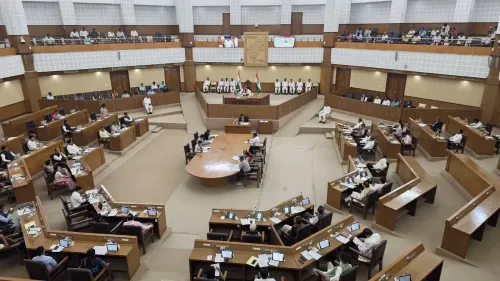
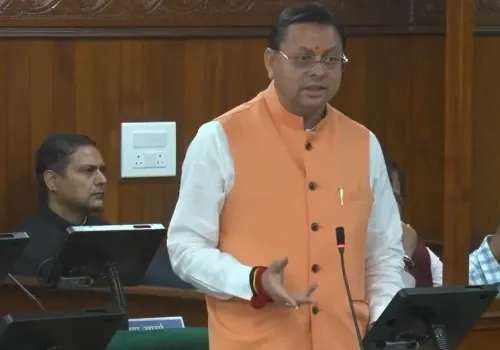
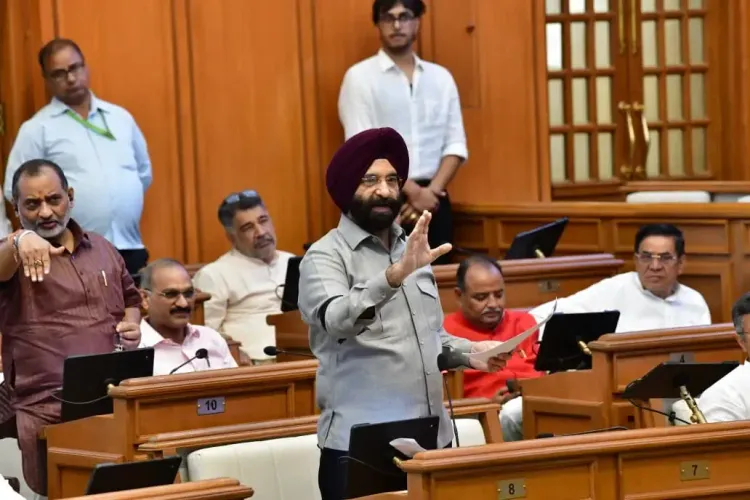
Delhi Cabinet Minister Manjinder Singh Sirsa on Tuesday, 29 April 2025, declared that history would not forgive those who opposed the Nari Shakti Vandan Adhiniyam (Women's Reservation Bill), asserting that the legislation — blocked in the Lok Sabha due to Opposition non-cooperation — represented a historic effort to secure constitutional rights for half of India's population. His remarks came during a special discussion on the Bill in a special session of the Delhi Assembly.
What Sirsa Said in the Delhi Assembly
Speaking on the floor of the Delhi Assembly, Sirsa described the Nari Shakti Vandan Adhiniyam as a decisive step towards providing 33 per cent representation to women in the Lok Sabha, State Assemblies, Rajya Sabha, and Legislative Councils. He alleged that the Indian National Congress (Congress), Aam Aadmi Party (AAP), Samajwadi Party, Dravida Munnetra Kazhagam (DMK), and other Opposition parties collectively worked to obstruct what he called a historic opportunity.
Sirsa quoted Prime Minister Narendra Modi as the driving force behind the Bill, saying:
Point of View
Particularly Congress and AAP. Yet the framing deserves scrutiny: the Bill was passed in the Rajya Sabha in 2010 but lapsed, and its more recent iteration in the 18th Lok Sabha has faced procedural, not just political, hurdles. The claim that Opposition parties 'collectively blocked' it glosses over the complex history of coalition arithmetic that repeatedly derailed the legislation across party lines. More importantly, the BJP's own record on scheduling the Bill for a floor vote — when it commanded comfortable majorities — remains a question mainstream coverage tends to sidestep.
NationPress
19 Sept 2026
Frequently Asked Questions
What is the Nari Shakti Vandan Adhiniyam?
The Nari Shakti Vandan Adhiniyam, also known as the Women's Reservation Bill, is a proposed law that seeks to reserve 33 per cent of seats for women in the Lok Sabha, Rajya Sabha, State Assemblies, and Legislative Councils. It has been debated in Parliament since 1996 and is aimed at ensuring greater political representation for women.
Why could the Women's Reservation Bill not be passed in the Lok Sabha?
According to Delhi Minister Manjinder Singh Sirsa, the Bill could not be passed due to non-cooperation from Opposition parties including Congress, AAP, Samajwadi Party, and DMK, who he alleged collectively obstructed its passage. The Bill has faced repeated legislative setbacks since 1996.
How many times did the Vajpayee government try to pass the Women's Reservation Bill?
According to Sirsa, the government led by former Prime Minister Atal Bihari Vajpayee made four attempts to introduce the Women's Reservation Bill in Parliament, but Opposition resistance prevented its passage each time.
What has the BJP done for women's political empowerment, according to Sirsa?
Sirsa cited 50 per cent reservation for women in Panchayats, which he described as one of the world's largest models of women's participation in democracy. He also pointed to BJP women leaders such as Sushma Swaraj, Uma Bharti, Vasundhara Raje, Anandiben Patel, President Droupadi Murmu, and Delhi Chief Minister Rekha Gupta as evidence of the party's commitment.
Where were Sirsa's remarks made?
Sirsa made these remarks during a special discussion on the Nari Shakti Vandan Adhiniyam held in a special session of the Delhi Assembly on 29 April 2025.