FM Sitharaman: India to take more steps to attract foreign capital

Synopsis
Finance Minister Sitharaman used the Hero Mindmine Summit 2026 to signal that India's bond market opening is just the opening move — more foreign capital measures are coming. With crude oil costs, Strait of Hormuz risks, and fertiliser volatility all squeezing the import bill, the government's urgency around forex reserves and capital inflows is sharper than the headline suggests.
Key Takeaways
Finance Minister Nirmala Sitharaman on 15 June 2026 said the government will announce additional measures to attract foreign capital beyond current bond market steps.
The RBI has already allowed public sector undertakings and banks to raise funds overseas — Sitharaman described this as 'not the end of the story.' Bond market liberalisation is currently limited to government securities ; the Finance Minister signalled expansion to other instruments.
Rising crude oil prices , shipping insurance costs , and Strait of Hormuz risks are elevating India's import bill and forex reserve requirements.
China's return to fertiliser exports after nearly a year has eased some supply concerns flagged since the Union Budget .
India's data centre and GCC ecosystem is expanding to Tier 2 cities including Tumakuru and Mangaluru , with states actively courting investors.
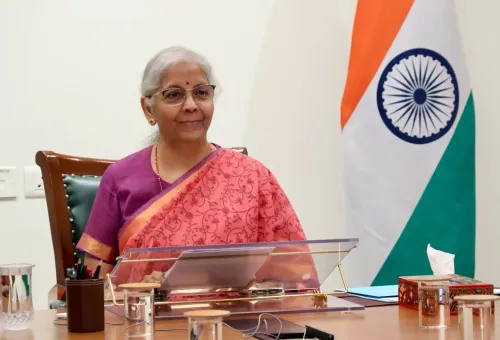
Finance Minister Nirmala Sitharaman on Monday, 15 June 2026 said the government is actively planning additional measures to draw greater foreign investment into India, signalling that recent moves to open the bond market to overseas capital are only the first step in a broader strategy. She made the remarks at the Hero Mindmine Summit 2026 in New Delhi.
Bond Market as a Gateway
Sitharaman confirmed that the Reserve Bank of India (RBI) has already permitted public sector undertakings and banks to raise funds from international markets — but stressed this is not the ceiling of ambition. 'We recognise we need more foreign capital to come in. But the fact that the RBI has now allowed public sector undertakings and banks to go out and raise money from outside is not the end of the story. We will be doing more,' she said.
The Finance Minister specifically identified the bond market as a viable absorption channel for incoming foreign capital. Currently, overseas investment has been opened only for government securities. 'We believe the bond market can be a good way to absorb the capital coming in. As of now, we have done it only for government securities. Certainly, that is not the end of the story,' she added.
Forex Reserves and External Pressures
Sitharaman acknowledged that India's foreign exchange reserves must scale up to keep pace with rising external demand. She pointed to a cluster of global headwinds — tariff volatility, swings in commodity prices, and supply chain disruptions — as factors beyond the government's direct control that nonetheless affect the country's import bill.
Crude oil pricing emerged as a particular concern. 'Not only is the price of crude a challenge, but insurance cover and risk of crude vessels passing through the Strait of Hormuz is also high. India must maintain adequate foreign exchange reserves to manage rising external demand,' she said. Higher shipping insurance costs linked to geopolitical risk in the Strait of Hormuz corridor are adding to India's energy import burden.
Fertiliser Market Volatility
The Finance Minister flagged significant turbulence in the global fertiliser market since the Union Budget was presented earlier this year. Traditional supplier nations had curtailed exports to build domestic inventories, raising concerns over shortages. However, China's re-entry into the export market after nearly a year has partially eased those supply fears, she noted. The episode underscores India's continued exposure to external commodity shocks despite its large domestic consumption base.
Data Centres and GCCs Spreading Beyond Metro Cities
Sitharaman highlighted the rapid expansion of India's data centre and Global Capability Centre (GCC) ecosystem as a structural positive. What was once concentrated in Bengaluru, Hyderabad, and the Delhi NCR is now extending to Tier 2 cities such as Tumakuru and Mangaluru. The Centre is actively coordinating with state governments to ensure data centre and GCC policies are understood and implemented at the ground level.
States are not merely framing policies — they are proactively engaging investors, she said. 'People have not treated it as, "Oh, what is this? What's a data centre?" No, there is a layer of our Indian technicians and youth who are catching on to this very easily,' Sitharaman remarked, pointing to a growing domestic talent pipeline as a competitive advantage.
What Comes Next
The Finance Minister did not specify a timeline for the additional foreign investment measures, but her remarks signal that the government and the RBI are in active dialogue on expanding the scope of capital market liberalisation beyond government securities. With India's domestic consumption providing a degree of buffer against global volatility, the policy push appears aimed at channelling external capital into productive sectors while managing forex adequacy.
Point of View
Not a policy. The bond market opening for government securities is meaningful, but the larger question is whether corporate bonds and equity-linked instruments will follow, and at what pace. India's forex reserve adequacy is a genuine pressure point: crude volatility and Hormuz risk are not transient. The GCC and data centre narrative, while real, risks being overstated as a near-term forex solution — these are multi-year structural plays, not immediate capital inflow levers. The government's candour about external vulnerabilities is welcome; the test is whether the follow-through on capital market liberalisation arrives before the next external shock does.
NationPress
14 Sept 2026
Frequently Asked Questions
What did Finance Minister Nirmala Sitharaman announce about foreign investment?
Sitharaman said on 15 June 2026 that the government will take further steps to attract more foreign capital into India, describing existing bond market measures as only the beginning. She made the remarks at the Hero Mindmine Summit 2026 in New Delhi.
What has the RBI done to allow foreign capital inflows?
The RBI has permitted public sector undertakings and banks to raise funds from international markets. The Finance Minister indicated this is the first step, with more measures under active consideration in coordination with the central bank.
Why is India focused on increasing foreign exchange reserves?
India faces rising crude oil prices, higher shipping insurance costs linked to Strait of Hormuz risks, and supply chain disruptions — all of which increase the import bill. Sitharaman said adequate forex reserves are essential to manage this growing external demand.
How has the fertiliser market situation changed?
Global fertiliser supply tightened after traditional exporters reduced shipments to build domestic stocks. China's re-entry into the export market after nearly a year has partially eased those concerns, though the situation remains volatile since the Union Budget was presented.
Which cities are emerging as new hubs for data centres and GCCs in India?
Beyond established hubs like Bengaluru, Hyderabad, and Delhi NCR, Tier 2 cities such as Tumakuru and Mangaluru are now attracting data centre and Global Capability Centre investments, supported by state-level policies and proactive investor engagement.