Is Sonia Gandhi's Plea Over Voter List Inclusion Really Politically Motivated?
Synopsis
Sonia Gandhi has asserted that allegations of her fraudulent inclusion in the voter list prior to gaining Indian citizenship are politically driven and lacking in merit. She has filed a detailed response countering these claims ahead of her court hearing on February 21.
Key Takeaways
Sonia Gandhi asserts allegations are politically motivated.
She challenges claims of fraudulent voter list inclusion.
The Rouse Avenue Court is set to hear the case on February 21 .
Laws regarding voter lists fall under the Election Commission .
No credible evidence has been provided by the complainant.
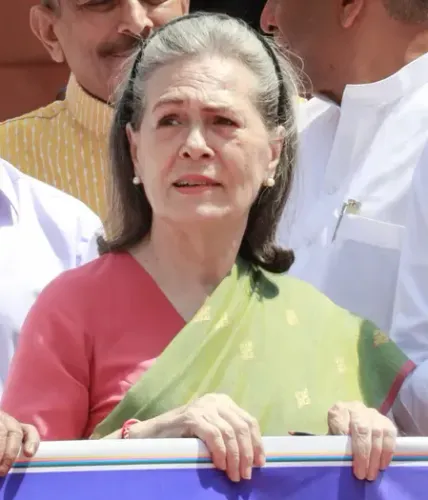
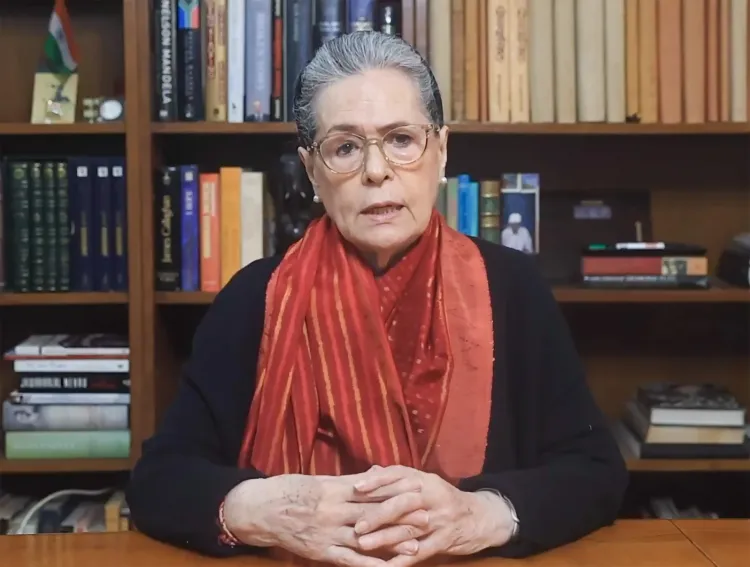
New Delhi, Feb 7 (NationPress) - Congress Parliamentary Party Chairperson Sonia Gandhi has conveyed to the Rouse Avenue Court that the claims regarding the alleged fraudulent inclusion of her name in the voter rolls prior to her acquisition of Indian citizenship are politically motivated and lack any substantive merit.
A comprehensive response has been filed on her behalf in the Rouse Avenue Court, countering a revision petition that accuses her of improperly securing a place in the electoral rolls before becoming an Indian citizen.
Gandhi has forcefully refuted the allegations presented in the petition, asserting that they are founded on erroneous, misleading, and unverified facts.
The case is set for hearing on February 21. The revision petition was submitted by advocate Vikas Tripathi, who has contested a Magistrate Court order issued in September 2025.
The lower court had dismissed his complaint, which aimed to initiate a criminal investigation into alleged irregularities concerning her inclusion in the voter lists.
According to the petition, Sonia Gandhi officially became an Indian citizen on April 30, 1983, but her name allegedly appeared in the New Delhi voter list as early as 1980, raising questions about the validity of her electoral roll inclusion during that time.
In her rebuttal, Gandhi characterized the application against her as baseless and politically motivated, describing it as an abuse of the legal process.
She has asserted that the claims are devoid of factual or legal support.
In her response, Gandhi further argued that the lower court correctly noted that issues regarding citizenship fall under the exclusive jurisdiction of the Central government.
Moreover, she contended that matters related to voter lists and electoral disputes are strictly the domain of the Election Commission, and that criminal courts cannot encroach upon these jurisdictions.
Gandhi also pointed out that the complainant failed to provide any credible documentary evidence to back the accusations. “No concrete documents or evidence have been provided to support the allegations made in the complaint,” she added.
The petition filed by Tripathi queries the circumstances surrounding her name's inclusion in the electoral roll at that time.
It also questions the subsequent removal of her name from the voter list in 1982 and demands clarity about the documents allegedly used for her inclusion in the 1980 electoral rolls.
The petition further claims that the earlier entry may have been based on forged documentation.
Rejecting these assertions, Sonia Gandhi reiterated in her response that the allegations are unfounded and stem from misleading interpretations of the facts.
She defended the legality of her actions and the decisions made by the lower court, asserting that the revision petition is without substance and based on incorrect claims.
Point of View
The ongoing legal battle involving Sonia Gandhi raises critical questions about the intersection of politics and electoral integrity. It is essential to recognize the importance of due process and the presumption of innocence, especially when allegations are made against influential figures. The narrative surrounding this case reflects the broader political climate in India, highlighting the need for transparency and accountability in all electoral matters.
NationPress
19 Sept 2026
Frequently Asked Questions
What are the allegations against Sonia Gandhi?
Sonia Gandhi is accused of being fraudulently included in the voter list before acquiring Indian citizenship.
When did Sonia Gandhi acquire Indian citizenship?
She officially acquired Indian citizenship on April 30, 1983.
What is the significance of the February 21 hearing?
The hearing is crucial as it will address the revision petition challenging the lower court's dismissal of the complaint against Gandhi.
Who filed the petition against Sonia Gandhi?
The petition was filed by advocate Vikas Tripathi.
What has Sonia Gandhi stated in her defense?
Gandhi has called the allegations baseless and politically motivated, asserting that they lack factual and legal support.