Sonowal targets 'vote bank politics' over illegal infiltration

Synopsis
Union Minister Sarbananda Sonowal has accused vote-bank politics of letting foreign infiltrators subvert Indian democracy, sharpening the BJP's long-running immigration-and-elections narrative ahead of border-state assembly cycles.
Key Takeaways
Union Minister Sarbananda Sonowal posted on X on 5 November 2026 alleging that vote-bank politics has allowed foreign infiltrators to 'hijack' Indian democracy.
The post carries the hashtag #SaveDemocracyRemoveAnarchy , indicating a coordinated BJP messaging push.
The Assam Accord of 1985 set 24 March 1971 as the legal cut-off for detecting illegal immigrants in Assam.
The National Register of Citizens (NRC) , completed in 2019 , was designed to identify verified Indian citizens and flag post-1971 entrants in Assam.
Sonowal is a former Chief Minister of Assam with a career-long association with the anti-infiltration movement that produced the Assam Accord.
The BJP has consistently deployed illegal-immigration rhetoric in electoral campaigns in Assam and West Bengal , making this post a live signal ahead of future border-state elections.
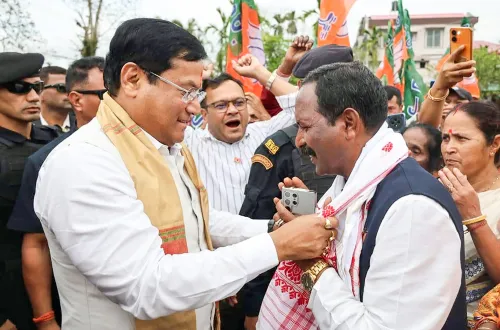
A decades-old fault line in Indian democracy — illegal immigration and its alleged distortion of electoral rolls — was thrust back into the national conversation on Thursday, 5 November 2026, when Union Minister of Ports, Shipping and Waterways Sarbananda Sonowal posted a sharp broadside on X, accusing vote-bank politics of allowing 'foreign infiltrators to hijack our democracy.'
The charge and what it invokes
Sonowal's words — 'For too long, vote bank politics allowed foreign infiltrators to hijack our democracy' — are not abstract. They land squarely in the political geography he knows best: Assam and India's northeastern border belt, where illegal immigration from Bangladesh has shaped electoral and demographic debates for more than four decades. The hashtag #SaveDemocracyRemoveAnarchy signals that the post is part of a coordinated messaging push, not an isolated remark.
The legal scaffolding behind the rhetoric
The policy context is substantial. The Assam Accord of 1985 fixed 24 March 1971 as the legal cut-off: anyone who entered Assam after that date without authorisation is, in law, a foreigner subject to detection and deportation. The National Register of Citizens (NRC), completed in 2019, was designed to give that accord teeth — a state-wide exercise to separate verified Indian citizens from post-1971 entrants. The Citizenship Amendment Act (CAA) of 2019 added another layer, offering fast-track citizenship to non-Muslim minorities fleeing persecution in Bangladesh, Pakistan, and Afghanistan.
Sonowal's political biography is inseparable from this issue. Long before he served as Chief Minister of Assam or entered the Union Cabinet, he was a prominent voice in the student-led movement against illegal immigration that produced the Assam Accord in the first place. His credibility on this terrain is personal, not borrowed.
BJP's border-state electoral calculus
BJP leaders have consistently framed illegal immigration as a democratic emergency, particularly in Assam and West Bengal — two states where the issue moves votes. The party's argument runs like this: infiltrators on electoral rolls dilute the franchise of genuine citizens, and any party that benefits from their presence has an incentive to look the other way. Opposition parties contest that framing, arguing it is used to target and disenfranchise long-settled communities. That clash is the live wire running through every state election in the northeastern corridor.
With assembly election cycles in border states perennially on the horizon, Sonowal's post is a reminder that immigration, citizenship, and democratic integrity remain among the BJP's sharpest campaign instruments — and that the party intends to keep them drawn.
The question is not whether this debate will surface in the next election cycle in the Northeast. It already has.
Point of View
' he escalates the framing from administrative failure to deliberate subversion, raising the political temperature in a region where the NRC and CAA remain deeply contested. The post also reasserts his personal authority on this issue: few active Union ministers carry the biographical weight on immigration that Sonowal does, having come of age politically in the student movement that wrote the Assam Accord. For analysts watching border-state electoral cycles, this kind of coordinated hashtag messaging is typically a leading indicator of campaign season firing up.
NationPress
5 Nov 2026
Frequently Asked Questions
What did Sarbananda Sonowal say about foreign infiltrators?
On 5 November 2026, Sonowal posted on X that 'vote bank politics allowed foreign infiltrators to hijack our democracy,' using the hashtag #SaveDemocracyRemoveAnarchy to amplify the message.
What is the National Register of Citizens (NRC) in Assam?
The NRC is a state-wide exercise completed in 2019 to verify Indian citizenship in Assam. It was designed to implement the Assam Accord of 1985, which set 24 March 1971 as the cut-off date for identifying illegal immigrants from Bangladesh.
What is the Assam Accord and why does it matter?
The Assam Accord, signed in 1985, was a political settlement ending the student-led anti-immigration agitation in Assam. It fixed 24 March 1971 as the legal cut-off: anyone who entered Assam after that date without authorisation is classified as a foreigner subject to deportation.
Why does Sarbananda Sonowal focus on illegal immigration?
Sonowal was a prominent leader in the student movement that produced the Assam Accord in 1985. As former Chief Minister of Assam and a Union Minister, he has consistently made illegal immigration from Bangladesh a central political issue throughout his career.
How does illegal immigration affect elections in Assam and West Bengal?
BJP leaders argue that undocumented migrants on electoral rolls dilute the votes of genuine citizens and that opposition parties benefit electorally from their presence. Opposition parties dispute this framing, calling it a tool to disenfranchise long-settled communities. The debate intensifies before every assembly election in the northeastern border states.