Sri Sri Ravi Shankar urges solidarity with Nepal after floods, landslides
Synopsis
As floods and landslides devastate the Nepal-Tibet border region, Art of Living founder Sri Sri Ravi Shankar has called for solidarity and stronger Himalayan environmental protection — while the Karnataka government races to locate and assist stranded residents through a dedicated emergency hotline and online form.
Key Takeaways
Sri Sri Ravi Shankar expressed solidarity with Nepal on 27 August following devastating floods and landslides along the Nepal-Tibet border .
He called for prayers for affected families and urged stronger environmental protection in the Himalayan region.
Several Indian pilgrims travelling to Mansarovar are reportedly stranded in the disaster zone.
Shivakumar announced that Karnataka is coordinating with the Ministry of External Affairs and Indian missions to trace and assist stranded Kannadigas.
Stranded persons or their families can contact the State Emergency Operation Centre (SEOC) at 1070 or 080-22253707 , or email seockarnataka@gmail.com.
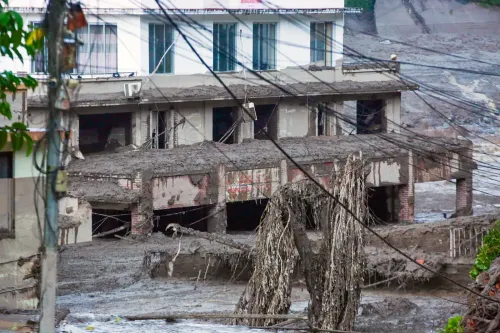
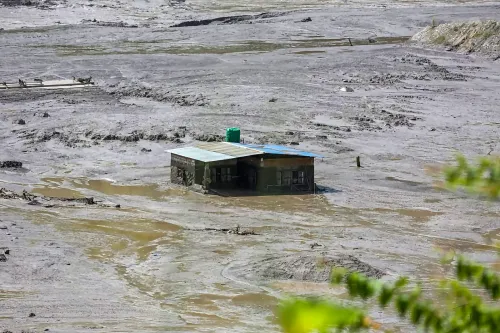
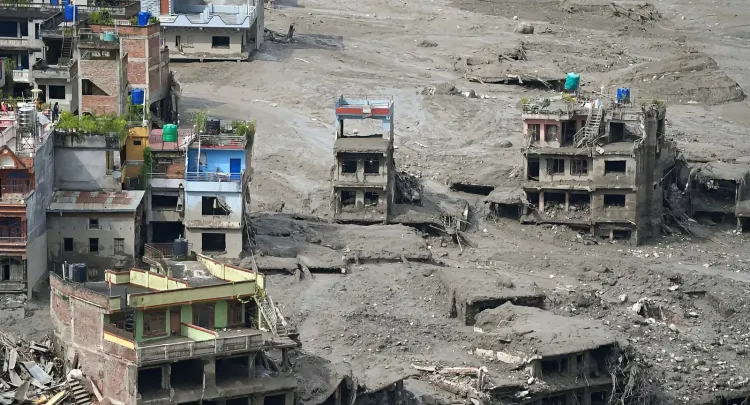
Art of Living founder Sri Sri Ravi Shankar on Thursday, 27 August expressed solidarity with the people of Nepal following devastating floods and landslides along the Nepal-Tibet border, calling on people across India to pray for those affected and demanding stronger efforts to protect the Himalayan environment.
Sri Sri Ravi Shankar's Appeal
In a video statement, Sri Sri Ravi Shankar described the disaster as a manifestation of nature's fury that had struck a country long cherished as a destination for tourists and pilgrims alike. He noted that many individuals had travelled to the region on pilgrimage to Mansarovar and expressed deep concern over reports of deaths.
'Let us all show our solidarity with the people of Nepal, the affected families and the Government of Nepal,' he said, while praying for strength for those who had lost their loved ones. He also voiced hope that Nepal would return to normalcy soon, and issued a broader call for heightened environmental protection, particularly across the fragile Himalayan belt.
Karnataka Government Mobilises Rescue Coordination
Simultaneously, the Karnataka government launched an initiative to trace residents of the state stranded in Nepal and the adjoining Tibet Autonomous Region (TAR) following the flash floods and related disruptions.
Chief Minister D.K. Shivakumar stated on social media platform X: 'The safety and well-being of every Kannadiga remains our foremost concern. In view of the flash floods and disruptions along the Nepal-Tibet border, the Government of Karnataka is working to identify and assist persons from Karnataka who may be stranded in Nepal or the Tibet Autonomous Region, in coordination with the Ministry of External Affairs and Indian Missions.'
How Stranded Persons Can Seek Help
The Chief Minister's Office urged stranded persons, their relatives, and tour operators to submit details through an official online form. The information gathered will be used to coordinate rescue and evacuation efforts with the Ministry of External Affairs, the Embassy of India in Nepal, and the Embassy of India in Beijing.
Assistance is available through the State Emergency Operation Centre (SEOC), reachable at 1070 or 080-22253707, and by email at seockarnataka@gmail.com. The Karnataka government has urged anyone with information about stranded residents to share details at the earliest to enable timely coordination.
The Broader Environmental Warning
Sri Sri Ravi Shankar's call for environmental protection echoes a growing chorus of concern over the Himalayan region's ecological vulnerability. Scientists and conservationists have long warned that deforestation, glacial retreat, and unregulated construction in high-altitude zones are amplifying the frequency and severity of floods and landslides. This disaster comes amid a broader pattern of extreme weather events across South Asia in the 2024 and 2025 monsoon seasons.
As rescue and relief operations continue, all eyes remain on the coordination between Indian state governments, the Centre, and diplomatic missions in Kathmandu and Beijing to account for and assist stranded Indian nationals.
Point of View
And disaster after disaster has not translated into policy urgency. The Karnataka government's swift mobilisation to trace stranded pilgrims reflects a welcome proactiveness, but it also highlights a structural gap: India still lacks a centralised, real-time tracking system for nationals in high-risk pilgrimage zones. Mansarovar and similar high-altitude circuits draw tens of thousands of Indians annually through terrain that is increasingly unstable. Without a mandatory registration protocol, state governments will keep scrambling for basic headcounts each time a disaster strikes.
NationPress
27 Aug 2026
Frequently Asked Questions
What did Sri Sri Ravi Shankar say about the Nepal floods?
Sri Sri Ravi Shankar expressed solidarity with the people of Nepal and called on everyone to pray for those affected by the floods and landslides along the Nepal-Tibet border. He also urged greater efforts to protect the environment, particularly in the Himalayan region, and expressed hope that Nepal would return to normalcy soon.
Which Kannadigas are stranded due to the Nepal floods?
Residents of Karnataka who were travelling in Nepal or the Tibet Autonomous Region — including pilgrims on the Mansarovar route — are among those reportedly stranded following flash floods and related disruptions along the Nepal-Tibet border. The Karnataka government is working to identify and assist them.
How can stranded persons or their families seek help from the Karnataka government?
Stranded persons, their relatives, and tour operators can submit details through an official online form shared by the Karnataka government. They can also contact the State Emergency Operation Centre (SEOC) at 1070 or 080-22253707, or email seockarnataka@gmail.com.
Which agencies is Karnataka coordinating with for rescue efforts?
The Karnataka government is coordinating with the Ministry of External Affairs, the Embassy of India in Nepal, and the Embassy of India in Beijing to facilitate rescue, evacuation, and other necessary assistance for stranded residents.
Why is the Himalayan region particularly vulnerable to floods and landslides?
The Himalayan region is ecologically fragile, with scientists warning that deforestation, glacial retreat, and unregulated construction at high altitudes are intensifying the frequency and severity of floods and landslides. Sri Sri Ravi Shankar's call for environmental protection reflects this growing concern, which has gained urgency after repeated disasters across South Asia in recent monsoon seasons.