Stalin Slams TVK Rule Over Tamil Nadu Law-and-Order Crisis
Synopsis
DMK president M. K. Stalin launched a stinging attack on the TVK government on October 28, declaring Tamil Nadu unsafe across prisons, schools, roads, and courts, accusing the Chief Minister of indifference, officials of lacking direction, and criminals of operating without fear.
Key Takeaways
Stalin posted a sharp law-and-order attack on the TVK government on October 28, 2026 .
He identified four specific institutions — prisons, schools, roads, and courts — as unsafe under the current dispensation.
Stalin accused the Chief Minister of lacking concern, officials of lacking guidance, and criminals of lacking fear.
The post used the hashtag #TVKFails , signalling organised opposition messaging rather than a spontaneous reaction.
His closing line declared that Tamil Nadu will see 'no dawn' as long as TVK remains in power — classic opposition campaign rhetoric.
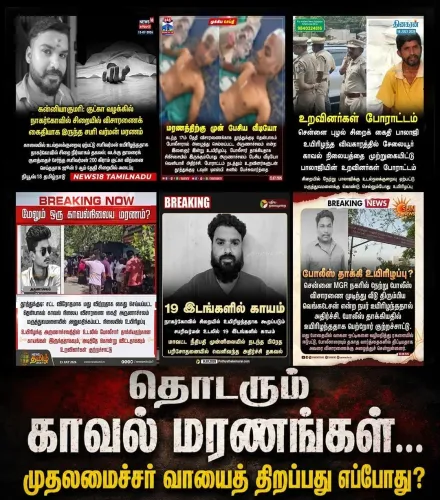
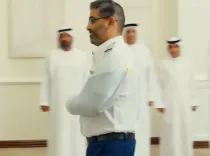
The post included a video attachment , suggesting visual evidence was deployed alongside the written charge.
From prisons to schoolyards, from courtrooms to public roads — DMK president M. K. Stalin declared on Wednesday, October 28, 2026, that nowhere in Tamil Nadu is safe under the current TVK dispensation, launching a sharp broadside that cuts to the heart of everyday public security.
In a Tamil-language post on X, Stalin wrote: 'சிறை, பள்ளி, சாலை, நீதிமன்றம் என எங்கும் பாதுகாப்பில்லை!' — 'There is no safety anywhere — not in prisons, schools, roads, or courts!' He then turned the attack directly onto the Chief Minister, charging that the government shows no concern, offers officials no guidance, and has left criminals entirely without fear.
The Four Institutions at the Centre of the Attack
Stalin's choice of landmarks was deliberate and pointed. Prisons, schools, roads, and courts are not random locations — they are the four pillars of a functioning state's protective architecture. A prison that is unsafe indicts the corrections system. A school that is unsafe indicts the state's duty to children. A road that is unsafe indicts policing. A courtroom that is unsafe indicts justice itself. By naming all four in a single breath, Stalin framed the crisis as total and systemic, not episodic.
The 'TVK Fails' Hashtag and What It Signals
The post carried the hashtags #LawAndOrder and #TVKFails, the latter a campaign-style tag that signals coordinated opposition messaging rather than a standalone comment. 'த.வெ.க. ஆட்சி இருக்கும் வரை தமிழ்நாட்டுக்கு விடிவே இல்லை!' — 'As long as TVK is in power, there is no dawn for Tamil Nadu!' — was the closing line, a rhetorical flourish that opposition parties deploy when they want to plant the idea of an irredeemable ruling failure in the public mind.
Stalin, the DMK, and Tamil Nadu's Governance Wars
The Dravida Munnetra Kazhagam, one of Tamil Nadu's two dominant Dravidian parties, has a long institutional memory of using law-and-order failures as a wedge issue against rivals in power. Stalin himself served as Chief Minister and oversaw the DMK's return to government after the 2021 assembly elections. His current position as opposition leader gives him standing to demand accountability — and the credibility of someone who has sat in the seat he is now criticising.
Opposition attacks of this nature in Tamil Nadu tend to intensify around election cycles and legislative sessions, using social media to set the public agenda before formal floor battles. The post's video attachment — one clip with no images — suggests the messaging may be paired with visual evidence intended to reinforce the written charge.
What the Ruling Side Must Answer
The ball is now squarely in the TVK government's court. Stalin's triple accusation — no concern from the Chief Minister, no guidance to officers, no fear among criminals — is structured as a ladder of institutional failure that demands a structured rebuttal. Whether the government responds with data, with policy announcements, or with silence will itself become part of the political story.
Tamil Nadu's competitive Dravidian politics has always been fought, in part, on the terrain of who keeps the state safer. Stalin has planted his flag — the ruling side must now decide whether to defend its record or let the charge stand unanswered.
Point of View
School, road, court — he forces the ruling party to defend safety on every front simultaneously rather than a single incident. The '#TVKFails' hashtag suggests a sustained digital campaign rather than a reactive comment, raising the question of whether the DMK is building a pre-election narrative around governance failure. For the TVK government, the danger is not just the accusation itself but the cumulative impression created if the charge goes visibly unanswered in legislative forums or the press briefing room. In Tamil Nadu's fiercely competitive Dravidian political arena, the party that wins the law-and-order argument typically enters the next election with a structural advantage on the single issue voters trust most.
NationPress
28 Oct 2026
Frequently Asked Questions
Why is Stalin criticising the TVK government on law and order?
As the leader of the DMK and principal opposition figure, M. K. Stalin is holding the ruling TVK government accountable for what he describes as a complete breakdown of public safety across prisons, schools, roads, and courts in Tamil Nadu.
What does 'த.வெ.க.' mean in Stalin's post?
'த.வெ.க.' is the Tamil abbreviation for the TVK, the ruling party currently in power in Tamil Nadu that Stalin is targeting in his criticism.
What is the DMK's position in Tamil Nadu politics right now?
The DMK, led by M. K. Stalin, is currently in opposition in Tamil Nadu, having previously held power. The party is one of the two dominant Dravidian political forces in the state.
Has the TVK government responded to Stalin's law-and-order attack?
As of the time of this report, no official response from the TVK government or Tamil Nadu police has been issued in reply to Stalin's October 28 post.
Is this part of a larger DMK campaign against the Tamil Nadu government?
The use of the coordinated hashtag '#TVKFails' alongside the post strongly indicates this is part of a sustained opposition messaging strategy rather than a standalone comment, a pattern common in Tamil Nadu politics ahead of elections or legislative sessions.