Stalin Slams AIADMK Govt Over NTK Candidate Karthika's Arrest
Synopsis
DMK president M. K. Stalin condemned the arrest of NTK's Dharapuram bypoll candidate Smt. Karthika on 20 October 2026, calling it political vendetta, warning police against misuse, and equating the ruling Tamil Nadu government with Delhi's BJP in a pointed rhetorical escalation.
Key Takeaways
Stalin on 20 October 2026 condemned the arrest of NTK candidate Smt.
Karthika linked to the Dharapuram Assembly bypoll .
Stalin demanded the 'unconditional release' of Karthika and all arrested NTK functionaries.
He accused the ruling state government of using the arrests to divert attention from a high-profile drug trafficking case involving its own functionary.
Stalin argued that women from marginalised communities in public life must be encouraged, not intimidated through police action.
He directly warned police officers that arresting individuals in bailable cases risks judicial censure, and they must not abet political vendettas.
Stalin equated the state government's conduct with Delhi BJP's in a sharp rhetorical escalation, calling it 'fascism.'
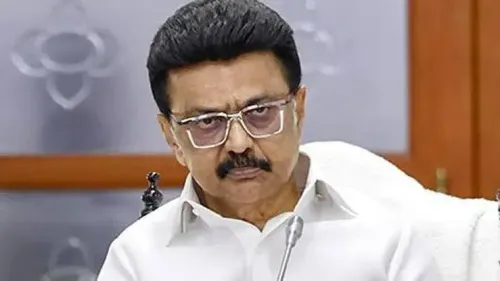
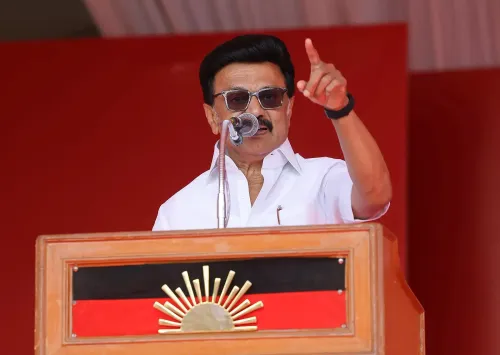
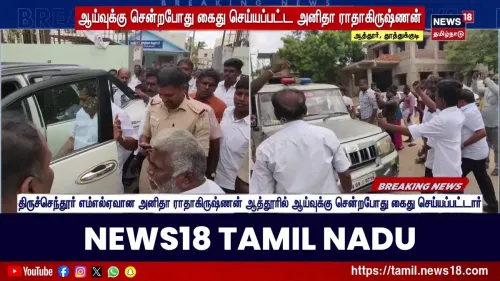
A woman candidate dared to contest a by-election. Now she sits in custody. DMK president M. K. Stalin on Tuesday, 20 October 2026, fired a sharp broadside at the state government, demanding the unconditional release of Naam Tamilar Katchi (NTK) candidate Smt. Karthika, arrested in connection with a case registered during the Dharapuram Assembly constituency by-election.
The Arrest That Sparked the Condemnation
Stalin condemned the arrest in unequivocal terms, calling it 'strongly condemnable.' His post, written in Tamil, argued that women from marginalised communities entering public life must be 'welcomed and encouraged, beyond ideological differences' — not intimidated through police action. The rhetorical question he posed cuts to the chase: 'What does this government hope to achieve by arresting and threatening such persons?'
He was careful to draw a contrast with DMK's own record. When Smt. Karthika had previously criticised the DMK and its ideological leaders, Stalin said his party responded through 'principled ideological counter-arguments to bring clarity' — not by 'locking up women leaders and putting a gag on them.'
Power Abuse in Dharapuram, and a Drugs Case Subtext
The statement does not stop at one arrest. Stalin alleged that the ruling dispensation misused state power during the Dharapuram bypoll — something he said 'the entire country witnessed' — and that the current wave of arrests against NTK functionaries is retaliation for those who dared to question it. He described the conduct as 'tyranny and narrow-mindedness.'
Critically, Stalin linked the crackdown to a separate, high-profile drug trafficking case in which, he alleged, a ruling-party functionary and associates have been arrested. He accused the government of using these political arrests as a 'diversion' from that scandal and to 'conceal its administrative failures.' Meanwhile, he charged, those who issued death threats to journalists and those complicit in gang rape walk free — protected, he said, by their party affiliation.
Stalin's BJP Comparison and the Call for Release
The sharpest line in the post was a direct political equation: in the competition of 'protecting criminals and arresting those who struggle,' Stalin wrote, only two contestants exist — 'ஒன்று டெல்லி பா.ஜ.க., இன்னொன்று தமிழ்நாட்டில் த.வெ.க.' ('One is Delhi BJP, the other is Tamil Nadu's ruling party'). Lumping the state government with the national BJP — ideologically its long-time rival — is a calculated rhetorical escalation designed to sting.
He closed with a flat demand: Smt. Karthika and all arrested NTK members must be released 'unconditionally.' He also warned police officers directly, noting that for bailable offences, officers who proceed with arrests risk judicial censure — and that they must not become instruments of 'political vendetta.'
Tamil Nadu's Bypolls and the Cycle of Accusation
Tamil Nadu by-elections have long served as flashpoints for mutual accusations of police misuse between the state's Dravidian parties. The Dharapuram bypoll follows that pattern — with smaller parties like NTK increasingly caught in the crossfire. What sets this moment apart is the drugs-case backdrop, which adds a governance-credibility dimension to what might otherwise read as routine electoral sparring. Bail hearings for the arrested candidates, and any formal Election Commission response to the bypoll conduct, are the pressure points to watch next.
A by-election, an arrest, a drug scandal, and a gender-in-politics argument have converged in a single statement — and Stalin has made sure none of that subtext goes unnoticed.
Point of View
Suggesting DMK sees the Dharapuram aftermath as a net electoral asset. The explicit BJP comparison is unusual — linking a Dravidian-lineage party to the BJP risks being dismissed as hyperbole, but it also signals that DMK is positioning itself as the unifying opposition voice against both. The direct warning to police officers, citing potential judicial censure, is a legally-grounded pressure tactic designed to separate law enforcement from the ruling party's political directives. Bypolls in Tamil Nadu have historically been launchpads for larger narrative contests, and this episode suggests the 2026 cycle will be no different.
NationPress
20 Oct 2026
Frequently Asked Questions
Why was NTK candidate Karthika arrested after the Dharapuram bypoll?
According to M. K. Stalin's statement, Smt. Karthika was arrested in connection with a case registered during the Dharapuram Assembly by-election. Stalin alleges the arrest is political retaliation against NTK functionaries who questioned alleged power misuse during the bypoll.
What is the Dharapuram bypoll and why is it controversial?
Dharapuram is an Assembly constituency in Tamil Nadu that held a by-election in 2026. It became controversial amid allegations by opposition parties, including DMK, that the ruling government misused state power during the election process.
What did M. K. Stalin demand in his post about Karthika's arrest?
Stalin demanded the unconditional release of Smt. Karthika and all arrested NTK members, condemned the arrest as tyranny, warned police officers against facilitating political vendettas, and accused the government of diverting attention from a drug trafficking scandal.
Why did Stalin compare the Tamil Nadu ruling government to Delhi BJP?
Stalin used the comparison rhetorically to argue that both governments protect criminals while arresting political opponents. It is a pointed escalation meant to frame the ruling state party as ideologically indistinguishable from its traditional rival on democratic conduct.
What can police officers face for arresting people in bailable cases, according to Stalin?
Stalin stated in his post that police officers who carry out arrest proceedings for ordinary, bailable offences risk facing judicial censure from courts. He warned officers not to become instruments of the ruling party's political vendetta.