Stalin Wishes PMK Founder Ramadoss on Birthday, Acknowledges Retirement
Synopsis
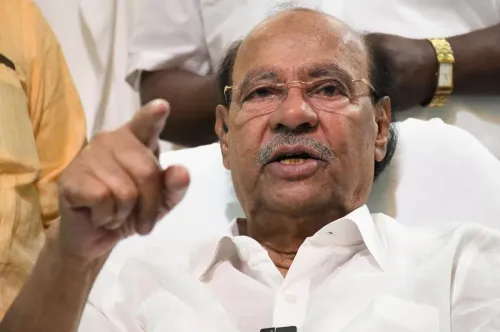
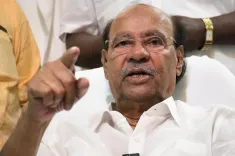
DMK president M. K. Stalin on 25 July 2026 publicly wished PMK founder Dr. S. Ramadoss on his birthday and acknowledged his retirement from active politics, hailing him as a key voice for social justice in Tamil Nadu over three decades.
Key Takeaways
Stalin posted birthday greetings for PMK founder Dr.
Ramadoss on 25 July 2026 .
Stalin acknowledged Ramadoss as a leader who 'led many struggles for social justice and stood as an important voice' in Tamil Nadu politics.
Ramadoss has announced his retirement from active politics, marking a significant generational shift for the PMK .
The PMK , founded in 1989 , has primarily represented the Vanniyar community and advocated for expanded reservations for backward classes.
DMK and PMK have shared electoral alliances in 2006 and 2019 , united around social justice and backward class welfare platforms.
Ramadoss's retirement is expected to prompt questions about PMK's future leadership and coalition positioning ahead of the next Tamil Nadu assembly elections.
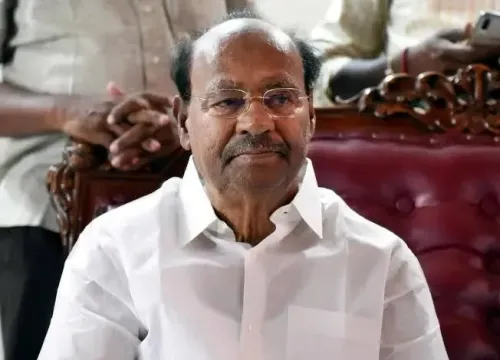
DMK president M. K. Stalin on Saturday, 25 July 2026, extended birthday greetings to Paattali Makkal Katchi (PMK) founder Dr. S. Ramadoss, wishing him a fulfilling and joyful retirement after the veteran leader stepped back from active politics.
In his post on X, Stalin wrote in Tamil: 'சமூகநீதிக்கான பல போராட்டங்களை முன்னெடுத்து, முக்கியக் குரலாக ஒலித்து வந்த தாங்கள்' — acknowledging Ramadoss as someone who 'led many struggles for social justice and stood as an important voice.' Stalin added that he wished Ramadoss's retirement to be filled with contentment and happiness.
Context
Dr. S. Ramadoss founded the PMK in 1989 as a platform primarily representing the Vanniyar community, an intermediate caste group concentrated in northern Tamil Nadu. Over more than three decades, he became one of the state's most recognisable voices on issues of reservation, backward class welfare, and social justice. His announcement of retirement from active politics marks a significant generational moment for one of Tamil Nadu's prominent regional parties.
Stalin's public tribute, posted on Ramadoss's birthday, reflects the personal courtesies that Tamil Nadu's Dravidian political ecosystem has long maintained across party lines — even between formations that are not always electoral allies.
Policy Backdrop
The DMK and PMK have shared electoral platforms at key junctures, including alliance arrangements in 2006 and 2019, built around a common emphasis on backward class reservations and social justice. Both parties have historically drawn from a political tradition that centres caste-based mobilisation as a vehicle for equitable representation in education and government employment.
Ramadoss's decades-long advocacy for expanded reservations for the Most Backward Classes (MBC) and the Vanniyar community in particular intersected frequently with DMK's broader backward class welfare agenda, creating periodic convergence despite competitive pressures between the two formations.
Stakeholders and Impact
The retirement of Dr. Ramadoss is closely watched by the Vanniyar community and social justice advocates across Tamil Nadu, for whom he has been a central political figure. His exit from active politics is expected to prompt internal questions about PMK's direction and leadership succession.
For the broader Tamil Nadu political landscape, the transition raises questions about how PMK will position itself in future electoral contests, and whether the party will seek closer alignment with larger formations such as the DMK or the AIADMK under new leadership dynamics.
What's Next
Political observers will watch for any formal announcement of a leadership transition within the PMK, and the implications that may follow for seat-sharing negotiations ahead of the next Tamil Nadu assembly elections. Stalin's warm public tribute may itself be read as a signal of continued goodwill between the two parties at a moment of change for the PMK. The retirement of a founding figure of Ramadoss's stature inevitably reshapes the calculus of Tamil Nadu's complex coalition arithmetic.
Point of View
Stalin implicitly aligns the DMK with that tradition and signals continued goodwill toward the PMK's constituency. The tribute also underscores how Tamil Nadu's Dravidian political culture uses personal milestones as diplomatic instruments. With assembly elections on the horizon, how PMK navigates succession will directly affect the coalition arithmetic that Stalin's DMK will need to manage.
NationPress
25 Jul 2026
Frequently Asked Questions
Why did M. K. Stalin wish Dr. Ramadoss on his birthday?
DMK president M. K. Stalin extended birthday greetings to PMK founder Dr. S. Ramadoss on 25 July 2026, acknowledging his long advocacy for social justice and wishing him a happy retirement from active politics.
Has Dr. Ramadoss retired from politics?
Dr. S. Ramadoss has announced his retirement from active politics, according to Stalin's post. The exact date of the announcement has not been independently confirmed.
What is the PMK and who founded it?
The Paattali Makkal Katchi (PMK) is a regional political party founded by Dr. S. Ramadoss in 1989, primarily representing the Vanniyar community in Tamil Nadu and advocating for expanded reservations for backward classes.
Have DMK and PMK ever been in alliance?
Yes, the DMK and PMK have formed electoral alliances at key points, including in 2006 and 2019, built around shared emphasis on social justice and backward class reservations.
What does Ramadoss's retirement mean for Tamil Nadu politics?
Ramadoss's retirement from active politics raises questions about PMK's leadership succession and how the party will position itself in future Tamil Nadu assembly elections, potentially affecting coalition negotiations among major parties.