Is The Third Eye a Verdict for Constitutional Balance?
Synopsis
The Supreme Court’s recent ruling on the powers of the Governor and President regarding legislative Bill responses has sparked varied reactions. While the Union Government claims victory, states like Kerala and Tamil Nadu welcome the decision as a reaffirmation of federalism and legislative integrity. The verdict delineates the constitutional roles of the Governor and President amidst ongoing debates over legislative timelines.
Key Takeaways
The Supreme Court's judgment clarifies the powers of the Governor and President.
It emphasizes the importance of timely decision-making on legislative Bills.
The ruling has implications for the balance of power between state and central governments.
States have the right to challenge undue gubernatorial inaction.
Judicial review can be invoked in cases of prolonged delays.
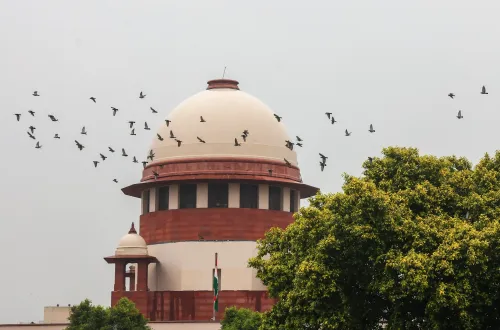
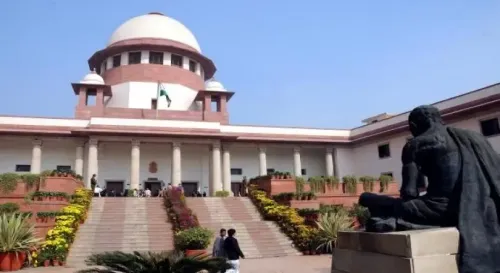
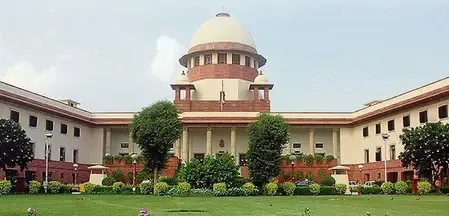
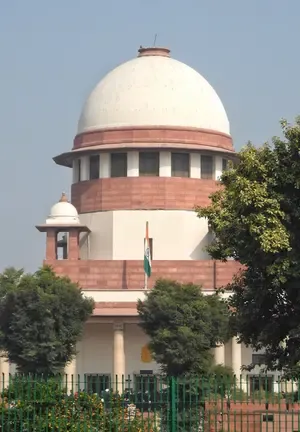
New Delhi, Nov 30 (NationPress) The ruling from the five-member Constitution Bench of the Supreme Court, led by former Chief Justice Gavai, was announced on November 20 regarding the powers of the Governor and President in relation to the timeline for responding to a legislative Bill submitted for assent. This decision has elicited a range of responses, from being hailed as ‘a victory for the Union Government’ to being described as ‘a setback for federalism.’ Meanwhile, states like Kerala and Tamil Nadu, which had approached the apex court against their governors' actions, expressed a sense of ‘welcome’ towards the verdict.
The ruling overturns the April 8 decision made by a two-judge bench in the Tamil Nadu case, which established stringent timelines for gubernatorial assent and introduced the concept of ‘deemed assent’ in instances of excessive delays. That earlier ruling set a one-month deadline for governors to act on a re-enacted bill and created a three-month timeline for bills reserved for the President.
The Constitution bench elaborated on several critical issues and addressed pertinent questions raised in the Presidential reference sent to former Chief Justice Gavai on May 13. It aimed to reconcile ‘the carefully balanced Constitutional framework for processing state legislation’ while providing solutions for instances where the ‘will of the people is hindered by indecision.’ The court established that its role was to avoid a ‘Constitutional deadlock’ without disrupting the ‘Constitutional design of discretion.’
Several pivotal points in the judgment warrant special mention. The court underscored that Articles 200 and 201 afforded the governor and the President a specified ‘textually rooted discretion,’ and imposing ‘externally contrived time-bound mandates’ would essentially rewrite the Constitution. The bench clarified that while governors typically act on the advice of the council of ministers, the Constitution does acknowledge scenarios where governors must utilize their discretion independently. Article 200 provides such a circumstance, with the court noting that while the governor’s discretion is not unlimited, it cannot devolve into a mere ‘perfunctory’ role.
In delineating the parameters of this discretion, the Constitution bench reiterated that a governor faced with a bill has three constitutionally sanctioned choices: granting assent, returning the bill for reconsideration with comments on the reasons for withholding assent (except for money bills), or reserving the bill for the President's consideration. Even after the legislature re-enacts a bill following reconsideration, the governor retains the option of either granting assent or reserving it for the President. The bench clarified that the idea that reconsideration negated any further options contradicts the text and structure of Article 200. Additionally, in reviewing the scope of judicial oversight, the bench ruled that courts cannot evaluate the merits of a governor’s or President’s decisions under Articles 200 or 201, nor can they scrutinize the legality of bills before they become law.
Nevertheless, the verdict permitted judicial review to extend—this is the crux of the contention—to situations where a bill is kept in abeyance due to prolonged and intentional inaction. In such instances, the court may direct the governor to take action without mandating a specific choice among the three constitutional options. The Constitution bench observed that it was upholding a minimal judicial check to avert constitutional paralysis while refraining from interfering with the ‘constitutional design of discretion.’ The bench elaborated why the April 8 ruling could not endure, declaring that the imposition of a one-month deadline for governors to act on re-enacted bills and creating a three-month timeline for the President was inconsistent with the constitutional text.
The judgment further ruled that by introducing ‘deemed assent’ in cases where timelines were not adhered to, the April bench encroached on the constitutional roles of the governor and President, breaching the fundamental principle of separation of powers. The Constitution bench, through a reconciliatory interpretation, articulated that the Constitution embodies a ‘dialogue model’ of federal governance that anticipates deliberation among the Governor, the President, and the legislature rather than a mere process of endorsements or vetoes.
The Constitution bench, chaired by former Chief Justice Gavai, also referenced the 2023 ruling of a three-member bench, including then CJI Chandrachud and Justices Pardiwala and Manoj Misra, which had taken a firm stand against the Punjab governor's inaction, asserting that the phrase ‘as soon as possible’ in Article 200 imposed an implicit obligation of promptness and instructed the governor to decide ‘without further delay.’
The Constitution bench expressed reservations about this judgment, arguing that while it addressed a pressing democratic concern, it introduced a judicial timeline and interpreted an obligation of expedition, effectively extending Article 200 beyond constitutional allowances. It maintained that the expression ‘as soon as possible’ in the proviso to Article 200 merely indicates that a governor cannot indefinitely withhold a bill. Furthermore, these words do not constitute an enforceable constitutional mandate. There remains a debate over whether this aspect of the Constitution bench's ruling diverged from the ‘word of law’ when the Punjab bench adhered to the ‘spirit of law’ to criticize gubernatorial ‘inaction.’ Nonetheless, the Constitution bench's ruling acknowledged that indefinite delays in processing bills cannot undermine democratic governance and asserted that, in appropriate circumstances, there could be limited court intervention to avert a ‘constitutional deadlock.’ The Constitution bench appeared to have a difference of degree, rather than kind, regarding the Punjab verdict.
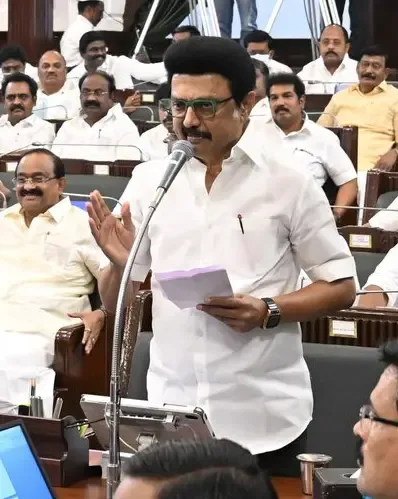
The responses from the states—primarily Kerala and Tamil Nadu—which approached the Supreme Court concerning the issue of the governor's ‘inaction,’ recognize the ‘balanced’ nature of the Constitution bench's ruling. Their representatives have indicated that their case was against the governor's withholding of bills and the indefinite obstruction of legislative processes, which contradicts federalism. They asserted that the governor must return the bill to the Assembly if there are concerns, allowing for further discussions in the assembly. This was highlighted in the Constitution bench's ruling as well. The states expressed satisfaction that the court acknowledged their right to approach the Supreme Court if a bill is withheld indefinitely and that the court could subsequently direct the governor to make a decision based on the merits of the case. They maintained that while the governor could seek clarifications if a bill appeared to contradict any constitutional provisions, the governor could not outright deny a bill on such grounds.
The states believe the Constitution bench has reaffirmed this position. The conclusion is that the Constitution bench has delineated the options available to a governor concerning a bill presented and advised the governor against prolonged inaction, allowing the concerned state to take the matter to the Supreme Court for a merit-based assessment. While the notion of the court establishing general timelines has been firmly rejected by the Constitution bench, the judgment has, in effect, empowered the apex court to arbitrate whether a governor has intentionally stalled a bill to obstruct its passage.
(The author is a former Director of the Intelligence Bureau)
Point of View
It is imperative to recognize the delicate balance the Supreme Court has attempted to strike between federalism and constitutional discretion. This ruling underscores the importance of dialogue and collaboration between state and central authorities, reflecting the evolving dynamics of governance in India.
NationPress
16 Oct 2026
Frequently Asked Questions
What was the Supreme Court's ruling about?
The Supreme Court ruled on the powers of the Governor and President regarding the timeline for responding to legislative Bills, overturning a previous decision that imposed strict deadlines for gubernatorial assent.
What implications does this ruling have for federalism?
The ruling has sparked debate, with some viewing it as a victory for the Union Government, while others see it as a potential setback for federalism, particularly in terms of state legislative autonomy.
How did the states react to the ruling?
States like Kerala and Tamil Nadu welcomed the judgment, viewing it as a reaffirmation of their rights against undue gubernatorial inaction.
What are the key points highlighted in the judgment?
The judgment emphasized the constitutional discretion granted to the Governor and President, clarified their options regarding legislative Bills, and reinforced the need for timely decision-making.
Is there a possibility of judicial review in this context?
Yes, the judgment allows for judicial review in cases of prolonged gubernatorial inaction, enabling courts to ensure timely decisions on legislative Bills.