Dr. Jitendra Singh reviews Special Swachhata Campaign 6.0 progress
Synopsis
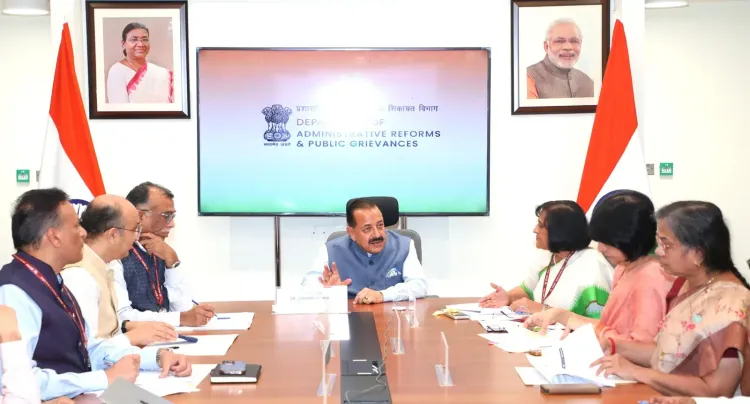
Union Minister Dr. Jitendra Singh chaired a Secretaries-level review of Special Swachhata Campaign 6.0 on October 19, 2026, revealing a 3.03-fold rise in sites covered, ₹491.28 crore in scrap revenue, and new employee facilities including a workplace crèche at Kartavya Bhawan-3.
Key Takeaways
8,34,509 cleanliness sites covered in the first 17 days of Campaign 6.0, a 3.03-fold increase over the same period in Campaign 5.0.
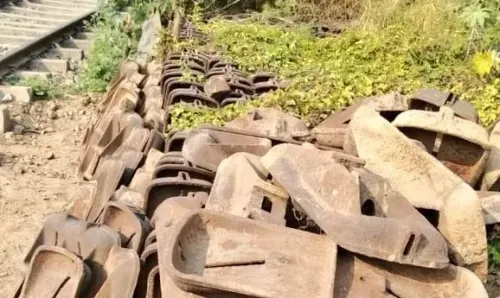
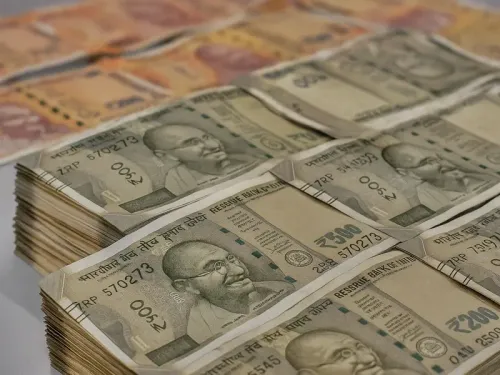
Scrap disposal revenue reached ₹491.28 crore within 17 days, up 1.61 times from ₹304.72 crore last year.
116 lakh sq. ft. of office space freed, exceeding Campaign 5.0's comparable figure of 113.12 lakh sq. ft.
DoPT is converting 2,000 sq. ft. of cleared space at Kartavya Bhawan-3 into a Workplace Crèche for central government employees.
DARPG , the nodal campaign department, has freed an additional 1,200 sq. ft. to establish a recreation zone .
The review was attended by Secretaries of the Government of India , signalling senior bureaucratic ownership of the drive.
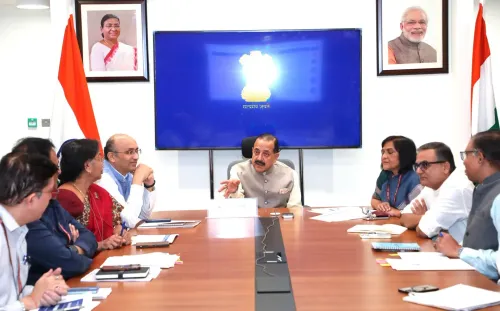
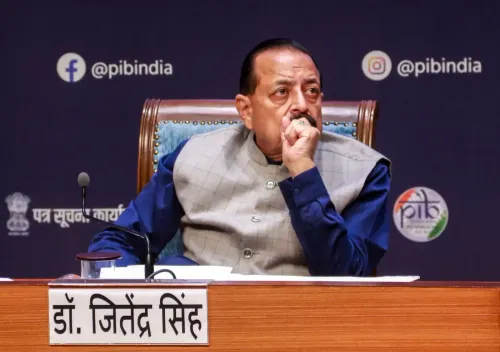
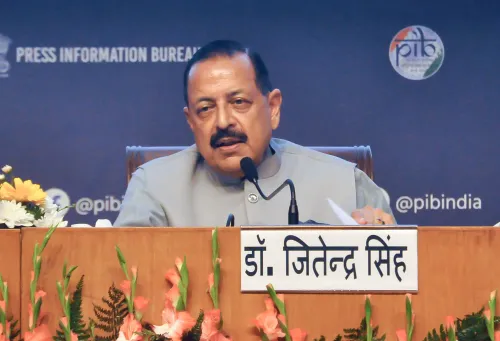
A government office cleanliness drive that has cleared more space in 17 days than its predecessor managed across a comparable stretch — and banked nearly ₹491 crore from scrap alone — got a top-level review on Monday, October 19, 2026, when Union Science and Technology Minister Dr. Jitendra Singh convened a meeting of Secretaries of the Government of India at DoPT, Kartavya Bhawan-3, New Delhi to assess the momentum of Special Swachhata Campaign 6.0.
The numbers that define Campaign 6.0's first 17 days
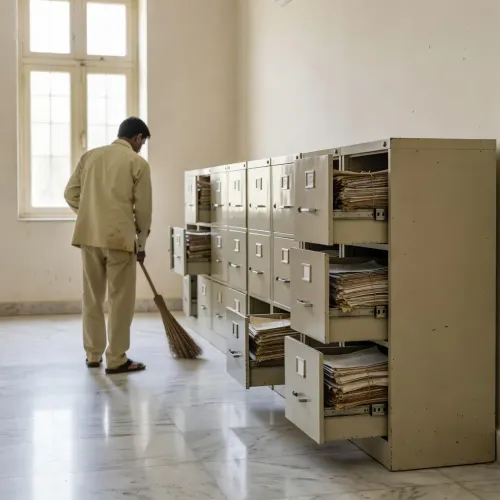
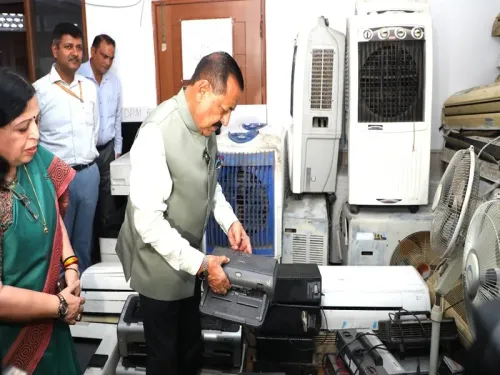
The headline figures are striking. Across the first 17 days of Campaign 6.0, central government offices covered 8,34,509 cleanliness sites — against 2,75,432 during the same window in the previous edition, a 3.03-fold increase. Revenue generated through scrap disposal has already hit ₹491.28 crore, up from ₹304.72 crore in the corresponding period last year — a 1.61-fold jump. Space freed stands at 116 lakh sq. ft., nudging past the 113.12 lakh sq. ft. cleared in Campaign 5.0's comparable phase.
These are not incidental housekeeping figures. Scrap revenue of nearly half a billion rupees in under three weeks signals a systematic monetisation of dormant assets across the central secretariat — money that flows back into government accounts rather than gathering dust in storerooms.
A crèche and a recreation zone emerge from the cleared space
Beyond the tonnage of discarded paper and obsolete equipment, Campaign 6.0 is reshaping the physical fabric of Kartavya Bhawan-3 in concrete ways. DoPT has reallocated 2,000 sq. ft. of ground-floor space at the complex to set up a 'Workplace Crèche' — a facility that directly addresses the long-standing gap in childcare support for central government employees. DARPG, the nodal department running the campaign series, has additionally freed 1,200 sq. ft. to create a recreation zone within its office premises.
The dual allocation — one for care, one for wellness — signals an intent to convert administrative decluttering into tangible employee benefits, not just audit-friendly space statistics.
Campaign lineage: from Swachh Bharat to the secretariat
Special Swachhata Campaigns trace their institutional roots to the Swachh Bharat Mission launched in 2014, which later evolved into periodic internal drives targeting central government offices specifically. DARPG has been the nodal agency coordinating successive editions, each building on the last with higher targets for sites covered, scrap value realised, and space released. Campaign 6.0's early data suggest it is outpacing its predecessors on almost every metric.
The fact that Secretaries of the Government of India — the most senior permanent officials of central ministries — gathered for this review underscores the bureaucratic priority the current administration places on what might otherwise seem a routine housekeeping exercise. When the country's top civil servants sit in a room to discuss dustbins and floor plans, the signal is deliberate: efficiency reform starts at home.
With the campaign still running and the crèche and recreation zone conversions still being set up, the next phase of Campaign 6.0 will test whether the early pace holds — and whether freed space elsewhere in the secretariat follows Kartavya Bhawan-3's lead into something useful.
Point of View
Helping sustain bureaucratic buy-in for what could otherwise feel like a top-down audit exercise. Convening Secretaries-level participation signals that the campaign is being positioned as a governance KPI, not just a symbolic cleanliness gesture, ahead of any parliamentary or audit scrutiny of outcomes.
NationPress
20 Oct 2026
Frequently Asked Questions
What is Special Swachhata Campaign 6.0?
Special Swachhata Campaign 6.0 is the latest edition of a recurring central government initiative to declutter office spaces, dispose of scrap for revenue, and free up area for productive use across ministries and departments. It is nodal-coordinated by DARPG and builds on five earlier campaigns rooted in the Swachh Bharat Mission launched in 2014.
How much revenue has Special Swachhata Campaign 6.0 generated so far?
As of October 19, 2026, the campaign has generated ₹491.28 crore through scrap disposal in its first 17 days , compared to ₹304.72 crore during the corresponding period of Campaign 5.0 — a 1.61-fold increase.
What is the Workplace Crèche at Kartavya Bhawan-3?
DoPT has reallocated 2,000 sq. ft. of ground-floor space at Kartavya Bhawan-3, New Delhi — freed during Swachhata Campaign 6.0 — to set up a Workplace Crèche, providing childcare support for central government employees working at the complex.
Who chairs the review meetings for Special Swachhata Campaign 6.0?
Union Minister of State (Independent Charge) Dr. Jitendra Singh, who holds charge of the Ministry of Personnel (under which DoPT functions), convened and chaired the review meeting of Secretaries of the Government of India on October 19, 2026.
How does Campaign 6.0 compare to Campaign 5.0?
In the first 17 days, Campaign 6.0 covered 8,34,509 cleanliness sites versus 2,75,432 in Campaign 5.0's corresponding period — a 3.03-fold rise. It also freed 116 lakh sq. ft. of space, slightly exceeding Campaign 5.0's 113.12 lakh sq. ft. , while scrap revenue climbed 1.61 times.