Tamil Nadu targets 4 lakh adults in 2026-27 literacy drive
Synopsis
Tamil Nadu is mobilising over 17,000 volunteers and a network of schools, NGOs, and self-help groups to educate more than four lakh non-literate adults in 2026-27 under the New India Literacy Programme — with District Collectors overseeing execution and assessments due by October. The state hopes the decentralised model becomes a national template.
Key Takeaways
Tamil Nadu School Education Department will target over four lakh non-literate adults aged 15 and above in 2026-27 .
The drive is part of the New India Literacy Programme (NILP) , covering foundational literacy, numeracy, financial literacy, and health awareness.
More than 17,000 volunteers from schools, colleges, and NGOs will support implementation.
Beneficiary identification will use school census records , anganwadi data , PHC databases , and MGNREGA registers .
The programme begins in June 2026 , with assessments scheduled for the second week of October .
District Collectors will oversee execution through District Literacy Mission authorities.
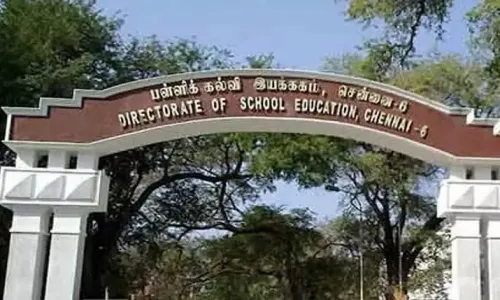
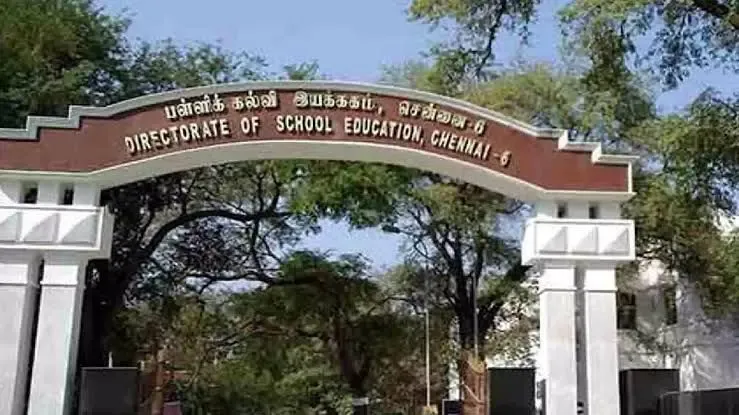
The Tamil Nadu School Education Department is set to launch a major adult literacy drive in 2026-27, aiming to educate more than four lakh non-literate adults and bring the state closer to achieving full literacy. The initiative, part of the New India Literacy Programme (NILP), will target individuals aged 15 years and above who lack foundational reading, writing, and numeracy skills.
What the Programme Covers
Beyond basic literacy, the curriculum is designed to equip learners with practical life skills relevant to daily functioning. These include basic financial literacy, health awareness, and communication skills — components that officials say are critical to making literacy meaningful and sustainable beyond classroom instruction.
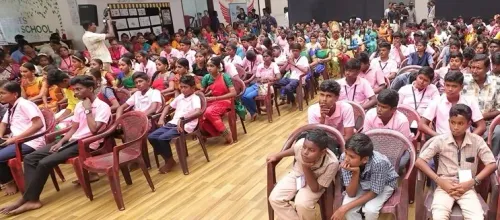
Learners' literacy centres will be established in schools and community spaces across the state. More than 17,000 volunteers are expected to support the effort, drawn from schools, colleges, and non-governmental organisations.
How Beneficiaries Will Be Identified
A comprehensive survey will precede the programme to identify eligible adults. Authorities have been directed to draw from multiple existing data sources, including school-level census records, primary health centre databases, anganwadi records, and MGNREGA registers.
Coordination between headmasters of government and aided schools and block development offices will be central to ensuring accurate identification. Beyond official data, the department plans to involve local communities — including school and college students, school management committees, self-help groups, and NGOs — to locate and motivate non-literate individuals within their neighbourhoods.
Implementation and Oversight
The initiative is scheduled to commence in June 2026, with assessments planned for the second week of October. District Collectors will oversee execution through District Literacy Mission authorities, ensuring coordination among local bodies, education officials, and community stakeholders.
This decentralised framework, officials said, is expected to improve both outreach and accountability at the ground level. Notably, this is part of a broader national effort under NILP, which seeks to address adult illiteracy across Indian states through a structured, community-driven model.
Broader Significance
Tamil Nadu has long been regarded as a leader in school education outcomes in India, but pockets of adult illiteracy — particularly among older demographics and marginalised communities — remain a persistent challenge. The state government hopes this initiative will not only reduce illiteracy levels significantly but also serve as a replicable model for adult education programmes across the country.
With the programme's first assessments due in October, the coming months will be a critical test of how effectively the state can translate its decentralised ambition into measurable literacy gains.
Point of View
But the real challenge lies in identification accuracy and volunteer retention — two areas where past literacy drives across Indian states have repeatedly faltered. Drawing on MGNREGA and anganwadi registers is smart data strategy, but those databases carry their own gaps and outdated entries. The October assessment window is tight for a June start, leaving little room to course-correct if enrolment lags. Whether this becomes a genuine model for the country or another well-intentioned headline will depend entirely on last-mile execution — something no amount of District Collector oversight can guarantee without sustained community ownership.
NationPress
19 Sept 2026
Frequently Asked Questions
What is Tamil Nadu's new adult literacy programme for 2026-27?
Tamil Nadu's School Education Department is launching a drive to educate over four lakh non-literate adults aged 15 and above in 2026-27, under the New India Literacy Programme (NILP). The curriculum covers foundational literacy, numeracy, financial literacy, and health awareness.
Who will implement the Tamil Nadu literacy drive?
Over 17,000 volunteers drawn from schools, colleges, and NGOs will support the programme. District Collectors will oversee implementation through District Literacy Mission authorities, with coordination from headmasters, block development offices, self-help groups, and school management committees.
When will the Tamil Nadu NILP programme begin and when are assessments?
The programme is scheduled to begin in June 2026, with formal assessments planned for the second week of October 2026.
How will non-literate adults be identified for the programme?
Authorities will conduct a comprehensive survey using school census records, primary health centre databases, anganwadi records, and MGNREGA registers. Local communities, students, NGOs, and self-help groups will also help identify and motivate eligible individuals.
Why is this literacy initiative significant for Tamil Nadu?
Despite being a leader in school education outcomes, Tamil Nadu still has pockets of adult illiteracy, particularly among older and marginalised communities. The government hopes this decentralised, community-driven model will significantly reduce illiteracy and serve as a replicable template for other Indian states.