Tejashwi condemns attack on Mamata, blames BJP silence

Synopsis
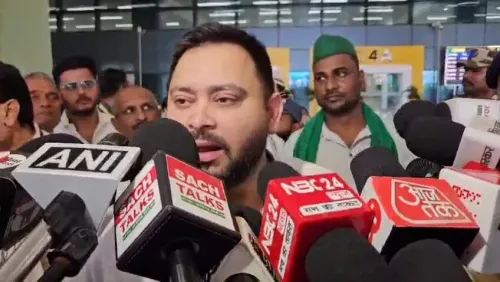
RJD leader Tejashwi Yadav has strongly condemned an attack on West Bengal Chief Minister Mamata Banerjee, accusing the BJP of normalising political violence and the Central government of tacit complicity through its silence on the incident.
Key Takeaways
Tejashwi Yadav called the attack on Mamata Banerjee 'extremely condemnable' and said violence has no place in democracy.
He accused the BJP of normalising 'anarchy, hatred and violence' — framing it as a systemic threat to democratic norms.
Tejashwi argued that the Central government's silence amounts to 'silent support' for the attackers.
He described the incident as an assault on India's 'civilised democratic and constitutional values.' West Bengal has been a recurring site of political violence allegations since Mamata Banerjee came to power in 2011 .
The statement reflects broader opposition solidarity and the ongoing federal fault line between New Delhi and TMC-governed Bengal.
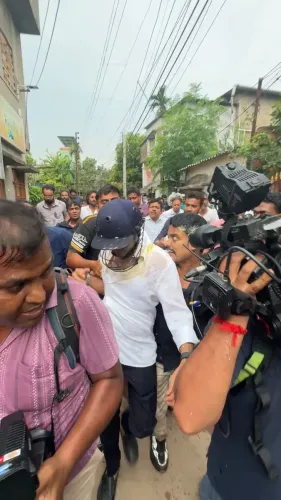
An attack on a sitting Chief Minister — one who has governed her state for fifteen years — drew sharp condemnation from RJD leader and Bihar Leader of the Opposition Tejashwi Yadav on Sunday, August 9, 2026, as he accused the BJP of normalising violence and the Central government of silent complicity.
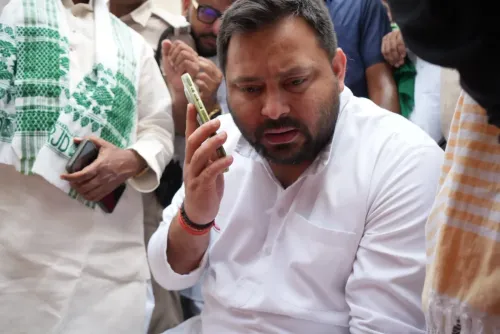
Tejashwi's post, written in Hindi, called the assault on West Bengal Chief Minister Mamata Banerjee by 'goons' (gundon dwara) 'extremely condemnable' (atyant nindaniya). 'There is no place for violence in democracy,' he wrote, adding that the BJP's 'normalisation of anarchy, hatred and violence is unfortunate for democracy.'
The charge of Central silence
The sharpest line in Tejashwi's statement was directed not at the attackers but at New Delhi. He argued that the absence of any reaction from the Government of India amounts to 'silent support' (maun samarthan) for the violence. It is a well-worn but potent opposition tactic — framing government inaction as tacit endorsement — and here it carries added weight given that the victim leads an opposition-ruled state.
Tejashwi also characterised the incident as an assault on 'India's civilised democratic and constitutional values' (Bharat ke sabhya loktantrik va samvaidhanik mulyon ko tar-tar kiya ja raha hai) — language that deliberately elevates a political attack into a constitutional crisis.
Bengal's long arc of political violence
West Bengal has been a flashpoint for inter-party violence for over a decade. Following the 2021 state assembly elections, both the Trinamool Congress and the BJP traded accusations of post-poll violence across multiple districts, with central forces deployed and court orders sought. The state's political temperature has rarely cooled since Mamata Banerjee first came to power in 2011, ending 34 years of Left rule.
For the BJP — which dramatically expanded its footprint in Bengal in the 2019 Lok Sabha elections and contested the 2021 assembly polls aggressively — the state remains a high-stakes political battleground. Opposition leaders, including Tejashwi, have consistently argued that this competitive intensity has fuelled a culture of political intimidation.
Opposition solidarity and the federal fault line
Tejashwi's statement is also a signal of opposition solidarity. As the son of Lalu Prasad Yadav and a key figure in the INDIA bloc's Bihar unit, his public defence of Mamata Banerjee — a regional heavyweight who has been both ally and independent actor in national opposition politics — underlines how attacks on opposition leaders are increasingly treated as collective threats rather than isolated incidents.
The broader pattern is familiar: when violence touches a non-BJP leader, opposition parties demand Central accountability; when violence is alleged in BJP-governed states, the charge of federal double standards follows almost automatically. Tejashwi's post fits that template precisely — but the fact that the target is a three-term Chief Minister gives it uncommon gravity.
Whether the Ministry of Home Affairs responds, whether an investigation is ordered, and whether the incident surfaces in Parliament will determine how far this moment travels beyond social media.
Point of View
' he shifts the moral burden from the perpetrators to the government's inaction — a framing that tends to gain traction when the victim is an elected head of government. The statement also reinforces the INDIA bloc's strategy of presenting regional opposition leaders as a collective under threat, which is politically useful ahead of any electoral cycle. The Central government's response — or continued silence — will be the real test of how damaging this narrative becomes.
NationPress
24 Sept 2026
Frequently Asked Questions
What did Tejashwi Yadav say about the attack on Mamata Banerjee?
Tejashwi Yadav called the attack on West Bengal Chief Minister Mamata Banerjee 'extremely condemnable,' saying there is no place for violence in democracy and accusing the BJP of normalising anarchy and hatred.
Who attacked Mamata Banerjee?
Tejashwi Yadav's post refers to an attack by 'goons' on Mamata Banerjee, but specific details about the perpetrators and the exact circumstances of the incident have not been independently verified.
Why did Tejashwi Yadav blame the Central government?
Tejashwi argued that the absence of any official reaction from the Government of India to the attack on a sitting Chief Minister amounts to 'silent support' for the violence.
What is the history of political violence in West Bengal?
West Bengal has seen recurring allegations of political violence between the Trinamool Congress and the BJP, particularly following the 2021 assembly elections, with both parties accusing each other of attacks on political workers.
How long has Mamata Banerjee been Chief Minister of West Bengal?
Mamata Banerjee has been Chief Minister of West Bengal since 2011, winning successive assembly elections in 2011, 2016, and 2021 — a tenure of over fifteen years.